// SPACE.COM — SPAZIO & SCIENZA
Partial lunar eclipse August 2026: Where will it be visible from?
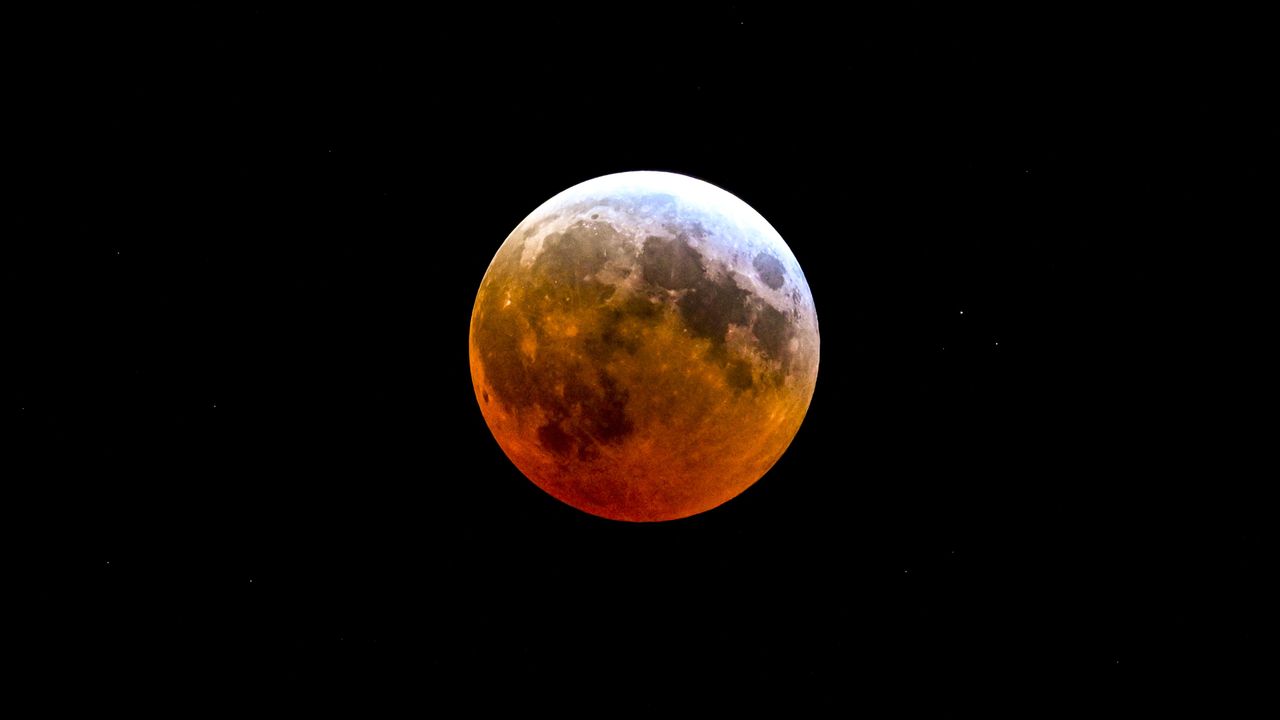
Here's where the 96% partial lunar eclipse will be visible from on Earth.
When you purchase through links on our site, we may earn an affiliate commission. Here’s how it works.
Earth's shadow will swallow 96% of the lunar surface overnight on Aug. 27-28, potentially turning the moon a gorgeous shade of crimson as it bathes in light filtered and refracted by our planet's atmosphere.
The partial lunar eclipse will occur as Earth passes between the sun and moon during the monthly full moon phase. Around this time, Earth's curved inner shadow will appear to creep across the lunar surface while leaving a thin crescent exposed to direct sunlight at the point of maximum eclipse.
But who will actually get to see it? As usual, it's all a matter of location.
The Aug. 27-28 partial lunar eclipse will be visible to roughly 3.3 billion people spread across North America, South America and parts of Europe and Africa. Each phase will occur simultaneously for everyone watching from Earth, through the local timings for each eclipse phase will vary depending on your location.
For stargazers on the West Coast of America in cities like Los Angeles, California and Portland, Oregon, the point of maximum eclipse will arrive just a few hours after sunset. While anyone watching from East Coast cities including New York and Jacksonville will see the lunar spectacle peak around midnight local time.
For the United Kingdom, Europe and Africa, the eclipse will be an early morning affair, occurring shortly before sunrise as the moon arcs low towards the western horizon. You can check the exact timings and altitude of the moon during key phases of the Aug. 27-28 eclipse on TimeandDate.com.
The full extent of a partial lunar eclipse can be enjoyed by anyone who happens to be on the night side of Earth at the time that it occurs. You also won't need safety glasses or specialized equipment to view a lunar eclipse. It'll look magnificent to the naked eye, though binoculars, or even a telescope can heighten the experience by granting a magnified view of the moon as Earth's shadow slowly marches across its cratered surface!
Sadly, the moon will be out of sight below the horizon for anyone on the day side of Earth as the eclipse unfolds, making it impossible to view with the naked eye from a host of countries including Australia, India, China and Japan to name but a few.