// NATURE NEWS — SPAZIO & SCIENZA
How tech-enhanced sleep could improve rest but erode privacy
Brian D. Earp is a cognitive scientist and bioethicist, serving as the director of the Oxford-NUS Centre for Neuroethics, AI and Society at the Centre for Biomedical Ethics, Yong Loo Lin School of Medicine, National University of Singapore, Singapore.
Search author on:
PubMed
Google Scholar
Sebastian Porsdam Mann is a bioethicist and legal scholar at the Centre for Advanced Studies in Bioscience Innovation Law, University of Copenhagen, Copenhagen, Denmark.
Search author on:
PubMed
Google Scholar
Effy Vayena is a bioethicist in the Health Ethics and Policy Lab, Department of Health Sciences and Technology, Swiss Federal Institute of Technology (ETH), Zurich, Switzerland.
Search author on:
PubMed
Google Scholar
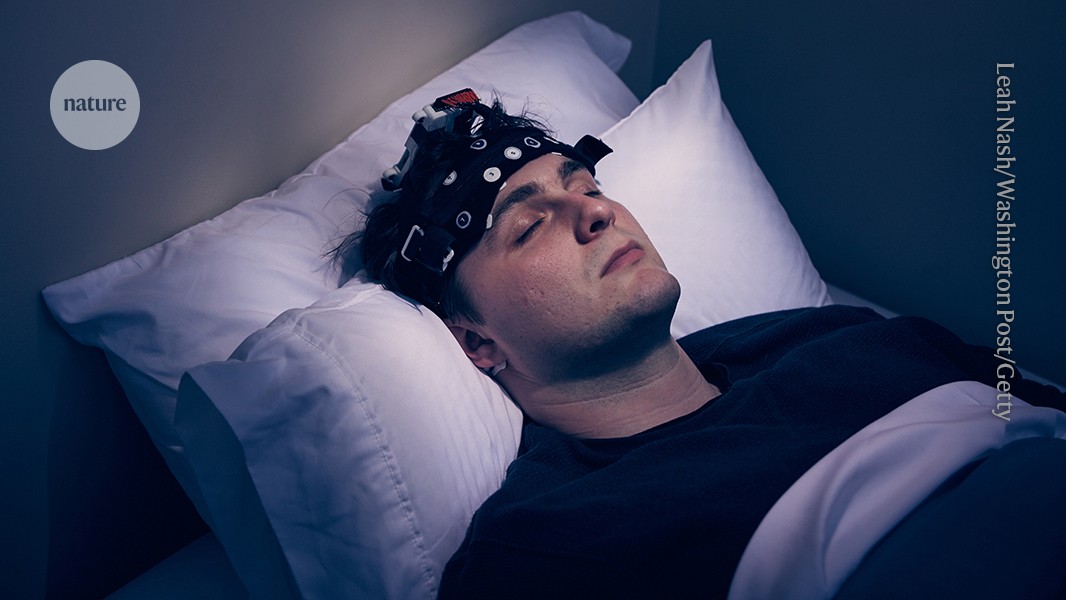
Wearable devices can help people to keep track of their sleep patterns. Credit: Leah Nash/Washington Post/Getty
Being tired behind the wheel can be as dangerous as driving while drunk1. Yet, whereas showing up to work intoxicated can lead to dismissal, being visibly sleepy doesn’t tend to have comparable consequences — at least for now.
Too hot to sleep? How heatwaves at night affect our health
As employers learn more about the productivity and safety costs of inadequate rest, might lack of sleep be treated as a sackable offence? And, if sleep can be enhanced to give workers wakeful benefits that go beyond those of a conventional night’s rest, might employers expect people to take such measures? These questions are not far-fetched.