// SPACE.COM — SPAZIO & SCIENZA
A black star in a false Spanish twilight: Here's the story of my 1st total solar eclipse
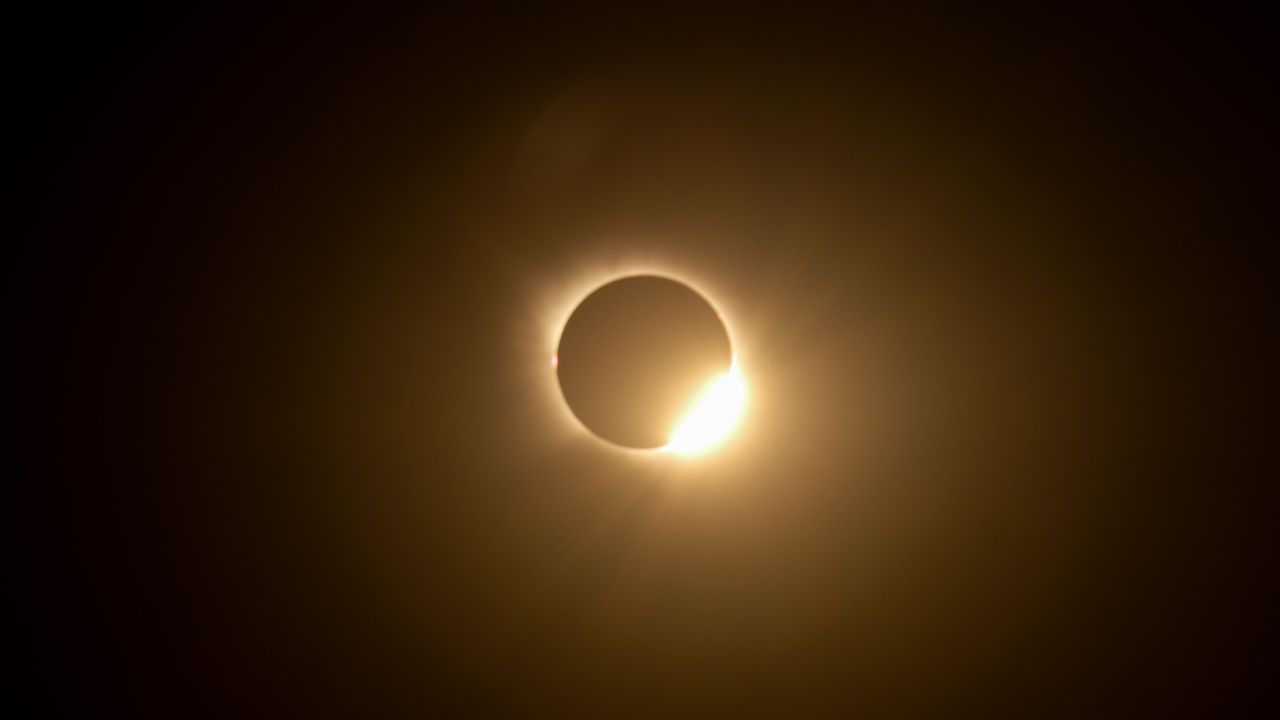
I journeyed to the path of totality in Spain to watch the Aug. 12 total solar eclipse with a group of passionate citizen scientists. Here's my story.
When you purchase through links on our site, we may earn an affiliate commission. Here’s how it works.
I had never seen a total solar eclipse. That's a strange thing to admit for the skywatching writer at Space.com, but the truth is that the opportunity had simply never come up.
When it comes to eclipses, I've always been beguiled by their beauty from afar. I've always hoped to see that strange moment when a black sun manifests to extend a glowing atmosphere into the fleeting twilight of totality. But after 37 years I hadn't once found myself in the path of the moon's inner shadow, and it was starting to feel like something that simply happened to other people.
That all changed when I joined Space.com and my life became anchored in the movements of the planets, moon and stars. I was offered the chance to report on the 2026 total solar eclipse from Spain, while our skywatching editor, Daisy Dobrijevic, witnessed totality from an HX Expedition's cruise aboard MS Spitsbergen in East Greenland. In the end, my first eclipse experience would be everything I had hoped for and more. A perfect blend of science, awe, culture and faith, that I'll carry with me for the rest of my life.
I covered the Aug. 12 eclipse from the small village — or pueblo — of Valoria la Buena in central Spain. There, I joined a team of citizen scientists from the Dynamic Eclipse Broadcast (DEB) Initiative, a voluntary initiative guided by professional astronomers from Southern Illinois University and, where possible, part funded by grants from the NASA Science Mission Directorate and the National Science Foundation. For this eclipse, the DEB was tasked with capturing data on the sun's corona while transmitting a live feed to a NASA webcast from within the path of totality.
Months of preparation, writing and trading emails with the DEB team lead Charles Greenwald came and went. Before I knew it my bags were packed, my passport was in hand and I was standing in a taxi rank outside the Madrid-Barajas Airport in the heart of Spain.
Hours of mild embarrassment ensued as I used broken Spanish and hand gestures to negotiate my way across the city to the Chamartín-Clara Campoamor station. Then onto a high-speed train heading north to Valladolid — a beautiful city whose pronunciation I butchered for the entirety of my stay.
Upon arrival I was met by Charles' brother in law Santiago and nephew Andreas, who had travelled from Guadalajara, Mexico to witness the eclipse. Andreas led us on a short detour to hunt down some quality coffee beans — he's something of an aficionado. Then on to Valoria la Buena, by means of a final 30-minute car ride that would take us deep into the path of totality.
I had embraced Charles' idea of joining the DEB group not only for the citizen science, but also because of the unique opportunity to observe the eclipse with a multinational group hailing from Mexico, the U.S. and, more locally, members from Madrid and Valladolid.