// HACKER NEWS — CYBERSECURITY
I co-founded Burning Man. The festival has lost its soul
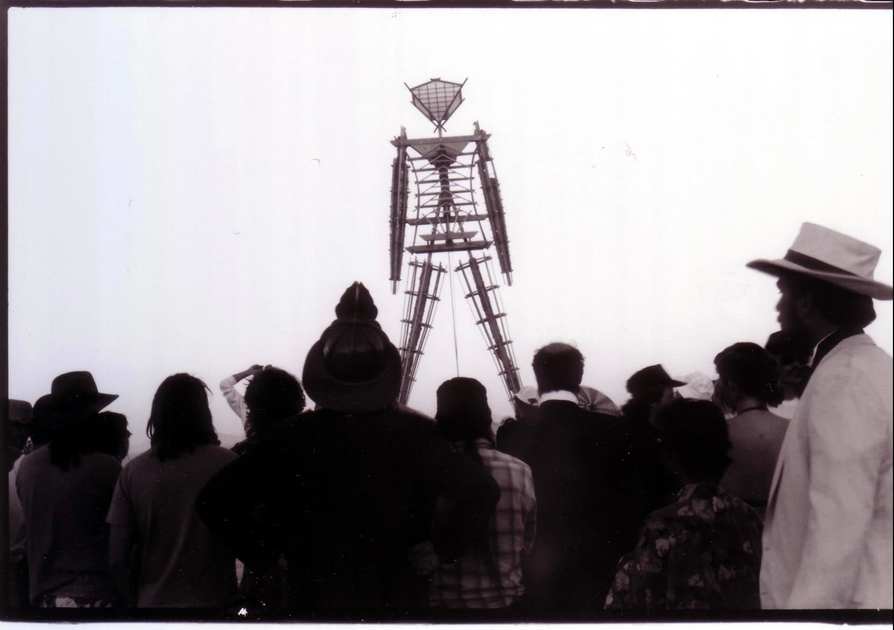
Burning Man won’t let go of me. As one of the three founders of the festival, I am constantly approached by journalists and documentary crews, podcasters, and the odd publisher hoping to make a book about the festival I helped invent 36 years ago. Curiously, I get this interest even though I haven’t set foot in the Black Rock Desert since 1996.
Everyone wants the same story: how a bunch of pranksters in San Francisco jumped into a bunch of janky vehicles headed for the desert, hauling weird props and camping gear and the components of a huge, man-shaped wooden figure, and accidentally built one of the most famous festivals on Earth.
For years after I left, I avoided talking about Burning Man — I’d moved on to other things. But people keep asking, so here’s what I’ll say: What it became makes me a little sad.
I won’t pretend that Burning Man isn’t fun. My friends who are still involved share their pictures and videos, and old-school crews still carry some of the OG punk-industrial flavor.
But the festival is barely recognizable from what we made. Burning Man has lost its anarchist soul.
Today’s event is a massive, kaleidoscopic extravaganza for the senses — a phantasmagoric, immersive spectacle built for the consumption of Western elites and the middle-class creatives who service them. It is a carnival. A fabulous Disneyland for the well-heeled, all the while presenting itself as a serious artistic enterprise grounded in philosophical principles. You can buy into luxury camps with private chefs and have a stylist curate your outfits (opens in new tab). You can fly in on a chartered plane (opens in new tab). It’s become a commercialized escape hatch — a week when anyone with enough money can leave their real life behind entirely.
Early Burning Man wasn’t a ready-made escape you could buy your way into. It was an anarchistic collaboration of equals, conjured into being by a few hundred people of goodwill, far from anyone’s control. Nobody owned it. No one person directed it. There was no official ideology or set of principles handed down from above — just a group of people powerfully, if unknowingly, attuned to the exact moment they were living through. It wasn’t an escape from reality. For those few days, it was realer than real.
San Francisco has always been a place people came to re-create themselves — running from something, running toward something exciting and unknown, going as far as they could for a shot at a new life. As Oscar Wilde put it: “It‘s an odd thing, but anyone who disappears is said to be seen in San Francisco.”
I was no different. I arrived as a teenager in 1976, determined, like so many seekers who landed on the Left Coast to start life anew, to re-create myself.
The region’s mythic attractions — sex, drugs, rock ‘n’ roll, and an uncritical habitat — bred an intensely collaborative scene free of the snobbery of East Coast art markets, where any idea could fly as long as it carried passion and transgressive appeal. Our influences were Dada (opens in new tab), surrealism (opens in new tab), adventure fiction, extreme cinema, Mad Max, Lawrence of Arabia, the Beats, the hippies, the punks.