// SPACE.COM — SPAZIO & SCIENZA
Liftoff! NASA's Roman Space Telescope soars to the stars on a SpaceX Falcon Heavy rocket in spectacular launch (video)
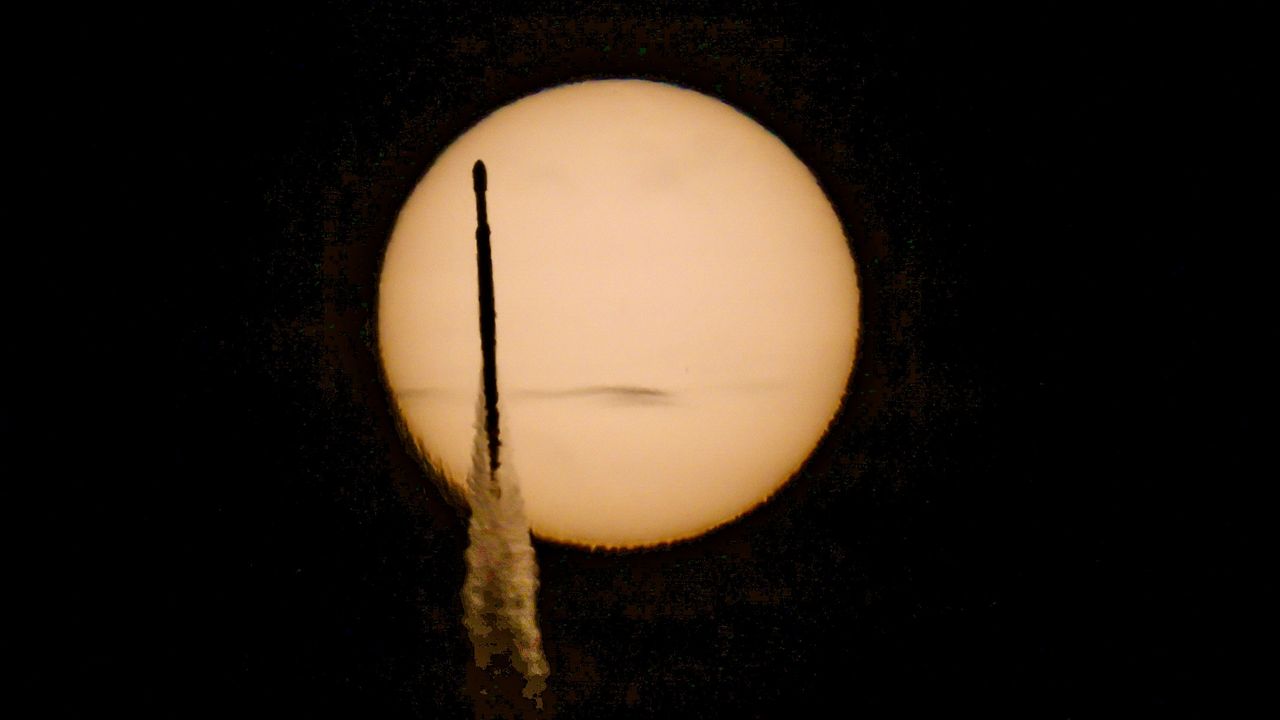
The new Roman Space Telescope will take images of the universe so vast, there's not a 4K TV on Earth capable of showing it all, NASA has said.
When you purchase through links on our site, we may earn an affiliate commission. Here’s how it works.
CAPE CANAVERAL, Fla. — A new era of astronomy is about to begin after NASA's newest flagship observatory leaped from the terrestrial bounds of Earth into the vastness of space this morning.
NASA's Nancy Grace Roman Space Telescope launched today (Aug. 30) on a SpaceX Falcon Heavy rocket from the Kennedy Space Center here in Florida. Liftoff occurred at 7:26 a.m. EDT (1126 GMT) at Launch Complex-39A (LC-39A).
Roman is NASA's newest orbital observatory designed to add to the wealth of research and discoveries we've received from the Hubble Space Telescope and James Webb Space Telescope. "The scope is extraordinary," Roman senior scientist Julie McEnery said during live commentary. "We will do a survey of our own Milky Way galaxy and find 20 billion stars. That would make it the largest catalog of astronomical objects that's ever been produced."
While Hubble and the JWST are built to get close looks at distant phenomena in the universe, Roman will study the bigger picture of our cosmos. Its main instrument, known as the Wide Field Instrument (WFI), will take extremely wide images of the universe, capturing ultra-high definition views across broad swaths of the sky. It's also equipped with the first active coronagraph to be used in space, which will revolutionize exoplanet studies.
The Roman Space Telescope is named after NASA's first chief astronomer Nancy Grace Roman, the first woman in an executive leadership role at the space agency. It was Roman who advocated for a telescope in space, leading to the Hubble Space Telescope. Roman, who died in 2018, earned the nickname "Mother of Hubble" as a result.
"It was Nancy in the old days, before the internet and before Google and email and all that stuff, who really helped to sell the Hubble Space Telescope, organize the astronomers, who eventually convinced Congress to fund it," Ed Weiler, Roman’s successor as Hubble's chief scientist, told the Voice of America in 2011.
At liftoff, Falcon Heavy blazed off the pad at LC-39A, roaring with the thunder of 21 Merlin 1D engines on the business end of the SpaceX triple-booster launch vehicle. About 2.5 minutes into flight, the rocket's two side boosters cut off their engines for a nominal separation and began trajectory burns to return for a landing back here on the Space Coast.
The rocket's core booster then continued onward to deliver Falcon Heavy's second stage equipped with Roman into space. Main engine cut off (MECO) and separation of Falcon Heavy's main stage took place about four minutes after liftoff, with fairing separation about 15 seconds later.