// HACKER NEWS — CYBERSECURITY
GPS glitched across the US by as much as 33 feet
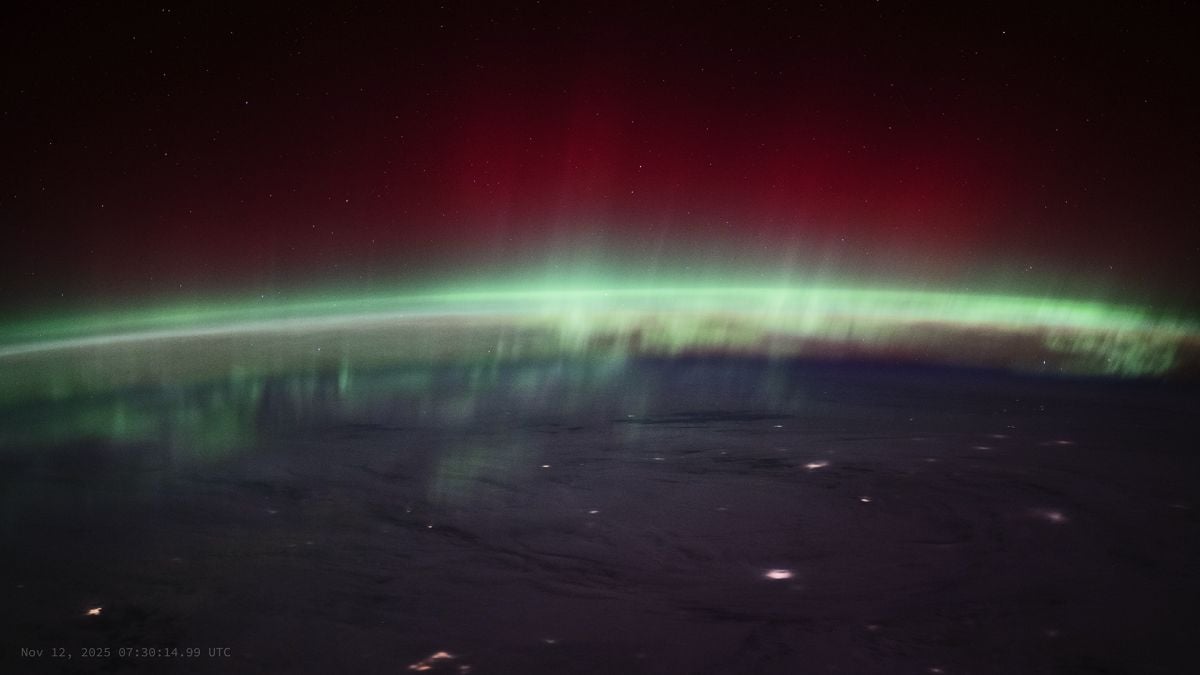
In November 2025, Earth was buffeted by several massive eruptions of solar material that slammed into the magnetosphere.
For many, the result was wonder. Much of the world watched in awe as a solar superstorm lit up Earth's skies with dazzling auroras to rare low latitudes.
The sword, however, was double-edged. The same storm also wrought havoc on the technology we rely on here on the ground.
And now, scientists led by space physicist Endawoke Yizengaw of The Aerospace Corporation in the US have discovered that the disruption was stranger – and more widespread – than anyone realized.
In a new analysis of data collected during the storm, the researchers found widespread, coast-to-coast disturbances in the atmosphere across the continental US – a phenomenon that has never been seen before on this scale.
That may not seem like much, but the effects of this would have been profound – throwing GPS off by more than 10 meters (33 feet) in some places. That's significant enough to disrupt precision agriculture and autonomous vehicles, the researchers say.
"The results underscore the importance of accurate understanding of various space weather phenomena to enhance our predictive capabilities through coordinated observations and physics‐based modeling and ultimately reducing disruptions to RF applications during space weather events," they write in a paper published in Geophysical Research Letters.
The impact of solar outbursts on human technology is already well known. Solar flares, which unleash powerful bursts of X-rays and ultraviolet radiation, can slam into Earth's upper atmosphere, temporarily disrupting high-frequency radio communications.
Solar storms are a bigger problem. A coronal mass ejection belches out a cloud of high-speed charged electrons and protons across the Solar System; when it slams into Earth's magnetosphere, it can generate electrical currents that disrupt power grids, change the shape of our atmosphere, and interact with atmospheric particles to generate the auroral glow.
The effect Yizengaw and his colleagues investigated is produced in a similar way. During a geomagnetic storm, energetic particles can rain down into the ionosphere, a region GPS signals have to travel through.