// PC GAMER — GAMING
Blending Deus Ex with Escape from Butcher Bay, Deficit is one of the best-feeling indie immersive sims I've played—even if the stealth system needs serious work
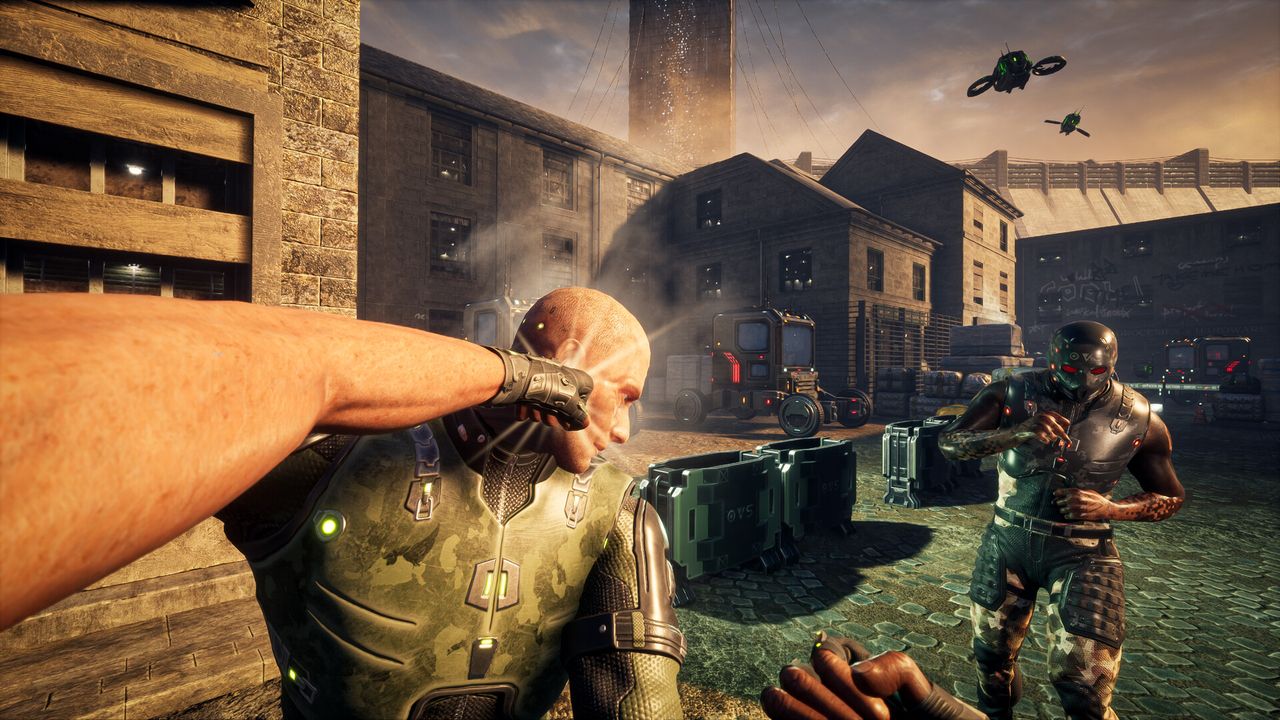
Playing the demo for Deficit was far from a net loss.
When you purchase through links on our site, we may earn an affiliate commission. Here’s how it works.
Immersive sims like Deus Ex and Dishonored are among the hardest kinds of games to make, so I always try to be supportive when an indie developer takes on the absurd challenge of creating one. Yet while there have been some good examples in recent years like Skin Deep and New Blood's early access Thief-like Gloomwood, a lot of the experiments in indie imsim design have been simply too janky for me to enjoy.
Part of the problem is I'm a highly tactile player, and my primary concern when playing any game is whether it feels good beneath the fingers. If a game falls at that initial hurdle, then it's likely (though not inevitable) that I'll drop it pretty quickly. Fortunately, I had the opposite experience with Deficit, an indie imsim with such a strong sense of physicality that I kept playing the demo despite some clear issues.
Developed by Item42, which previously created the cooperative shooter Perish, Deficit sees you play as a freelance spy in a dilapidated, dystopian world. You're tasked with infiltrating a sprawling fortress known as Hadrian's Wall to steal a device called the Interpolator, on behalf of a nameless client known as, well, The Client.
The premise is very Deus Ex, and Deficit involves a mix of sneaking and shooting similar to Ion Storm's cyberpunk classic. But Deficit's more specific inspiration is The Chronicles of Riddick: Escape from Butcher Bay, the surprisingly great tie-in game to David Twohy's mediocre Pitch Black sequel. Your character's melee attacks, which include wild swings of your fists and overhand jabs with makeshift knives—are hugely reminiscent of Riddick's brawling style in Starbreeze's cult 2004 hit.
While I'd need to go back to Butcher Bay to verify this, Deficit's brawling seems more physical than that of Butcher Bay. When you thwack a guard with a hammer, you can almost feel the impact shudder up your arm. Enemies are pleasingly reactive to being mercilessly beaten about the head too, stumbling and staggering before eventually collapsing in a pile of physics-powered limbs.
There's more to Deficit than just fisticuffs, though. You can throw objects to distract or damage guards, use batteries to activate and deactivate objects like doors and robotic sentries, lay traps using mines or laser tripwires, or shoot enemies with 3D-printed guns. The world is highly reactive too. Nearby explosions won't just hurt you, but physically push you around, as I discovered when I got blasted backward through a doorway that I didn't know was behind me. Moreover, when I accidentally threw an object at a nearby wall, it bounced back, hit me in the face and dealt damage. Immersive sim confirmed.
Deficit definitely has potential. But there is one big problem—stealth. I can't tell whether the stealth system is broken or just incredibly hard to read, but I was constantly being spotted by enemies without really understanding why. They seemed to see me regardless of elevation and sometimes rumbled me despite there being an obstacle between us. As far as sneaking goes, Deficit needs a lot of work.
Keep up to date with the most important stories and the best deals, as picked by the PC Gamer team.