// KOTAKU — GAMING
Suikoden 3 Has One Of The Best Stories in the Series
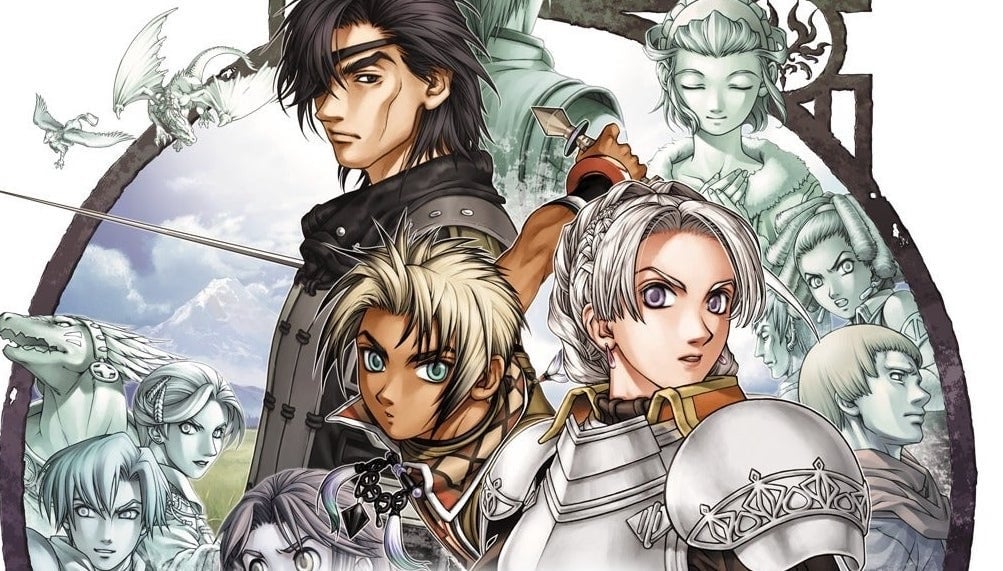
Suikoden 2 is arguably one of the best JRPGs for the PS1. While Suikoden 1 doesn’t reach the heights of 2, it’s well regarded and I personally enjoyed it. But I haven’t seen the third Suikoden get anywhere near as much love despite having one of the most interesting stories in the series. That’s a shame because I think it’s not just one of the best games in the series, but one of the best JRPGs on the PS2.
I called the first game a “Leadership Simulator covered in JRPG armor.” Suikoden 3, which came out in 2002, is more or less similar, but showcases different approaches to leadership. The Trinity Sight System is a series of branching pathways through which players can follow the paths of three different protagonists (and a few optional ones) that eventually link up.
If this game had a thesis, it’d be that history isn’t just a linear track from A to B. There are multiple causes with unexpected effects, and the truth behind them all is murkily mixed up in the overlooked connections. As this was the first PS2 Suikoden, the game didn’t simply leave the upgrades to visual ones as it moved from sprites to 3D characters and environments. It also tried to evolve its approach to storytelling. It’s no longer that binary of good vs. evil, as in the plight of the first two Suikodens building an army to confront Luca Blight (and later Jowy) and Emperor Rugner. Instead, the battle is about ingrained systems and its various manifestations, a “fate” that forces the individuals into cycles of violence. Information or lack of it, leads to many of the misunderstandings, hence the need for triple sight. No single antagonist is outright evil like the previously mentioned Luca Blight, but rather, guided by their own slice of what they deem the truth. The player can see more of the picture than the characters, but even their scope is limited until they play through all paths.
The backdrop to the game is that the Grasslanders, which are made up of six clans, have been at war with the Zexen Federation, a nation of wealthy traders. The first of the three protagonists, Hugo, has an idyllic opening. He’s the chief’s son and a young Grassland warrior who hangs out with his friends. These include the duck captain St. Joe, the griffin called Fubar, and a young villager named Lulu. Think of him basically as the classic JRPG trope of the wide-eyed lad setting out to save the world. The first stretch of his arc exemplifies what makes Suikoden III so compelling.
Those who’ve played the previous game might recognize Hugo’s mom, Lucia, who was one of the antagonists. I like how the series continually changes who’s considered friend and foe depending on which side you’re fighting for. She sends her son on a mission to deliver a message to the Zexen capital regarding peace negotiations. Hugo’s best friend, Lulu, begs to be allowed to come along. The mission is such a big step for the young Hugo, the village comes to see him off. Lulu, playing the role of comic relief, overpacks. There’s also a minor detail that seems trivial but becomes very important later on. One of the villagers, Jimba, mentions that he acquired a suit of Zexen armor from a former acquaintance. When he’s asked why he keeps the armor outdoors, he reveals, “Our mother can’t stand the smell of iron. It reminds her of a cruel past.” As Hugo get ready to leave, Jimba asks him to take a pentacle to the Lightfellow family in the Zexen capital and tell them that the person who wore the armor “died heroically.”
Along the way, Hugo and friends pass through Brass Castle and see Chris, one of the other two protagonists you can play as. The main protagonists often cross paths this way and showing specific events from different perspectives is one of the key narrative gimmicks. In this case, one of the Zexen knights accidentally knocks Lulu down. Chris apologizes for him. Lulu snaps back that they’re “ironheads,” a pejorative reference to their knighthood. Things get tense. That’s when Chris formally in