// HACKER NEWS — CYBERSECURITY
The GDR and Vietnam: From Fake Coffee to Coffee Empire
“And now for something completely different.” I don’t know if you know this classic Monty Python catchphrase. In the TV sketches, John Cleese used to sit somewhere ridiculous, like a forest or a beach, at a desk, in a dinner jacket and say that line in a serious BBC sort of way before the show would start and the audience be exposed to the first absurd sketch.
The phrase sprang to mind earlier this week when I sat in the front row of one of Germany’s oldest cinemas, UT Connewitz in Leipzig, which began life in 1912. On stage, a man said something like: “And now for a short film about a Leipzig bakery entitled ‘People will always eat food’”. The room went dark, and 1980s-style synth music began to play. Then we saw Trabant cars whizzing through Leipzig. Loaves of bread being put into an oven. A room being tiled. More loaves of bread. More Trabants.
The situation seemed a little bizarre, but I ended up rather enjoying myself. The film was from the early 1990s and documented an independent Leipzig bakery’s struggle to operate under socialism and after the fall of the Berlin Wall, when supermarkets suddenly provided fierce competition.
It certainly was something completely different. That afternoon I’d been having coffee with some diplomats in Berlin who had questions about the Saxony-Anhalt election. A train and a tram ride later, I was sitting in an ancient cinema, watching a film about socialist buns.
When it had finished, it was time for the announcer to do it again. And now for something completely different. Here comes Katja Hoyer, all the way from England. She will tell us all about coffee plantations in Vietnam…
ZEITGEIST is a reader-supported publication. To receive new posts and support my work, consider becoming a free or paid subscriber.
To give you some context: I was attending the opening of a week of events focusing on industrial culture. Leipzig has a long history as a hub of German industry in the East – one of the reasons it was heavily bombed in the Second World War – and currently there are some anxieties around deindustrialisation, even if Leipzig on the whole is thriving.
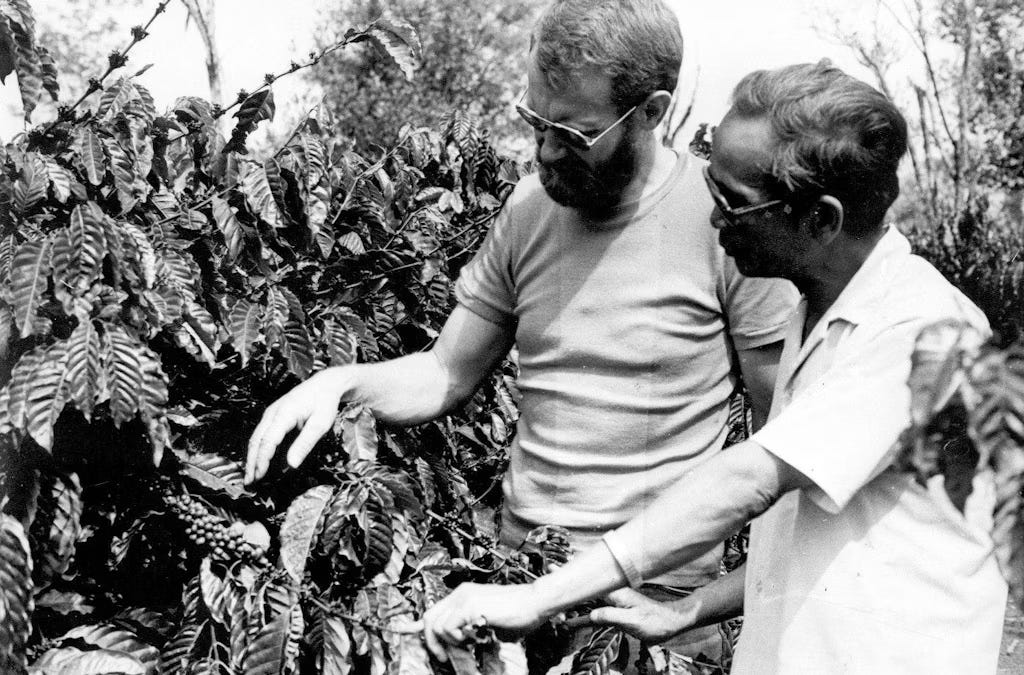
So my contribution to this event was to tell the story of how East German botanists, engineers and other specialists grew a highly successful coffee industry in Vietnam, which remains the world’s second-largest coffee producer today.
It’s a fascinating and undertold bit of history, and I was even more pleased to join a panel after my talk with two tropical plant experts who were in Vietnam in the 1980s to get the project going and one coffee merchant who sources his beans from Vietnam to this day. In fact, he was brewing coffee for us that evening, and the cinema smelled wonderful.
I won’t recount the full story here. There’s a whole chapter on it in Beyond the Wall if you’re interested, but in short: