// SPACE.COM — SPAZIO & SCIENZA
James Webb Space Telescope and Hubble discover 27 puzzling new objects orbiting the sun far beyond Neptune
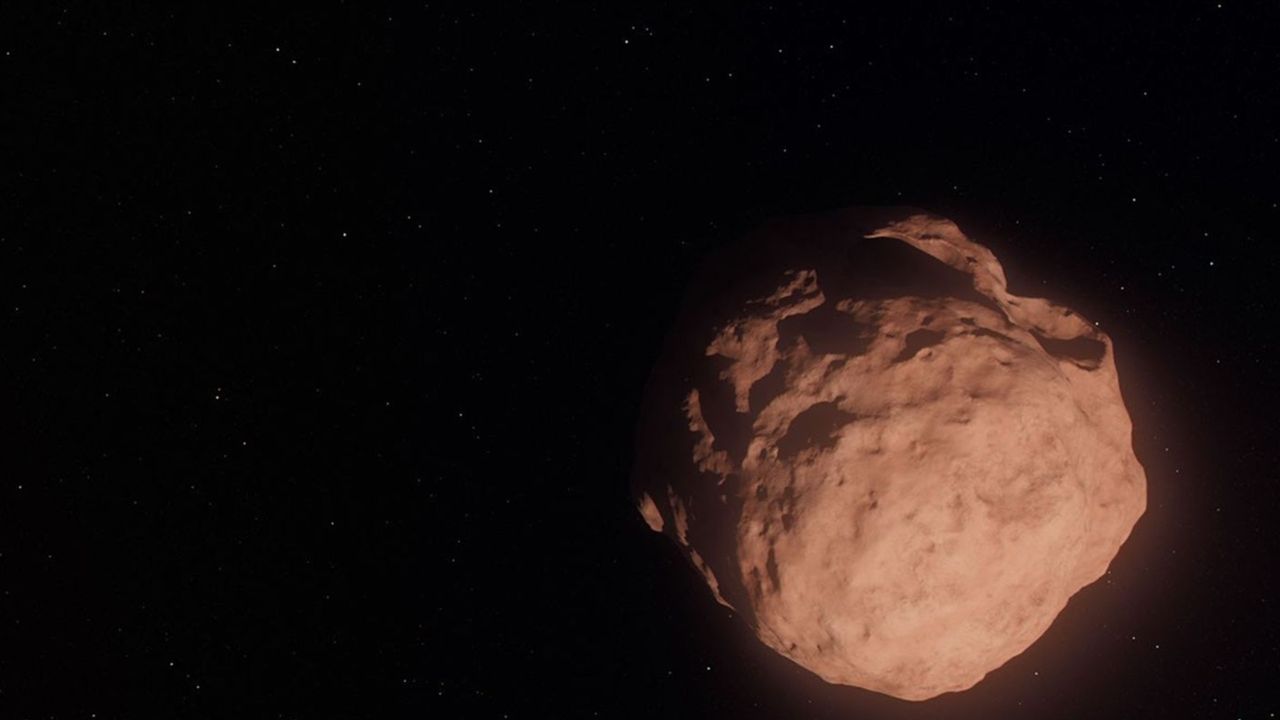
These observations push Hubble's and JWST's abilities to the limit.
When you purchase through links on our site, we may earn an affiliate commission. Here’s how it works.
The Hubble and James Webb space telescopes have teamed up to target some of the smallest, most distant objects in the solar system, discovering that the history of these tiny objects is more puzzling than we'd realized.
The two orbiting observatories collectively discovered 27 new Trans-Neptunian Objects, or TNOs, all less than 25 miles (40 kilometers) across, with the smallest being only 6 miles (10 kilometers) in diameter. As their name suggests, TNOs orbit the sun from far beyond Neptune. Some of them were born out there, at the dawn of the solar system, as small planetesimals unable to take the extra step to form planets.
Models of how these TNOs formed predicted that they should have been peppered with impacts that mixed up their surface material so that their composition, and therefore color, would be different than larger TNOs. Yet new observations, led by two PhD candidates, Anastasia Morgan of Northern Arizona University and Marielle Eduardo of the University of Victoria found the opposite – the little TNOs still look as pristine as the day they formed.
"You could imagine a scenario where getting knocked around and fragmented would change the surface composition, and then you would see a different surface color for tiny TNOs compared to their larger siblings," said Morgan, who led the color and composition analysis, in a statement. "So it's really fascinating to see that the smallest objects are somehow 'remembering' and preserving the history of how they were made."
TNOs native to the Kuiper Belt move in near-circular orbits around the sun and are level with the ecliptic plane, the imaginary flat 'disc' on which the planets and other objects orbit our star. They are said to be dynamically 'cold' because they haven't really budged since they formed.
Other TNOs, however, formed between the seventh and eighth planets, Uranus and Neptune, but before they could be assimilated into those worlds while those planets were growing, they were ejected by gravitational resonances into the region far beyond Neptune, collectively forming a 'Scattered Disk' of objects on highly elongated orbits significantly inclined to the plane of the solar system. Such TNOs are referred to as being dynamically 'hot'.
Yet even the 'hot' TNOs seem to have resisted any changes to their surface composition.
"These dynamically hot TNOs retain a signature of where they were born, even though they've been orbitally scrambled since then," said David Trilling of Northern Arizona University.