// ARS TECHNICA — MODA & SOCIETÀ
F1 in Madrid: Like Monaco but twice as long and none of the glamour
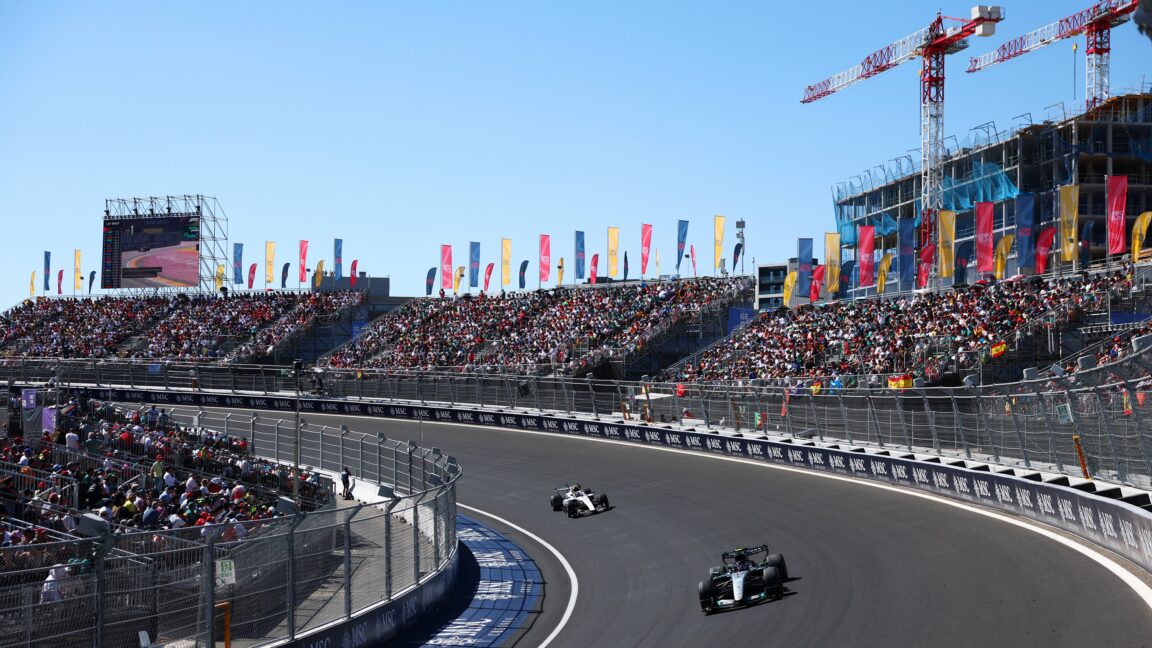
Formula 1’s latest venue might be fun to drive, but the race was processional and dull.
It’s been quite a couple of weeks for Formula 1. First, its annual visit to one of the oldest tracks on the calendar, the Italian temple of speed that is Monza, just outside Milan. Apologies for no Ars report, but your correspondent was on the ground, on vacation, learning the hard way that attempts to call the circuit “accessible by public transport” can still involve walking several miles. The place was packed with Tifosi—the hardcore Italian superfans—dressed in red, who had their hopes dashed almost immediately as Charles Leclerc first ruined his teammate’s race, then his own, all within the first two laps.
Salvation came in the form of the first Italian title contender in my lifetime, Mercedes’ Kimi Antonelli. Opting to take a new engine and other power unit components meant Antonelli would start the race from 19th. But the kid is in fine form right now, and Monza’s long straights and slow corners make for several good overtaking spots. I declared to my race companions that morning that “he’s going to podium, easily,” but if anything, I was too cautious. By the time Leclerc’s heavy crash at Parabolica had stopped the race, Antonelli was already up to 12th.
From the second standing start, on fresh medium tires and still needing a second pitstop, he made short work of the rest of the grid, including his teammate George Russell, who spent much of the race in the lead, on a theoretically faster one-stop strategy. Even a mistake from Antonelli that saw him make an excursion through a gravel trap as he tried to pass Russell couldn’t stop his charge, and he became the first Italian to win the Italian Grand Prix in 60 years—fairy tale stuff, surely.
The contrast with this past weekend could not be starker.
The sport traveled from Italy to Spain to race on the new Madring, a temporary circuit built around a sprawling exhibition center near the Spanish capital’s airport. The 3.3-mile (5.4-km) circuit had a troubled gestation, with construction setbacks caused by heavy rain, among other issues. Like some other new street circuits, a highway passes over the course, constraining the track design somewhat, and its most notable feature is a long, banked corner meant to generate IndyCar-like passing. At least, that was the idea.
Indeed, had the F1 race followed on from the examples set by the F2 and F3 support races, the race report you’re reading now would describe all manner of chaos with plenty of overtaking, a few heavy crashes, and more than one red flag. But F1 drivers are all a lot more experienced than those in the junior series. They’re not prone to crashing and know when to pick their battles. And there were no battles to be fought on the Madring.
The win should have gone to McLaren’s Lando Norris. He was the fastest in qualifying on a day when the driver made more of a difference than the car, and he was the fastest driver during the race, leading from the start. But on lap 14, a virtual safety car was declared after Lance Stroll retired his Aston Martin. Under a VSC, the cars circulate at reduced speed, and making your pit stop under a VSC can therefore allow you to do so without losing nearly as much time to your rivals. Which is exactly what Antonelli and Max Verstappen did, Antonelli even slowing his pace by a second or two after being warned the scenario was likely.
Norris had no such luck; the VSC was declared just after the point at which he could have responded and entered the pits. Worse, it ended shortly before Norris reached the pit entry on his next lap. Bewilderingly, the McLaren still pitted anyway, rather than remaining on track to continue building a gap for a later green-flag stop. Making matters worse, a problem with one of the wheels meant Norris was stationary for more than seven seconds—easily three times the length of a competitive stop in 2026. Norris rejoined the race in fifth with plenty of work to do. It be