// ARS TECHNICA — INTELLIGENZA ARTIFICIALE
Founder’s cost-cutting obsession drove Unitree lead in cheap humanoid robots
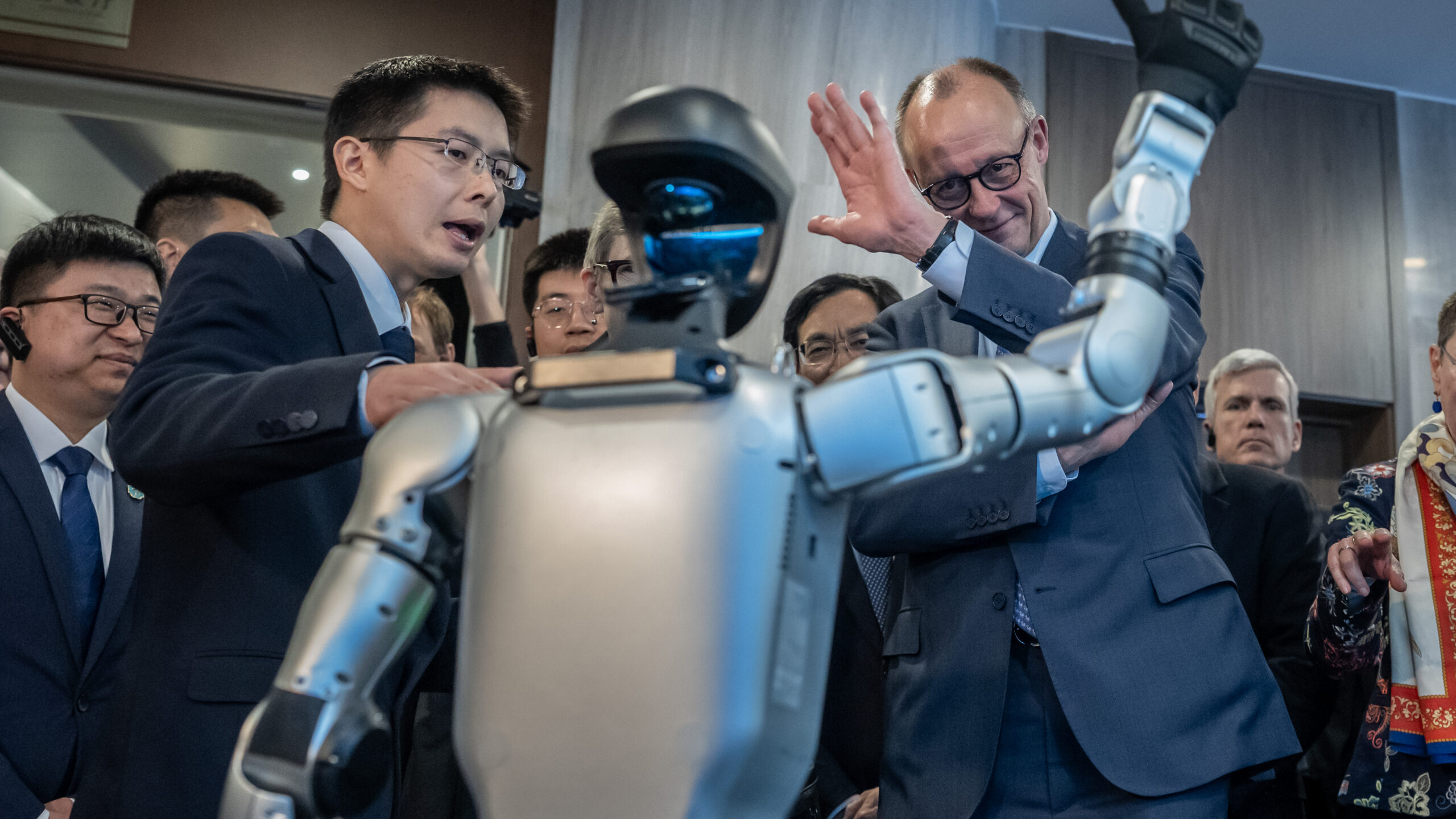
Wang Xingxing micromanaged Unitree to success—will his leadership style scale?
China leads the world in churning out humanoid robots and four-legged robot dogs that also happen to be the most affordable on the market—and Unitree Robotics’ founder Wang Xingxing is arguably one of the people most responsible for that Chinese lead.
The introverted founder, who prominently appeared at a 2025 business symposium hosted by Chinese President Xi Jinping, became phenomenally wealthy after Unitree launched an initial public offering on the Shanghai Stock Exchange STAR Market on August 19. But extensive reporting by Beijing-based Caijing Magazine suggests Unitree’s success so far has been driven by Wang’s extreme micromanagement leadership style—an approach that may be more suited to a small startup than a fast-growing robotics company.
Caijing’s interviews with Unitree employees and investors paint a picture of Wang as someone who personally decides nearly every aspect of corporate strategy or product design, including the colors of materials and lengths of individual screws. The Caijing Magazine feature published on August 31, titled “The King of Unitree,” was translated into English by ChinaTalk, a US-based think tank and media organization, on September 10.
The founder’s obsession with details, coupled with his cost-cutting focus, has driven Unitree to produce some of the cheapest walking robots on the market. Robotics hardware engineers told Caijing Magazine that Unitree achieved this cost advantage through design choices and structural engineering—and Ars has done a deep dive into the specific design decisions on hardware components that make Unitree robots so cheap.
For example, a baseline Unitree G1 humanoid robot designed for robot developers and researchers sells for $13,500, not including shipping costs, while the Unitree R1 robot intended for more casual consumers sells for $4,900.
However, this cost-cutting drive comes at the expense of quality control, according to Caijing Magazine. Unitree employees described the company’s robots as having an “extremely high” rate of returns for repairs in the early years, although that has supposedly improved to the point where the company’s robots can survive the one-year or six-month warranty periods without breaking down.
When considering what AI models could make humanoid robots more autonomous, general-purpose machines, Wang has previously expressed skepticism of large world models as being too compute-intensive. But during Unitree’s recent IPO, he spoke of the company attempting to use large AI models as the foundation for a type of physical AI that could potentially achieve an “autonomous loop of perception, decision, execution, evaluation, learning, and evolution,” according to Caijing Magazine.
Wang, whose background is in hardware structural engineering, reportedly embodies the stereotype of the hard-charging tech founder by still posting in work chats at 2 or 3 am and spending most of his time in the office, including on weekends. Employees described Wang as a blunt communicator who is completely business-focused and will cut off employees after a few sentences.
But Wang’s micromanagement of the company and lack of a formal management structure mean that employees have to queue up to run decisions by him, according to Caijing Magazine. The founder’s emphasis on controlling costs even extends to personally approving any expense reimbursements exceeding 100 yuan (approximately $15), a Unitree employee said.