// NATURE NEWS — SPAZIO & SCIENZA
How research funding took me out of the lab and into leadership
Anna Sandak is a professor and head of the materials research group at the InnoRenew Centre of Excellence at the University of Primorska in Koper, Slovenia.
Search author on:
PubMed
Google Scholar
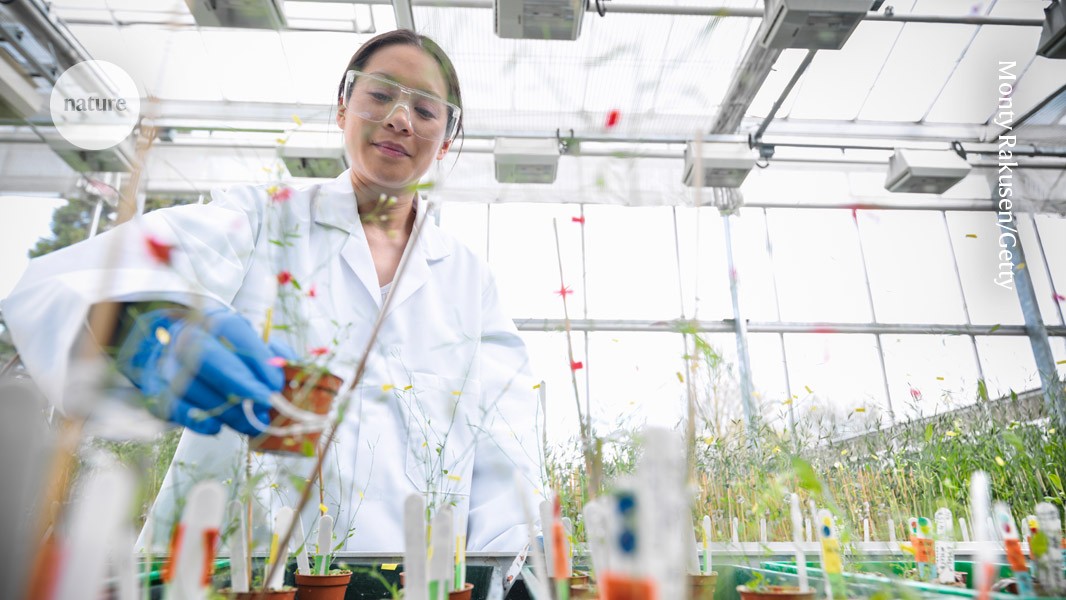
Many academics experience a point at which they transition from laboratory work to management, which can be an opportunity to foster growth in the next generation of scientists.Credit: Monty Rakusen/Getty
In April 2021, after six months of intensive writing, revising and reshaping of an idea that I had been refining for years, I submitted a research proposal for my first grant from the European Research Council — a part of the Horizon Europe funding scheme that focuses on researcher-led science. After waiting anxiously for another six months, I finally received an invitation to interview. I knew, therefore, that my proposal had been well received and would be eligible for resubmission should I ultimately miss out. So, after my interview in January 2022, I began to prepare for failure: I rewrote my entire proposal for resubmission.
To try to put the proposal outcome out of my mind, I turned off my message notifications, shut my e-mails and stopped checking my phone. The resubmission needed my full attention. It was only when my institute director called me in March that year that I broke my focus. I had won the grant. I’d been thinking of this achievement as the peak of my career, so much so that I had forgotten to imagine what my work would look like should I win — but I had no clue how much my job was about to change.
It was clear that the nearly €2 million (US$2.3 million) in funding, awarded over five years, would immediately transform my research group’s work. With this support, we could develop a new generation of living coatings for buildings: fungal-biofilm-based materials capable of self-repair and protection against ultraviolet light. What I did not expect was how quickly it would transform my job at the InnoRenew Centre of Excellence in Izola, Slovenia. Like many researchers, I spent years learning how to design experiments, analyse data, write papers and compete for funding. Academic training taught me how to become a scientist. But it had not prepared me to lead a growing team, manage people, navigate institutional structures and make decisions that affect the careers of colleagues and friends.
New peer-review trial lets grant applicants evaluate each other’s proposals
The questions that I was used to thinking about before receiving the grant — scientific considerations such as how to quantify the bioremediation capacity of fungal biofilm — quickly became ones such as ‘Where are our skill gaps, and who can fill them?’’. Hiring a researcher is not just about selecting the strongest candidate: every appointment shapes the expertise, culture and future direction of the laboratory. Decisions about collaborations, funding allocation and project priorities have similar consequences. They influence not only the science, but also the opportunities available to the people in the team.
I encountered a second gear shift two years later in 2024, when I secured a €3 million Pathfinder grant — a highly competitive funding scheme supported by the European Innovation Council, the European Union’s main body for funding cutting-edge research. This initiative seeks to develop emerging scientific technologies into marketable products and provides support in the form of a variety of business-acceleration services. Suddenly, our group’s ideas, which had existed mainly as carefully written grant proposals for other academics, had to be assessed not only for their scientific promise, but also for their technical feasibility, scalability, value and relevance beyond academia.
Strategic questions that had once felt removed became pressing: who would use this technology, what problem would it solve, how could it be produced and what partnerships would be needed to