// HACKER NEWS — CYBERSECURITY
Gravity Seems Holographic. What Does That Mean for Reality?
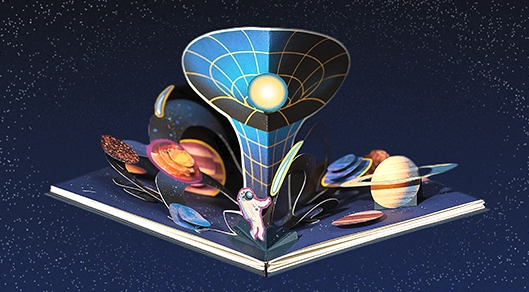
In my first months as a physics journalist nearly a decade ago, I kept running into an inscrutable string of characters: AdS/CFT. Thoroughly intimidated, I decided to just ignore it.
But I couldn’t keep my head in the sand for long. I soon learned that those characters are shorthand for a surprising connection between the seemingly inharmonious worlds of gravity and quantum mechanics. And even more bizarrely, this “anti-de Sitter/conformal field theory” correspondence suggests that gravity eliminates the distinction between volume and area. This broader idea is known as the holographic principle, and it now strikes me as the most profound proposal in theoretical physics in the last 30 years.
In philosophy, “qualia” refers to the subjective qualities of our experience: what it’s like for Alice to see blue or for Bob to feel delighted. Qualia are “the ways things seem to us,” as the late philosopher Daniel Dennett put it. In these essays, our columnists follow their curiosity, and explore important but not necessarily answerable scientific questions.
Theoretical physicists tend to vote with their feet, and AdS/CFT sparked a stampede. The three foundational papers on the topic in the late 1990s have garnered tens of thousands of citations, making them by far the most highly cited theoretical physics works of the digital era. In my interviews with physicists who study holography, they often seem genuinely stunned, and reach for words like “magical” and “miraculous” to describe it. And it doesn’t hurt that holography led to a widely accepted answer to the most famous puzzle in physics: Contrary to what Stephen Hawking argued, black holes are not inescapable prisons.
But even after covering numerous developments in holography and having countless conversations with the physicists involved, I still felt confused. I had heard that holography suggested that gravity and quantum mechanics are one and the same, and that space might be an illusion. I had also heard holography described both as a mathematical fact and as a speculative flight of fancy. So I tried to triangulate these wild ideas and figure out what, exactly, the holographic principle implies about our universe.
Put a box around any region of space (space-time, really, but I’m going to drop time throughout this essay for ease of visualization, as physicists often do). The holographic principle asserts that no matter what’s going on inside — from gas molecules pinging around to black holes colliding — you can decipher the entire contents of the box just by repeatedly measuring points on the surface.
Pause for a moment to reflect on how outrageous this assertion is. You can’t see into the box at all. Nevertheless, holography says that you can learn exactly what’s happening everywhere in the box without any access to the interior. Observing the surface alone is enough. In this sense, the amount of stuff that fills a box is the same as the amount of paint that covers it. That’s a violation of logic and geometry. It asks us to erase the categorical difference between square meters and cubic meters. It recalls how holographic images appear to have depth despite being flat, except the bird in the hologram is the same as an actual bird.
Bartek Czech, a theorist at Tsinghua University in China, highlights the power of the principle by comparing it to a CT scan of the brain, which uses X-rays to look inside the organ and reconstruct it from hundreds to thousands of cross-sectional images. Holography implies that you can do that — reconstruct every fold, vessel, and neuron in three dimensions — without actually looking inside. Simply photographing the surface of the brain somehow suffices.
Why would anyone entertain such a far-fetched notion? It’s rooted in thought experiments and math, and it appears to trace back to one force: “a miracle of gravity,” Czech said.
Scientists have known for more than a century that gravity is different from the other forces. Imagine a box filled