// NATURE NEWS — SPAZIO & SCIENZA
Daily briefing: Landmark bat study suggests they evolved in Europe
Search author on:
PubMed
Google Scholar
Hello Nature readers, would you like to get this Briefing in your inbox free every day? Sign up here.
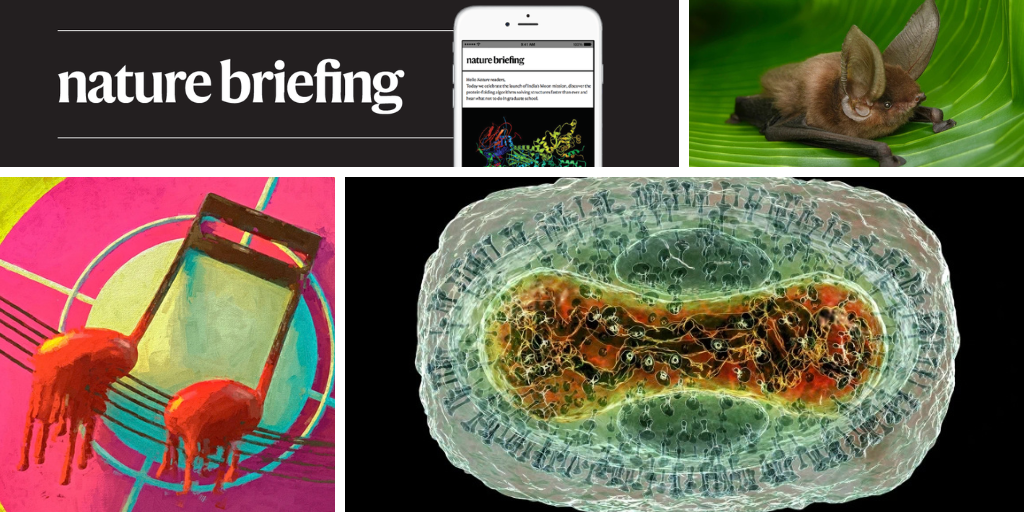
Figure 1 | Madagascar sucker-footed bat (Myzopoda aurita). This species is one of 103 that now has a reference genome available.Credit: Chien Lee/NPL
Bats are special: they’re the only mammals that can fly, they can tolerate viruses without getting sick and they have exceptional longevity and cancer resistance. So scientists are welcoming a tour de force study of bat genomics: the first phase of the Bat1K Project, which aims to generate chromosome-level genomes for all living bat species. Notably, the study suggests that bats evolved in Europe, challenging previous hypotheses of African, Asian or North American origins. “This is a landmark study for bat biology, and for comparative genomics more generally,” writes evolutionary biologist Josefin Stiller in an accompanying Nature News & Views article.
The Washington Post | 8 min read & Nature News & Views | 8 min read
The AlphaFold Protein Structure Database — a repository of predicted structures for nearly every known protein on Earth — has been upgraded to better represent viruses. Researchers added more than 8,000 protein dimers — pairs of interacting molecules — from 23 virus families, all with human-infecting members. The addition is part of the launch of a ‘pandemic preparedness portal’ within the widely used and freely available AlphaFold database. “This is an essential resource for understanding virus diversity, evolution and function,” says virologist Edward Holmes.
Around 10–15% of people taking popular GLP-1 drugs such as Wegovy lose little to no weight — and researchers don’t really know why. Solving this mystery might lead to new medications for people who don’t benefit from currently available drugs, and could make it possible to match individuals to treatments that are most likely to work for them.
Australian Prime Minister Anthony Albanese revealed on Wednesday that an artificial-intelligence agent created by technology giant OpenAI hacked into a government health-care website in June, where it accessed private data. “There will obviously be legal consequences,” Albanese said. OpenAI did not respond to questions about the incident.
The rigour that is required for critical infrastructure such as nuclear power and aviation should also be applied to AI development, argues computer scientist Heidy Khlaaf, the chief AI scientist at the AI Now Institute, who devised the UK AI Security Institute’s testing framework. “Incidents this year, in which AI agents ‘escaped’ their test environments, have sparked widespread concerns about AI safety,” she writes. “Yet the real issue is not rogue AI. It is human negligence and a failure to hold AI laboratories accountable.”
Amid warnings from research leaders that artificial intelligence could kill us all, Nature examines whether the technology might really spell the end for humans. (Nature | 7 min read)