// NATURE NEWS — SPAZIO & SCIENZA
Tuberculosis treatment has advanced — now we need to stop drug resistance dragging us backwards
Ana Cehovin is research lead in epidemics and epidemiology at Wellcome, London, UK.
Search author on:
PubMed
Google Scholar
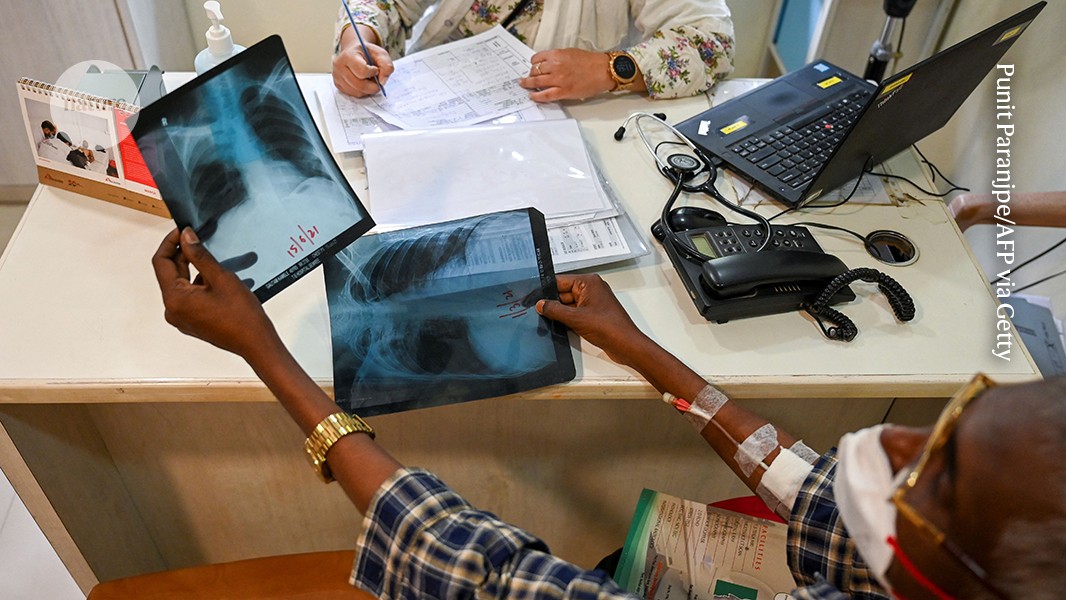
Many people in India have drug-resistant tuberculosis.Credit: Punit Paranjpe/AFP via Getty
In 2022, the World Health Organization transformed the treatment of tuberculosis (TB). It recommended a six-month course of antibiotic pills that include the drug bedaquiline. This is more effective, cheaper and faster to implement than was the old regimen, which took up to 20 months and involved injecting medicines with bad side effects, including hearing loss.
But this treatment is already under threat. Drug resistance is being seen, risking the world reverting to longer, more complex and expensive treatments for TB. A concerning factor is that researchers still have limited understanding of how and why resistance arises.
TB remains the world’s leading infectious-disease killer, causing 1.23 million deaths in 2024. The bacterium that causes the disease can evolve rapidly when it is exposed to a new drug, to evade it. Each medicine that is introduced starts a ticking clock in the race against drug-resistant strains — and a race to understand how resistance emerges.
The rise of ‘nightmare bacteria’: antimicrobial resistance in five charts
Researchers should think about antimicrobial research and development (R&D) not simply as a pipeline of new medicines, but as a balance between developing treatments and understanding how to preserve those we already have before resistance renders them useless.
A drug regimen that has promising results in clinical trials, or even one that works brilliantly at a population level, can still fail if we don’t understand which combinations of medicines, genetic changes in bacteria and treatment conditions allow resistance to emerge.
We need the science that tells us how to use a medicine well, how resistance might be or already is emerging, who is most at risk and how quickly we need to change course to prevent further resistance spread — this evidence generation must all come as part of the innovation process, not after.