// NATURE NEWS — SPAZIO & SCIENZA
Sugar-rich foods exacerbate antibiotic-induced microbiome disruption
Nature
(2026) Cite this article
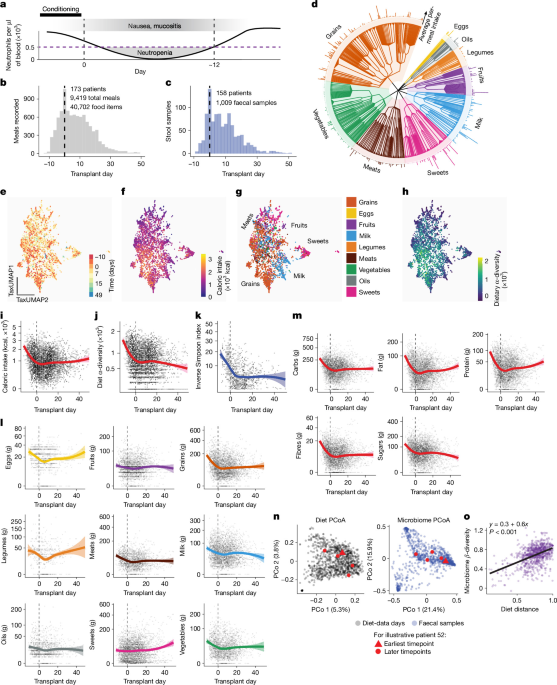
Diet shapes the composition of the gut microbiota1; however, the specific effects of distinct food groups on microbiome dynamics are unclear, particularly in circumstances of extreme perturbation. Here we evaluated the relationship between diet and intestinal microbiome dynamics by precisely tracking 9,419 meals consumed by 173 patients who were hospitalized for haematopoietic cell transplantation and analysing subsequent microbiome changes. Bayesian inference applied to data from 158 patients with paired longitudinal microbiome samples revealed that the intake of sweets and sugars during antibiotic exposure predicted exacerbated microbial dysbiosis, manifesting as lowered α-diversity and greater expansion of the pathobiont Enterococcus. Experiments in mice also showed that sucrose supplementation increased and prolonged antibiotic-induced Enterococcus expansion. These data suggest that avoiding a diet rich in simple sugars during antibiotic treatment may mitigate microbiota disruption. Further studies in independent cohorts will offer opportunities to generalize these findings and evaluate microbiota-sparing interventions.
The intestinal microbiota modulates host metabolism and immunity, and perturbations of microbiome composition are linked to various disease states2. Although a precise definition of a homeostatic human microbiome composition remains unclear3,4, a number of disease states share dysbiotic patterns in microbial community compositions, often characterized by loss of diversity and expansion of facultative anaerobes5. Understanding the factors that influence microbiome disruption and dysbiosis is key to deciphering the interactions between host and commensal organisms and to designing therapeutic strategies that target the microbiome.
Host and environmental factors shape intestinal microbiome compositions; in particular, a major effect of diet has been observed both in mice and humans1,6,7,8,9,10. However, most of these human analyses were either in small dietary-intervention trials of individuals with chronic conditions or of healthy volunteers with unperturbed, stable microbiomes. Severe perturbations, such as those that occur during acute illness or intensive medical treatment are less well understood4,11. Controlled studies in mice and humans have indicated that the recovery of mouse microbiome composition after antibiotics can be impaired or facilitated by withholding or augmenting dietary fibre, respectively10,12,13. Moreover, while some studies suggest that dietary perturbations exert effects on microbial composition within hours14,15,16,17, most human studies have correlated faecal microbiome compositions with long-term habitual diet7,18,19,20 or variations on months-long timescales21,22 and relied on recall-based surveys, the imprecision and limitations of which have been well described23,24. Taken together, while diet is assumed to be a major determinant of microbiome composition, an understanding of precise diet–microbiota interactions in humans under real-world disease and treatment conditions is lacking.
Patients with blood cancers who undergo allogeneic haematopoietic cell transplantation (allo-HCT) are typically hospitalized for several weeks, during which they receive chemotherapy and, frequently, antibiotics. During this time, they exhibit substantial changes in nutritional intake25, as well as severe microbiome perturbation4,26, including loss of α-diversity and expansion of facultative anaerobe organisms, most often Enterococcus27. These shifts are associated with adverse clinical outcomes, including mortality26,27. These microbial–ecological disruptions are driven largely by antibiotics4,28, as well as by intestinal inflammation induced by chemotherapy, irradiation and graft-versus-host disease (GVHD)29,30. Here we hypothesize that nutrition contributes to these microbiome dynamics, and we reasoned that microbiome perturbations o