// ARS TECHNICA — MODA & SOCIETÀ
F1 in Bahrain... in Malaysia: The race needed a software update to start
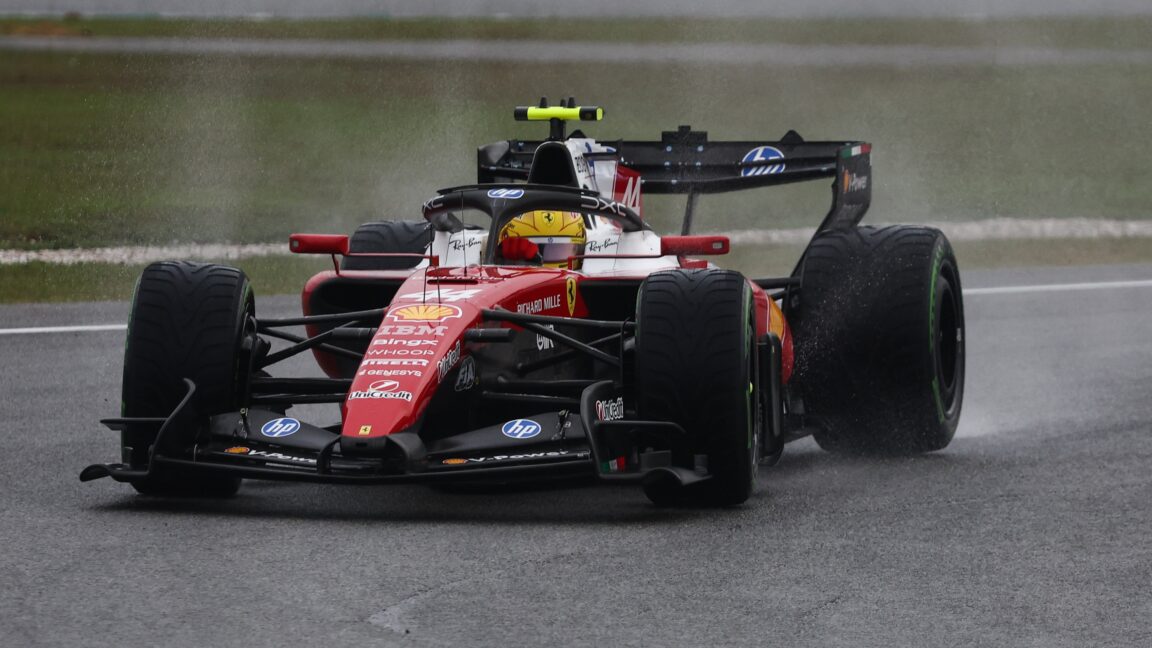
A software bug waylaid half the field and required a race reboot.
Well, it’s safe to say no Bahrain Grand Prix has been affected by torrential rain quite like the 2026 race.
For one thing, it was held several thousand miles from Bahrain itself. The ongoing war with Iran ruled such things out, so the Sepang International Circuit in Malaysia stepped in to fill its spot. One of the best examples of a late-’90s “Tilke track”—named for its designer, Herman Tilke—it’s characterized by a couple of long straights and the always-brutal tropical weather that provides one of the toughest physical challenges on the calendar. And this weekend was no exception.
Heavy rain arrived about half an hour before the start time, delaying things significantly. Although the sport has two different kinds of treaded tires for use in the rain, the full wet tire generates so much spray, and such slow lap times, that it’s essentially only useful for circulating behind the safety car. If it’s wet enough to need it, it will be too wet to see where you’re going. The intermediate tire, by contrast, has much shallower grooves and is good for racing on damp but not soaked tracks, although it quickly overheats and degrades as the track dries.
The organizers decided on two formation laps behind the safety car; circulating at lower speed would allow the drivers to get an idea of the track conditions and let their intermediate tires pump some water off the track surface, the idea went. But that didn’t take into account a bug lurking in the cars’ software.
Driving slowly behind the safety car with reduced hybrid power in some parts of the track due to the extremely wet conditions convinced several of the cars that they were being tricked into breaking a hard-coded rule meant to prevent cheating, triggering an automatic 60-second shutdown of their electric motors that caused chaos as car after car slowed for the one in front, then took varying lengths of time to reboot their systems.
“It was like the Lego race,” said Max Verstappen of Red Bull, referring back to the human-size Lego cars that F1 used for a driver parade at the 2025 Miami Grand Prix. “At some point, we were five-wide on the straight because we couldn’t understand what was going on. Then we did a lap and then I see eight other cars crawling still… I mean that’s not what you want, right, for the sport.”
The race organizers aborted the entire start. The bug had never come up in testing, and the FIA had to hastily write and distribute a software update to fix it. An hour after the first aborted start, the cars lined up on the grid again, ready to finally race.
“In wet conditions, there are some different software settings for the cars for safety reasons to reduce the power in certain sectors from the maximum to a lower level,” explained Nikolas Tombazis, head of single-seater racing at the FIA. “And this year, we’ve had very little wet weather running or none at all, almost. So it wasn’t maybe adequately checked.”
The software was developed by the FIA with the teams and engine makers. “So it’s common software for all cars,” Tombazis said. “And basically there was a combination of events between those software settings and the fact that some cars went incredibly slow during the formation lap and those entered a sort of a bug into the software which was stopping those cars to reaccelerate and to go to normal speeds.”