// TOM'S HARDWARE US — HARDWARE & GADGET
I bought this cheap $65 mechanical keyboard blind, and it ruined me for every other board I own
Sometimes the hardware matters more than the brand on the box
When you purchase through links on our site, we may earn an affiliate commission. Here’s how it works.
Sometimes you need a keyboard, and you need it now. That was where I found myself a couple months ago during local AI testing with one of the Nvidia GB10 boxes on my bench. Those systems are incredibly picky about which wired keyboards they'll work with for some reason, and moving the one known-good board I have on hand between systems under test was becoming a massive headache.
After one too many inconvenient keyboard swaps, I had had enough. I wanted a compact Bluetooth board that I could dedicate to my workbench, and I wanted it now. Testing on that GB10 system couldn’t wait, and I didn't want to get stuck in analysis paralysis. So I hopped on Amazon, filtered my choices down to items with same-day delivery, and found the Epomaker x Aula F75 Pro for just $65.
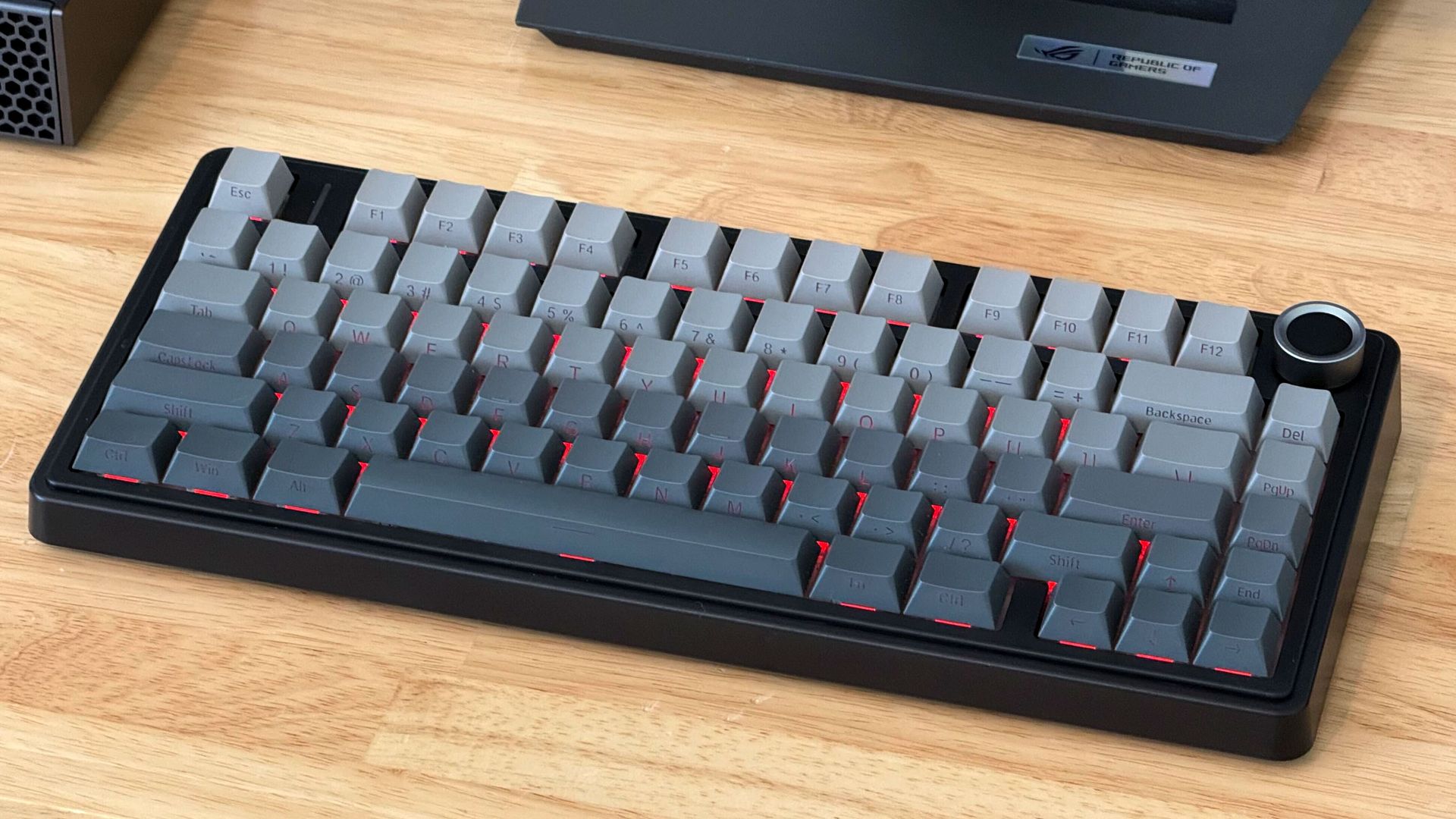
The Aula F75 Pro keyboard is feature packed with Leobog Reaper switches, dual-tone PBT keycaps, a volume knob, and wired, 2.4 GHz, and Bluetooth connectivity, among other features.
I was suspicious of this board at first, given the lack of in-depth independent reviews online and its unfamiliar switches. It uses Epomaker’s Leobog Reaper switches, which didn't map directly to any of the standard Cherry MX switches or their knockoffs that I'm used to.
But according to the spec sheet, they were linear and didn't have an incredibly heavy actuation force, which is the most important spec I look for in a keyboard when protecting my RSI-ravaged wrists. And they claimed to come pre-lubed, which is an upgrade I’ve never performed myself on any of my prior boards. So we were off to a good start.
The rest of the F75 Pro's feature list suggested custom keyboard DNA in its lineage. Spiffy dual-tone PBT keycaps with side legends? Check. A stack of noise-shaping and noise-reducing materials inside, including a cotton layer and a hefty silicone foundation? Check. A dedicated volume knob that doubles as a mute button? You got it.
Throw in wired, 2.4GHz wireless, and Bluetooth connectivity (with multiple Bluetooth pairing profiles), along with customizable RGB LED backlighting, and I was sold. And for such a low price, plus a few bucks extra for same-day delivery, I was willing to risk it if some aspect of this board wasn’t quite up to snuff.
A couple hours later, my Amazon delivery driver dutifully dropped the F75 Pro at my doorstep. And after a few minutes with the printed shortcut guide so I could pair it over Bluetooth, I had it connected to my GB10 box and was typing away in a terminal.