// SPACE.COM — SPAZIO & SCIENZA
Namibian salt flats look like an alien planet | Space photo of the day for Oct. 12, 2026
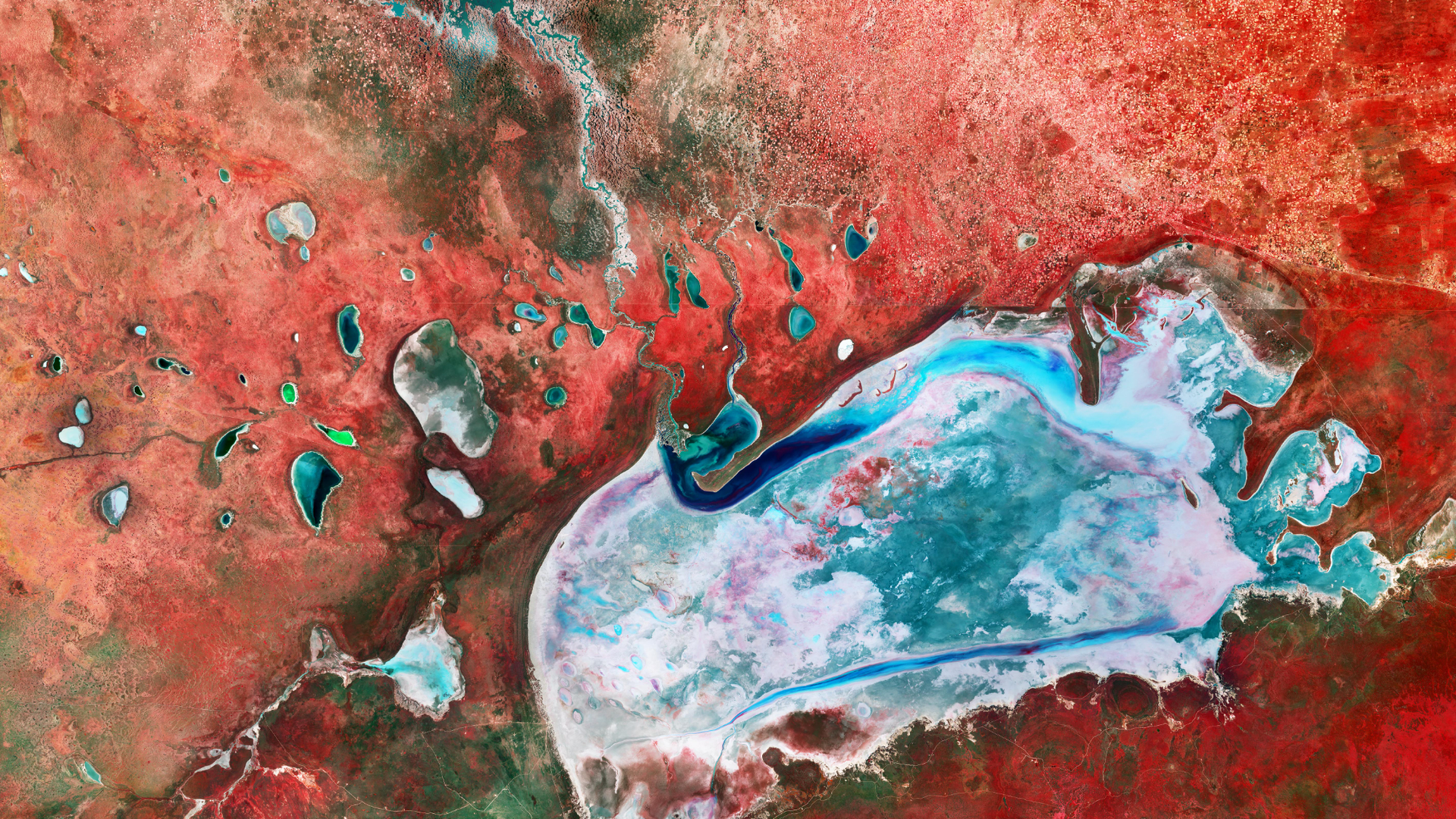
Namibia's biggest salt pan looks otherworldly from orbit.
When you purchase through links on our site, we may earn an affiliate commission. Here’s how it works.
A neon blue pool swirls amongst what look like clouds, all surrounded by a bright red stretch of land. This might look like the surface of an alien planet, but it's actually a salt flat right here on Earth, seen from space.
Etosha National Park in northern Namibia hosts the largest salt pan, or piece of land covered with salt and other minerals, in the country.
This image of the Etosha Pan was captured on April 5 of this year by Europe's Copernicus Sentinel-2 mission, which consists of two identical satellites in the same orbit.
The Sentinel-2 pair observe and capture imagery of our planet in different wavelengths using a high-resolution multispectral imager that can see 13 different spectral bands, or ranges of wavelengths.
By looking at our planet from space, and observing it through different wavelengths and colors, we can better understand Earth's topography and how it changes over time. With this image, researchers can better understand this landmark in Namibia, a nation in southwestern Africa.
While this image is strikingly beautiful, the Etosha Pan doesn't exactly look like this in real life. If you were standing close to the pan in the national park, it would look bright white.
While this is a real image, false color has been added, which allows scientists to separate different types of vegetation and topography.
With the false color, the vegetation surrounding the salt pan appears in shades of red, while the salt pan itself looks like a mix of bright, light and dark blues with cloudy sediment floating around.