// SPACE.COM — SPAZIO & SCIENZA
A dead Soviet satellite just broke apart in orbit (again). Experts say it's part of 'a worrying trend'
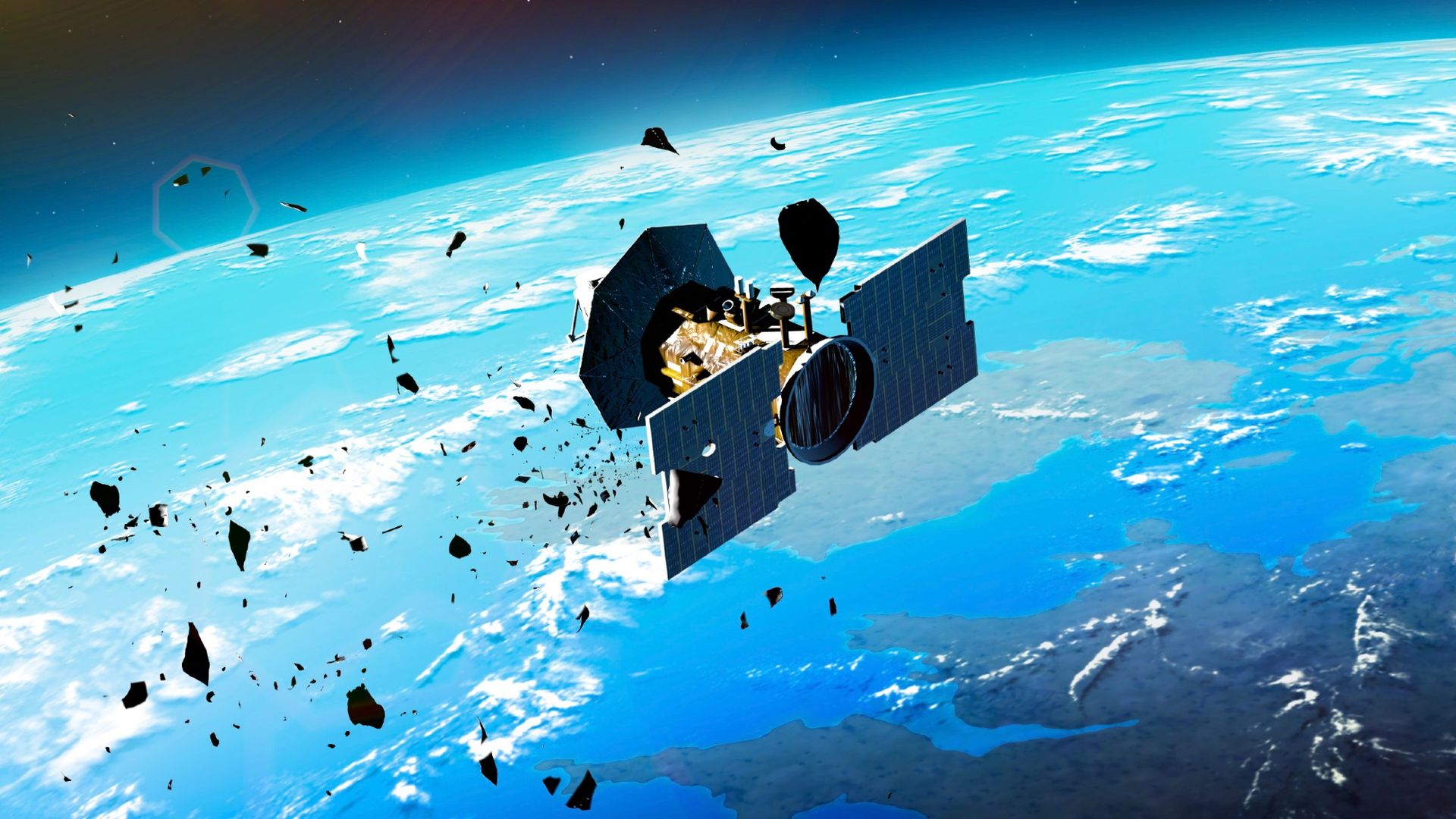
The satellite previously broke apart in March 2004.
When you purchase through links on our site, we may earn an affiliate commission. Here’s how it works.
An old Soviet satellite has fragmented into multiple pieces in low Earth orbit, the latest in a string of recent breakup events that suggest satellites may be facing an increased risk of debris impacts.
The space domain awareness company LeoLabs detected a "debris generating event" in the known orbital location of the Soviet-era Meteor 2-7 weather satellite as it passed over one of their sites in Western Australia. The company said that an estimated "tens of fragments" were detected in the vicinity of the spacecraft, which launched in 1981.
The breakup of Meteor 2-7 follows on the heels of several other satellite fragmentation events in recent months, including that of the U.S. Cold-War-era spy satellite USA 32, which was confirmed to have disintegrated in September 2026. "This is the latest in a series of events we've seen over the last 6 months, LeoLabs wrote on X. "Together, they point to a worrying trend for space safety and security, and underscore the critical need for persistent sensing."
Orbital debris expert Jim Shell pointed out on X that Meteor 2-7 previously broke apart in March 2004. Shell added that the event occurred at an altitude of around 530 miles (855 kilometers), where, he said, "debris spatial density is highest."
Aside from the September breakup of USA 32, a Chinese rocket body also disintegrated in low Earth orbit (LEO) in late August 2026, according to LeoLabs. A SpaceX Starlink satellite experienced a fragmentation event just over four months earlier.
And in January 2026, a Russian "inspector" satellite disintegrated, although in a much higher geostationary orbit.
For years, experts have been warning that the ever-increasing numbers of satellites being placed into orbit are raising the risk of collisions and fragmentation events, which could have a cascading effect; as more satellites break up, they create more pieces of debris, which can then put other spacecraft at risk.
And data support those warnings. In 2005, the European Space Agency (ESA) reported it was tracking about 16,000 pieces of debris in Earth's orbit. By the time it reported the same data in 2026, ESA was tracking more than 44,000, an increase of about 180%. Even though the majority of those fragments are tiny, the high velocities at which they orbit mean they carry a lot of energy, making them capable of causing serious damage if and when they impact spacecraft.