// SPACE.COM — SPAZIO & SCIENZA
The Draconid meteor shower peaks tonight before bedtime. Here's how to see it
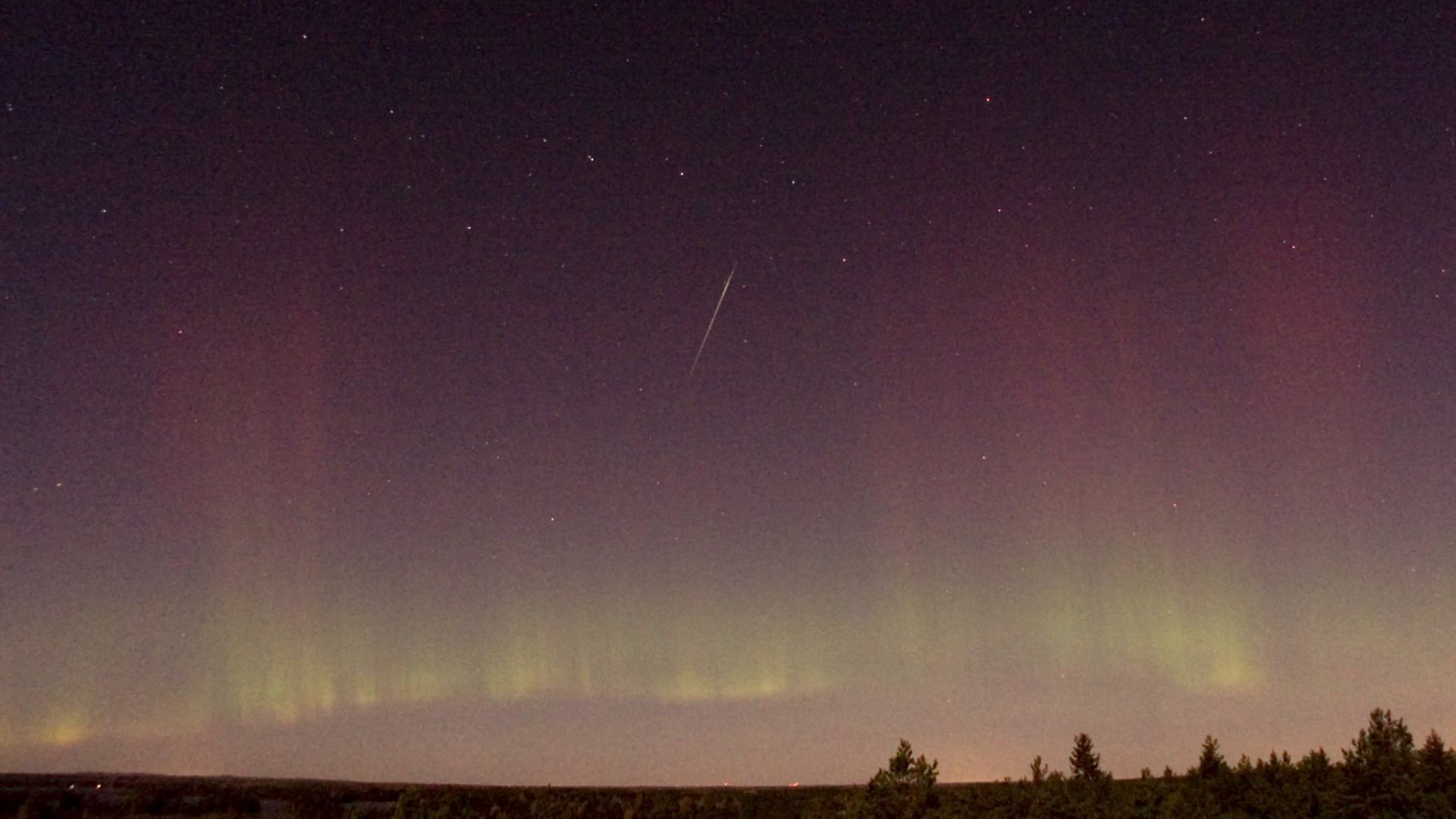
The Draconid meteor shower reaches peak activity on the evening of Oct. 8 in the beautifully dark skies ahead of the October new moon.
When you purchase through links on our site, we may earn an affiliate commission. Here’s how it works.
Heads up stargazers! The Draconid meteor shower peaks tonight (Oct. 8) and you don't even have to stay up late for a chance to see them.
Draconid meteors can be spotted from Oct. 6 to Oct. 10 as Earth barrels through the debris stream left by Comet 21P/Giacobini-Zinner, which returns to the inner solar system once every 6.6 years to refresh the trail of meteoroids that trigger the annual shower.
Unlike most meteor showers, the Draconids are best viewed in the evening just a few hours after sunset, making them wonderfully accessible to newcomers and veteran meteor hunters alike!
Draconid shooting stars will appear to streak away from an apparent point of origin, or radiant, located in the constellation Draco, the "dragon", whose faint stars can be found shining high overhead in the northwestern sky after sunset in October.
The Draconids are expected to reach maximum activity around 9 p.m. EDT on Oct. 8 (0100 GMT on Oct.9), making it the ideal time to spot shooting stars belonging to the shower for stargazers in the Northern Hemisphere, according to NASA.
Find a patch of sky roughly 40 degrees away from the radiant — where the meteors will be at their most spectacular — and allow 30 minutes for your eyes to fully adapt to the dark. Under ideal conditions, the Draconids can produce around 5 meteors per hour during their peak,but are capable of producing spectacular displays on rare occasions.
One such outburst took place in 1933, when observers in Europe watched an astonishing 500 shooting stars streak across the sky each minute. In 2018, another brief outburst sent rates soaring above 100 meteors per hour, according to EarthSky.
The EOS R8 delivers the essential interval shooting functionality you need to capture meteors without bursting the bank. It has a 24MP full-frame sensor and -6.5 EV low-light autofocus. Pair it with the budget RF 16mm f/2.8 STM lens to capture a wide portion of the sky.