// SPACE.COM — SPAZIO & SCIENZA
South Korea launches Nuri rocket carrying 15 satellites, its 1st liftoff of 2026 (photo)
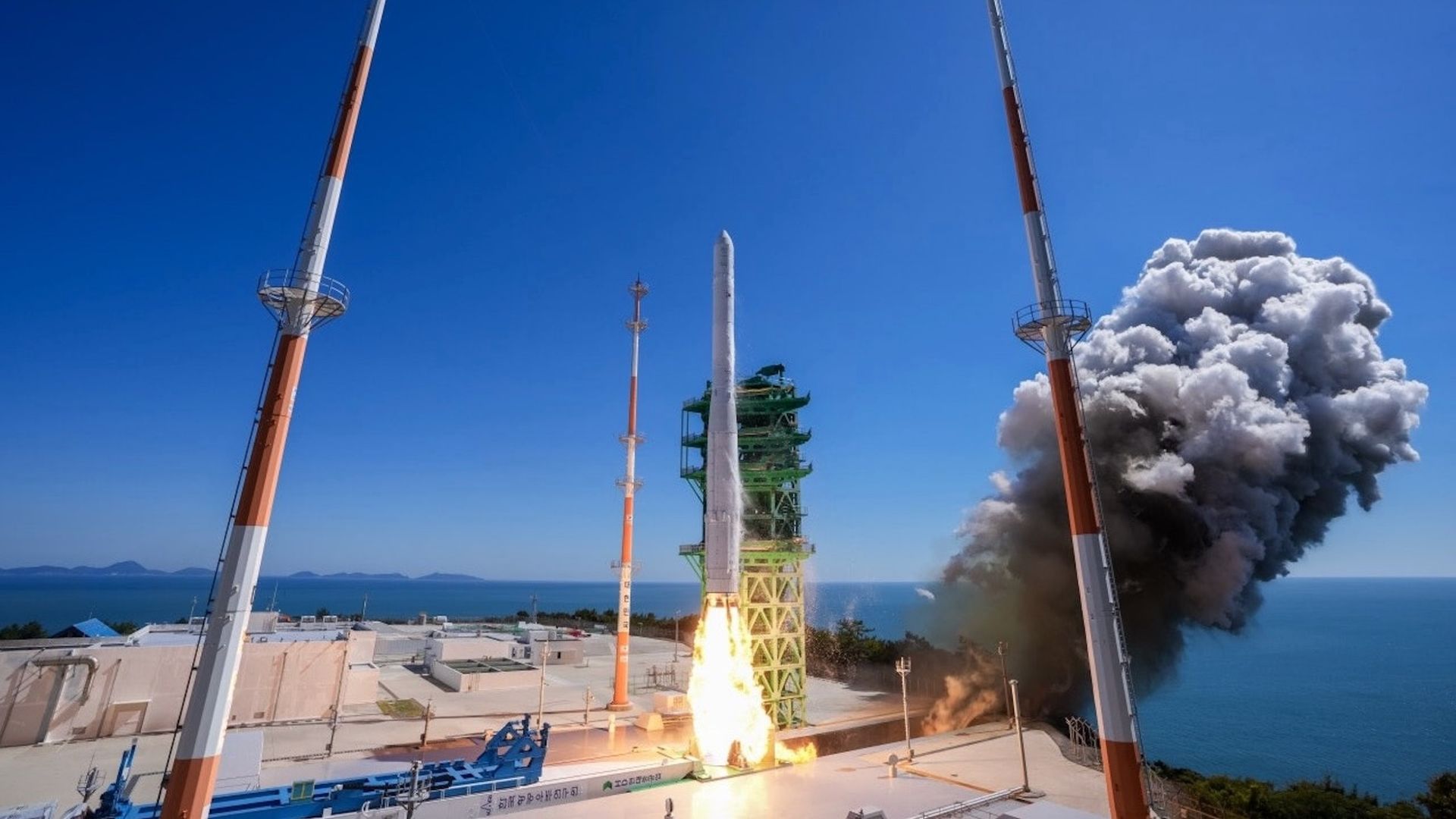
Almost everything went well on the flight, which was the fifth to date for Nuri.
When you purchase through links on our site, we may earn an affiliate commission. Here’s how it works.
South Korea just launched its first orbital mission of the year.
The milestone came on Tuesday night (Oct. 6), when the homegrown Nuri rocket lifted off from the nation's Naro Space Center, carrying 15 satellites skyward.
Liftoff occurred at 11:25 p.m. EDT (0325 GMT and 12:25 p.m. local time on Oct. 7). Almost everything went well: All but one of the payloads was successfully delivered to low Earth orbit as planned, according to the state-run Korea Aerospace Research Institute (KARI).
Five of those payloads are microsatellites for South Korea's nascent New-space Earth Observation Satellite Constellation for National Safety (NEONSAT) network.
"Each NEONSAT weighs less than 100 kilograms [220 pounds] and carries an electro-optical camera capable of distinguishing objects as small as 1 meter [3.3 feet] in black-and-white images and 4 meters [13.1 feet] in color images," South Korea's Yonhap news agency wrote in a prelaunch preview.
"The satellites will monitor the Korean Peninsula and surrounding areas for national security and disaster response," Yonhap added.
Two NEONSAT satellites had launched before today, both aboard Rocket Lab Electron vehicles. The first went up in April 2024, and the second flew in January of this year. Five more will launch atop a Nuri next year, rounding out the constellation, according to Yonhap.
The other 10 satellites that went up tonight are cubesats, which were provided by a variety of operators. And it was one of these cubesats that experienced difficulty on Tuesday night: PERSAT02, which was developed by the South Korean company Quaternion, failed to deploy, KARI wrote in an X post about two hours after launch.