// SPACE.COM — SPAZIO & SCIENZA
On this day in space! Oct. 16, 1975: NASA launches the 1st-ever GOES weather satellite to watch Earth from space
When you purchase through links on our site, we may earn an affiliate commission. Here’s how it works.
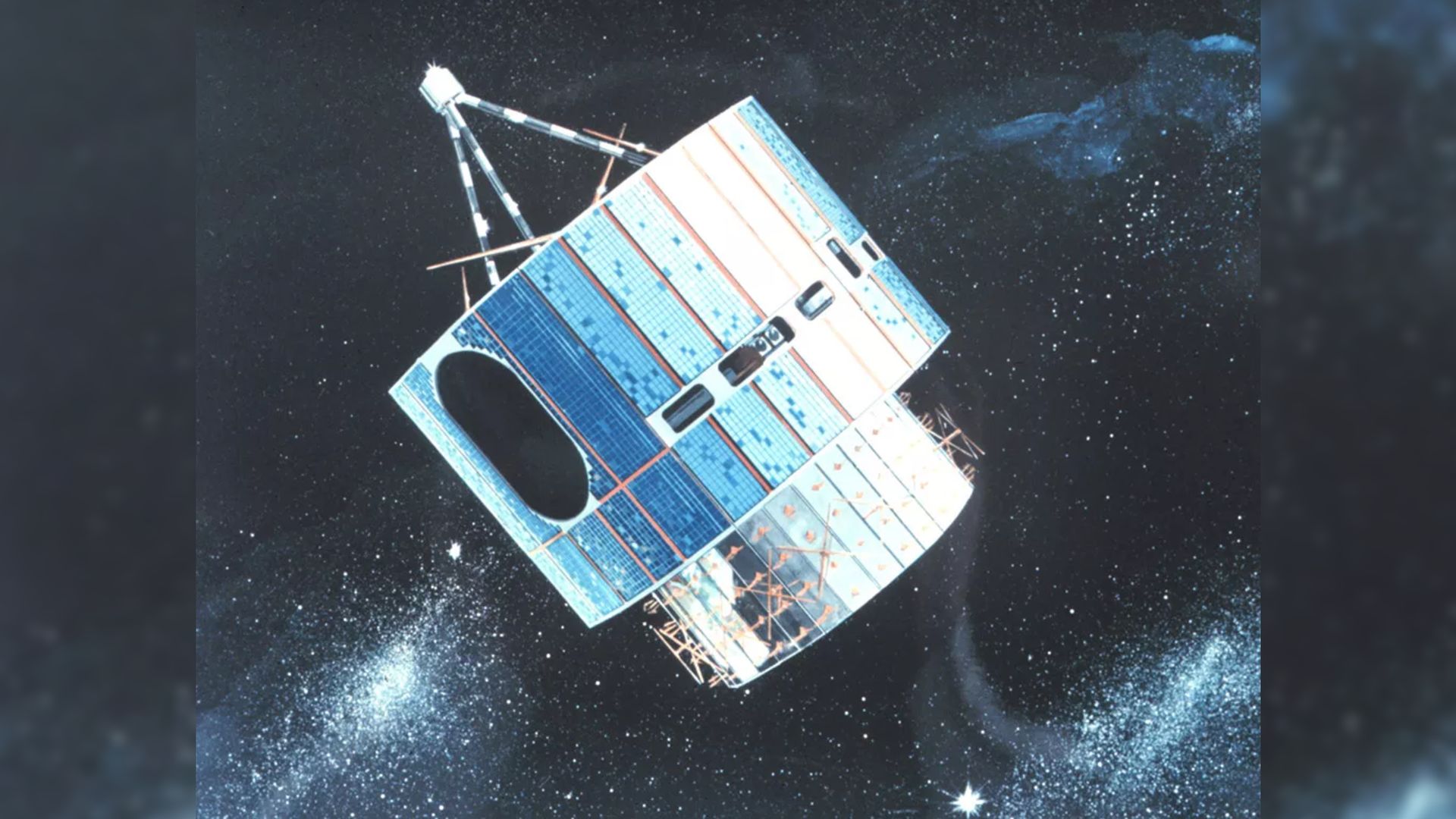
On Oct. 16, 1975, NASA launched the first operational GOES satellite!
GOES-A was the first in a series of weather satellites that NASA jointly operated with the National Oceanic and Atmospheric Administration (NOAA).
The name is short for Geostationary Operational Environmental Satellite. GOES-A launched on a Delta rocket from Cape Canaveral, Florida. GOES satellites all have a geostationary orbit, which means they always face the same part of Earth — in this case, the Indian Ocean. Once GOES-A became operational, it was renamed GOES-1.
The GOES satellite fleet has grown over the years, and is a critical link in the chain of satellites tracking Earth's weather from space. In 2016, NASA and NOAA launched GOES-R, the first in a new next-generation series of GOES weather satellites, with more to follow in ensuing years.
With weather forecasts so prevalent (you can literally find them in the palm of your hand with a smartphone), it may be hard to think that such daily information wasn't always readily available. But that was the case when NOAA began building what has become an essential part of the U.S. weather monitoring fleet of satellites.
GOES-A, or GOES-1 as it was later called, "gave forecasters their first near-real time look at atmospheric conditions from a fixed location," NOAA officials said in an overview.
The satellite launched from Pad 17A at what is now the Cape Canaveral Space Force Station and returned its first photo just nine days after liftoff, on Oct. 25, 1975. The satellite was equipped with a Visible/Infrared Spin Scan Radiometer (VISSR) to capture Earth observations in daylight and nighttime to track clouds and surface temperature.
The spin-stabilized satellite was able to observe Earth just 10% of the time, but was still the most up-to-date satellite observations for weather forecasters.
GOES-1 was active until March 7, 1985, when it was ultimately decommissioned. But during that time, NASA and NOAA launched five more successors, GOES 2, 3, 4, 5 and 6.