// SPACE.COM — SPAZIO & SCIENZA
Why can you see the moon during the day? This week is the perfect time to find out
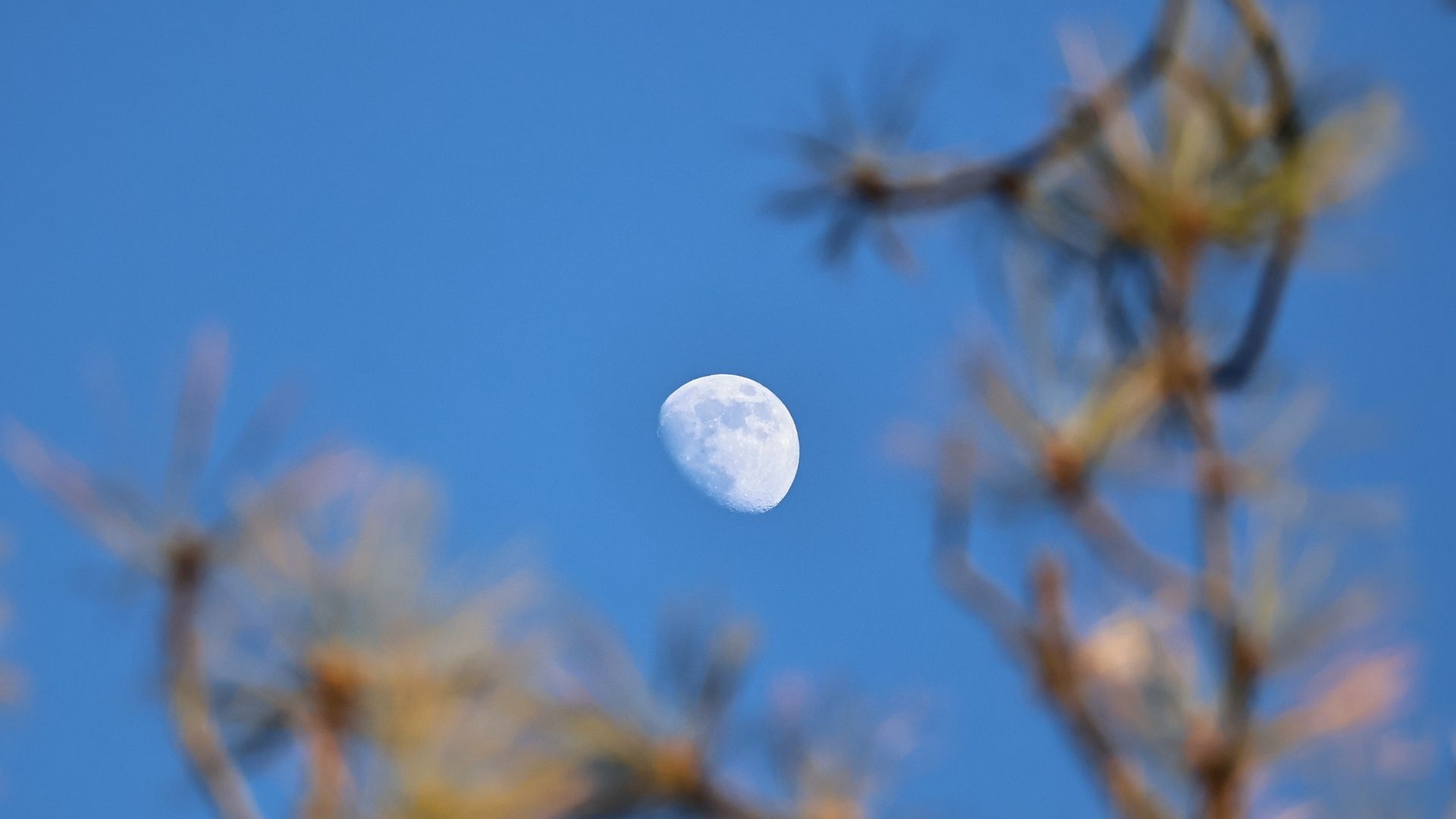
You don't have to wait until dark to see the moon. Here's why it appears in broad daylight — and why this week is a particularly good time to spot it.
When you purchase through links on our site, we may earn an affiliate commission. Here’s how it works.
I know perfectly well that the moon comes out during the day. I have known this for decades. Yet whenever I spot it in a blue afternoon sky, some primitive part of my brain still thinks it has turned up early.
I'm certainly not the only one. Many people don't understand how it could be visible in daylight. In their eyes, the moon is a nighttime object. Why? Because that's when they notice it — it appears brighter.
We tend to think of the sun as belonging to the day and the moon to the night because that's how they're usually presented to us as children. Astronomically, it makes little sense. The moon spends plenty of time above our horizon while the sun is also up — it spends half its time in the daytime sky, in fact.
If the moon, pale but unmistakable, looks slightly out of place against a blue sky, it's not — you are. This week is a great time to get used to seeing it there. Just past first quarter, the moon will spend each afternoon hanging in the daytime sky, becoming easier to spot as the sun sinks towards the horizon.
The moon reached first quarter on Sunday, Oct. 18, and is now waxing toward full moon, which occurs early on Monday, Oct. 26 (Oct. 25 in some time zones). That puts it in the right part of its orbit to be conspicuous during the late afternoon this weekend.
Here's the useful bit to remember. Around first quarter, the moon rises roughly around midday. As it waxes towards full, it rises progressively later in the afternoon. By full moon, it rises around sunset.
That makes the days immediately after first quarter an excellent time to get into the habit of finding the moon before sunset. On Monday, Oct. 19, look southeast in the afternoon for a moon just over half-lit. Each afternoon this week, it will become a little more illuminated, move farther east against the background stars, and appear progressively later in the day.
You don't need to wait until dusk. In fact, that's the point. Start looking during the afternoon, when the sun is still well above the horizon. Once you find the moon, it can be surprisingly conspicuous against the blue sky.