// SPACE.COM — SPAZIO & SCIENZA
Astroscale proposes fleet of 'bodyguard' spacecraft to protect satellites from orbital attacks
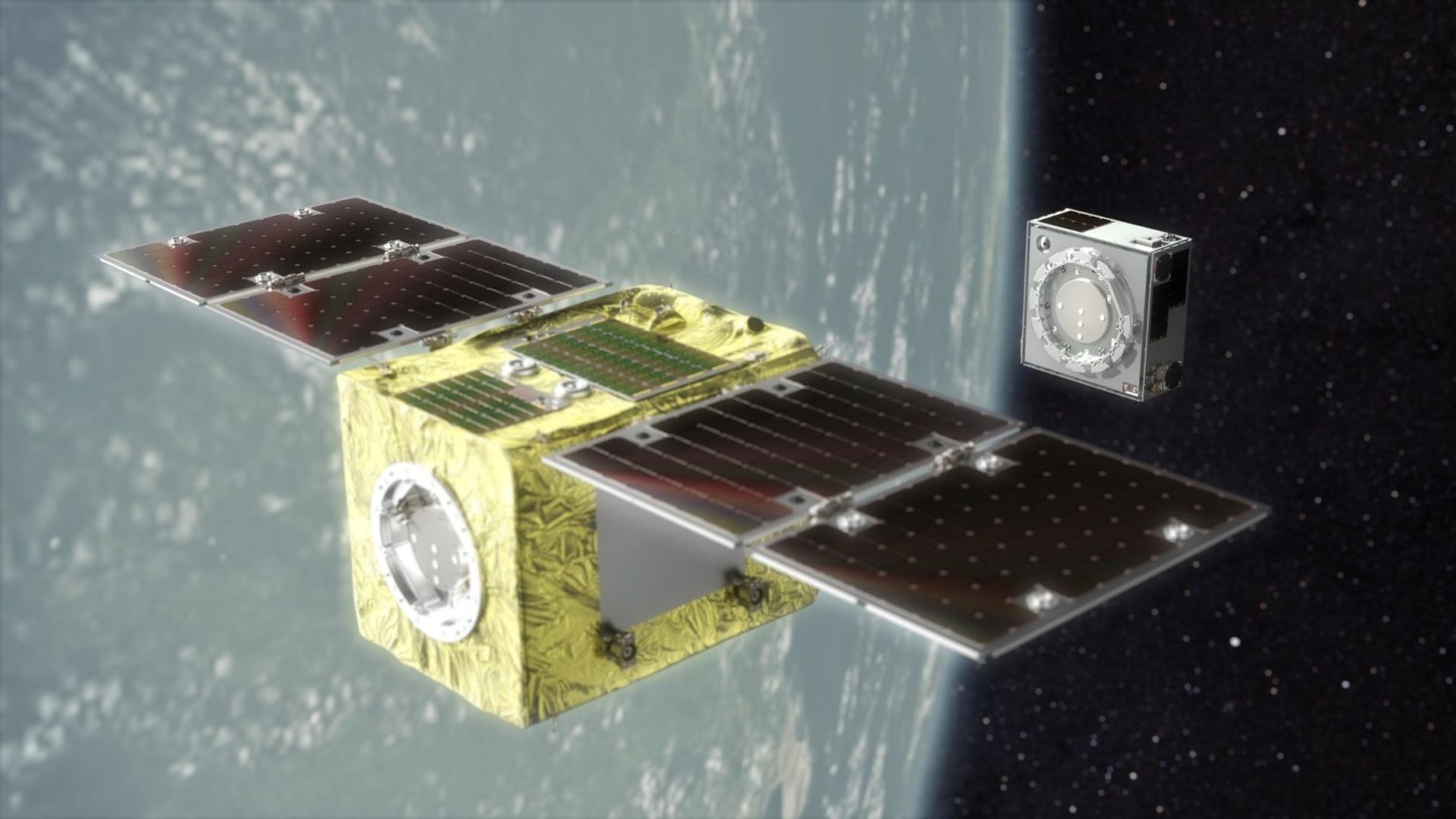
Technologies developed to remove space junk and fix broken satellites can be repurposed to build fleets of bodyguard spacecraft to protect important assets from attacks.
When you purchase through links on our site, we may earn an affiliate commission. Here’s how it works.
Technologies developed and tested in orbit to remove space junk and fix broken satellites can be speedily repurposed to build fleets of bodyguard spacecraft to protect important satellites from adversary attacks, space clean-up company Astroscale thinks.
Astroscale made history with its 2024 up-close in-orbit inspection of a discarded Japanese rocket stage during the pioneering ADRAS-J mission in low Earth orbit (LEO), the region of space below altitudes of 1,200 miles (2,000 kilometers).
The firm's ELSA-D mission, which ran from 2021 to 2024, was the first commercial endeavor to demonstrate orbital capture technologies in LEO. Now, this technology can come in handy as Western space assets face increasing threats from Russia.
Speaking on the sidelines of an event in London earlier this month, Alex Godfrey, Astroscale's head of defense, said the company could have a protector spacecraft ready for launch in under three years.
"In in-orbit servicing, we have to achieve very high levels of agility to be able to dock and close to a distance of zero meters to refuel something or remove it from orbit," Godfrey told Space.com. "With space control, you're rarely getting quite as close, so in some ways it's simpler because you are further away."
Space control — a military term for ensuring the space around Earth remains orderly and peaceful — is quickly becoming a hot talking point. Godfrey's remarks came just as the world witnessed in shock as Russia made close-up maneuvers around a radar satellite owned by Finland headquartered Earth-observation company ICEYE. The October incident, described by experts as the first rendezvous of two active satellites in low Earth orbit conducted without the consent of the target, raised concerns Russia may be preparing to damage the satellite, which is part of a fleet providing critical intelligence to Ukraine.
U.S. Under Secretary of State Thomas G. DiNanno described Russia's actions on X as "threatening behavior" and "consistent with on-orbit weapons operations."
The ICEYE incident is only the latest in a long string of activities conducted by Russia in space designed either to eavesdrop on or interfere with the activity of critical Western space assets. The Luch-1 and Luch-2 satellites have been stalking Europe's and America's communications satellites in geostationary orbit — the busy region 22,000 miles (36,000 km) above the planet where satellites have a fixed view of a portion of the globe—since 2014. Germany's military space command chief Major General Michael Traut admitted earlier this year that the Luch spacecraft have been spying on European strategic communications in space for years.