// SPACE.COM — SPAZIO & SCIENZA
Halloween night sky 2026 — Saturn, shooting stars and a space station await US stargazers
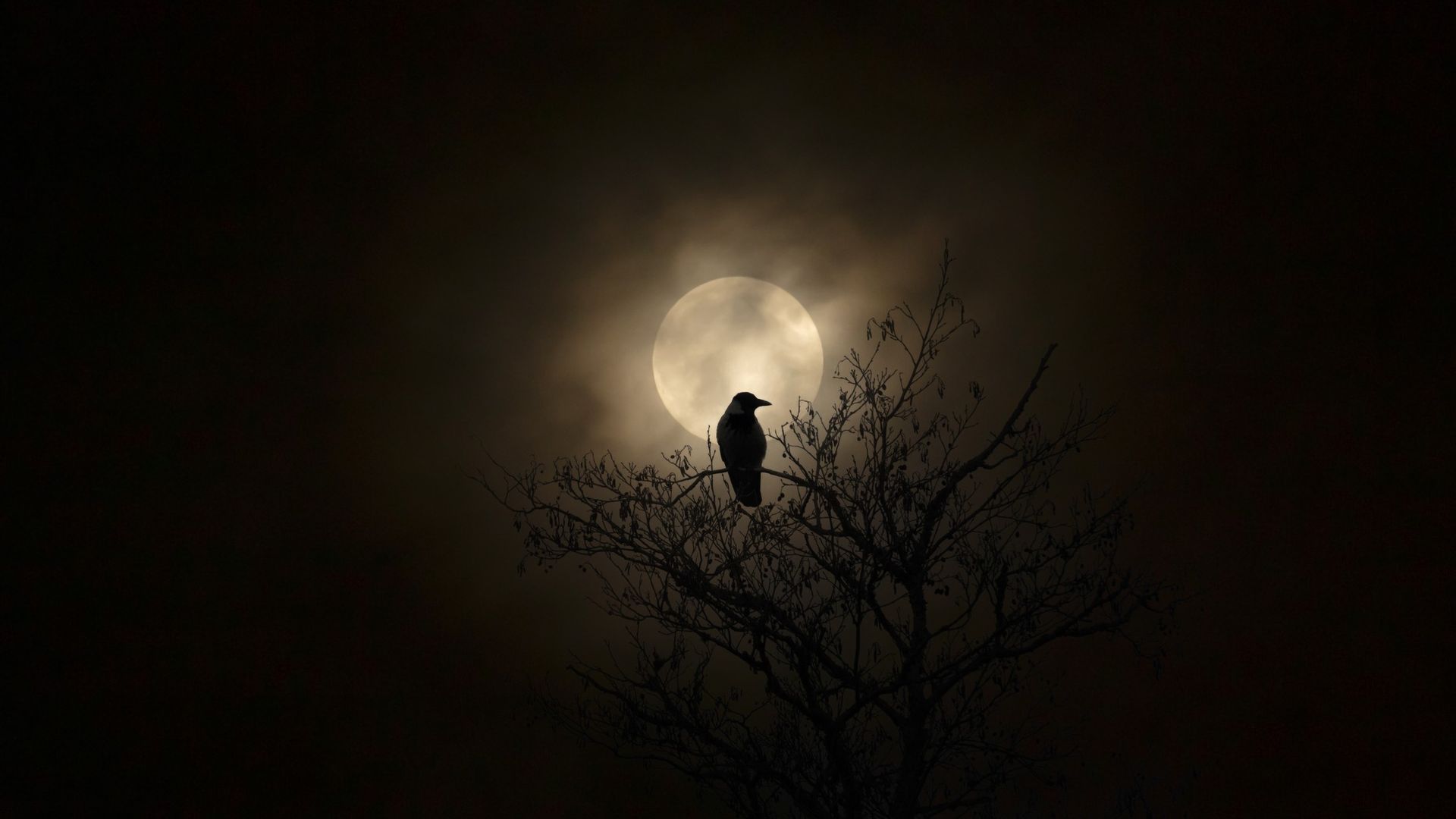
From Saturn's spectacular rings to Halloween fireballs and a space station flyover, there are plenty of celestial treats in store this Halloween. Here's when and where to look.
When you purchase through links on our site, we may earn an affiliate commission. Here’s how it works.
There could be more than just ghosts and ghouls lurking in the skies this Halloween! From Saturn's spectacular rings to shooting stars and even a space station flyover, the night sky has a few treats of its own in store for U.S. skywatchers on Oct. 31.
Based on the latest national forecast, skies will be mainly clear on Saturday evening over most of New York State, northeast Pennsylvania, northern New Jersey and New England as well as a swath of the southern and central Great Plains, central Rockies, a portion of the Pacific Northwest and central and south Florida, as costumed kids arrive at the door looking for candy or some other Halloween treat.
Temperatures will be mostly in the chilly 40s across the Northeast US, upper 50s and 60s for the nation's midsection, warm 70s to near 80 for the southern US, including Florida and the Gulf Coast, and 40s for much of the western US. Unfortunately, a storm moving across the nation's heartland may spell rainy skies for parts of Iowa and Nebraska, south to the Gulf Coast.
For those blessed with a generally fair evening, there will be views of mid-autumn stars and constellations plus a bright planet shining prominently in the early evening sky. If you plan to accompany children around your neighborhood, you might want to enlighten them by pointing out some of those objects that will be visible in the sky. Better yet, if you have a telescope, give your visitors a treat of a different kind: Give them a close-up view of some of those celestial sights.
At around 7 p.m. local time, tell your young audience to make a clenched fist with their hands and then hold them out at arm's length. Now, tell them to go "two fists" up from the east-southeast horizon and they will see a bright star, shining with a yellow-white hue. Now, direct your telescope toward that "star" and when you gaze through the eyepiece, you will not be looking at a star at all . . . but a planet!
This sixth planet out from the sun, just might be the most beautiful of all. Its rings are still readily evident, although currently they appear somewhat edge-on with the south face tilted only about 6 and a half degrees to our line of sight. A telescope magnifying 30-power will bring them out; they appear to bisect the ball of the planet. While this is far from their appearance compared to other years, the view should still look impressive to those who have never seen the ringed planet for themselves.
Because they are active over Halloween, the Taurid meteor shower is sometimes called the "Halloween Fireballs." The bits of debris that make up the Taurids are a little larger than average, so they can result in brighter meteors and even fireballs, or exploding meteors (called bolides), that streak across the sky and leave incandescent trains in their wake. While they are most active during the second week of November, a few forerunners can show up on Halloween night, darting from out of the east-northeast part of the sky. So, if you or your young visitors see something resembling a flare from a Roman candle sweeping majestically across the evening sky, it may very well be a Taurid meteor.
Not the International Space Station, but the Tianhe-1 core module, the first module to launch of the Tiangong space station. It was launched into orbit on 29 April 2021, as the first launch of the final phase of the Tiangong program, part of the China Manned Space Program (Project 921). On Halloween evening, Tianhe-1 will be following a track from Chicago to New York at an altitude of 240 miles (385 km) and should be readily visible to the naked eye across the Northeast US within a few minutes of 7 p.m. EDT, wherever skies are reasonably clear.