// KOTAKU — GAMING
Going Back To Kingdom Hearts’ Tarzan Level Is About To Make Me Crash Out
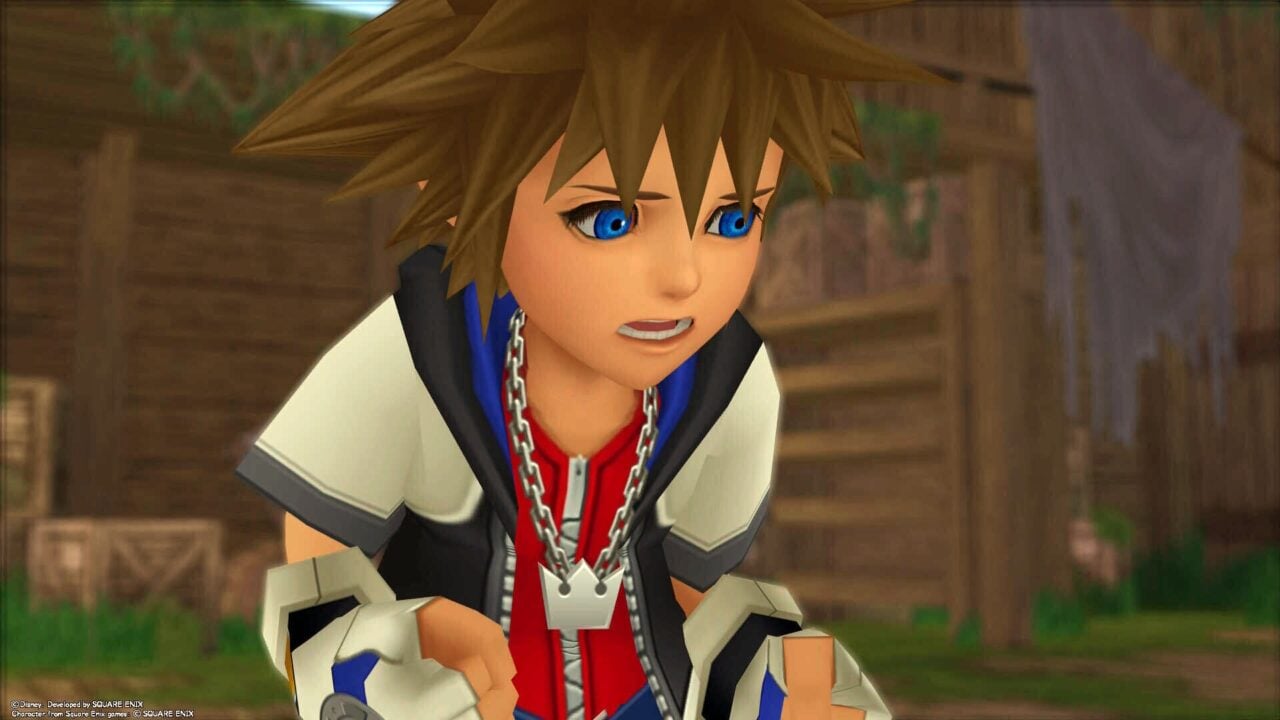
All right, we’re one month into Guiding Key, Kotaku’s year-long Kingdom Hearts replay, and that means it’s time for our one-month check-in! For years I’ve heard people say that the first Kingdom Hearts has aged poorly and you should just skip it. “Nonsense,” I thought. There wasn’t a chance in hell that I would skip the original adventures of Sora, Donald, and Goofy. That game is so special to me, surely my love for some of its iconic moments would give me the nudge I needed to overcome Square Enix’s nearly 25-year-old jank and awkwardness, right?
Admittedly, I’ve been having trouble getting through Kingdom Hearts due to various unrelated circumstances (I moved apartments this month and also BioWare was shut down so I’ve been very busy in my daily duties here at Kotaku), but also, every time I’ve opened the game I’ve been met with some crazy flimsiness that I guess I just didn’t know enough at the time to recognize as the serious flaws they are.
Kingdom Hearts wants to be a lot of things, and it’s certainly pretty ambitious for a 2002 PS2 game. But Square wasn’t one to play it safe, so that would’ve been par for the course. It’s an action game, an RPG, a space flight combat sim, and, perhaps most regrettably, a platformer.
Sora’s notoriously floaty jump has been the bane of my existence in this replay. Trying to get this boy’s big-ass shoes to land where I want them to has been particularly difficult in its finicky recreations of Disney worlds, and nothing quite captures that like the Tarzan world called Deep Jungle. Sora and friends move through this world by jumping, swinging, and even grinding on the jungle’s various plants and platforms. In many platformers, the challenges are made less frustrating by the fact that you’re offered an immediate redo when you fall from your intended path. Deep Jungle, however, has layers to its map such that, if you fall from one, you’ll go down to the other, which means that every time you fall from a vine or miss a landing, you’re falling down to another level, and getting back up to where you were is tedious as all shit. Here’s a clip from friend of the site Jesse Vitelli that illustrates it all pretty well.
In general, movement has been one of my biggest issues with this game during my replay. Like yeah, it’s dated, but the PS2 era had a lot of really tight and snappy action games. In Kingdom Hearts, however, Sora’s floatiness makes any jump feel like a risk, which frustrated me to the degree that at one point I had to put my Switch 2 down and go play Overwatch to be mad at something else.
On a more positive side, what has stuck out to me in these early worlds is just how much Square Enix was clearly allowed to play with the Disney source material in cool ways, even though they definitely feel smaller than I remembered them being. Wonderland is dramatically smaller than I recalled, which isn’t too much of a bummer because it doesn’t move me as much as the other two early Disney worlds. Despite my grievances with the running and jumping of it all, Deep Jungle, with its portrayal of Tarzan villain Clayton as basically Just a Guy controlling Heartless is one of the earliest moments of Square Enix’s dark fantasy perfectly blending into a Disney world when one might think them entirely incongruous.
The standout in this early batch of Disney worlds, however, is far and away the Olympus Coliseum. What it lacks in scope, it makes up for in being one of the most intriguing marriages of Disney and Final Fantasy that Square pulls off early on. Though there are literally only three “rooms” in this world, Square does a lot with the Hercules setting with very little. What could easily have been just a glorified stage for challenges and boss fights instead sets up some of the most intriguing crossovers in the game. Cloud Strife, the brooding hero of Final Fantasy VII, is also here to take part in Phil’s games, specifically to kill Hercules on behalf of Hades. As a result, you have to fight him, an