// SPACE.COM — SPAZIO & SCIENZA
NASA's Swift space telescope is about to crash to Earth. Where will it fall?
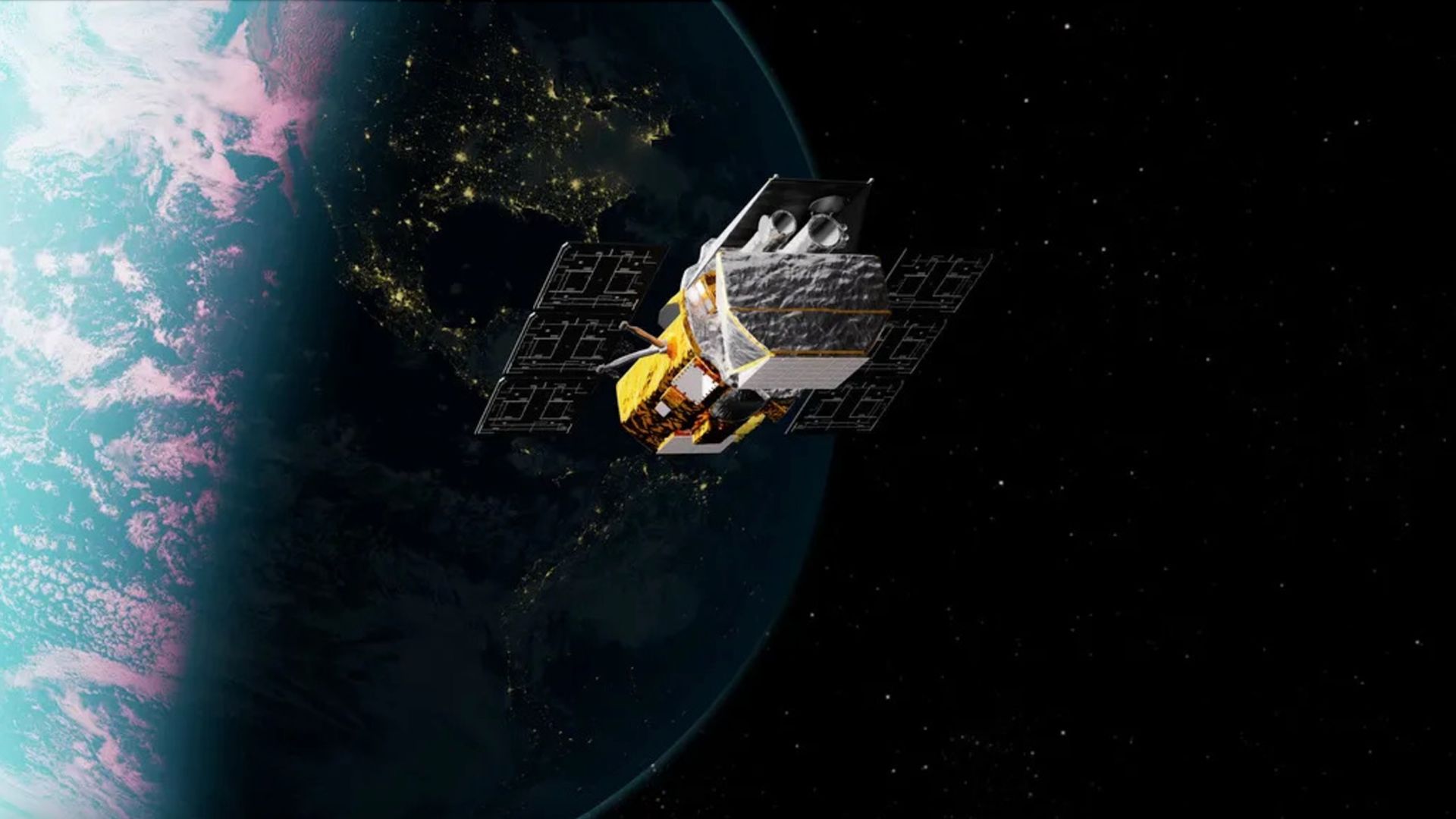
Swift is expected to crash back to Earth in the next few days.
When you purchase through links on our site, we may earn an affiliate commission. Here’s how it works.
NASA's Swift space telescope is expected to crash back to Earth in the next few days.
The Neil Gehrels Swift Observatory will reenter Earth's atmosphere in an uncontrolled fashion, after a robotic rescue mission failed to boost the scope to a higher orbit.
Swift launched to Earth orbit back in November 2004. Over the next two decades, it studied gamma-ray bursts — the most powerful explosions in the universe — and other cosmic objects and events using a trio of telescopes: a Burst Alert Telescope (BAT), an X-Ray Telescope (XRT), and its Ultraviolet/Optical Telescope (UVOT).
On Oct. 20, NASA reported that Swift's orbit had decayed to 171 miles (275 kilometers) above Earth and that the roughly 3,300-pound (1,500-kilogram) observatory was no longer able to compensate for the effects of the increased drag. It entered safe mode, followed by Swift's operations team at Pennsylvania State University sending a command to the spacecraft that effectively ended its operations ahead of its destructive and fiery nose-dive.
It's unclear at the moment exactly when and where Swift will plunge to Earth. But researchers definitely have their eyes peeled.
In physics fashion, for the most part, what goes up must come down — with more space hardware to follow.
Thanks to the growing surge in low Earth orbit constellations and technology refresh cycles, there are 10 times more objects reentering per year than there were just five years ago, said Darren McKnight, a senior technical fellow at LeoLabs, a company that keeps a watchful eye on what's going on above our planet.
"It is unfortunate that Swift was not 'reorbited,' but from a reentry hazard perspective it is a small portion of the stuff coming back in. The rub on this, of course, is that, while many people bemoan the reentry of more objects, I am much more upset about the rapid rate of abandoning massive objects above 400 miles [644 km]," McKnight told Space.com.