// ITS FOSS — LINUX & OPEN SOURCE
Fedora 45 Release Date and New Features
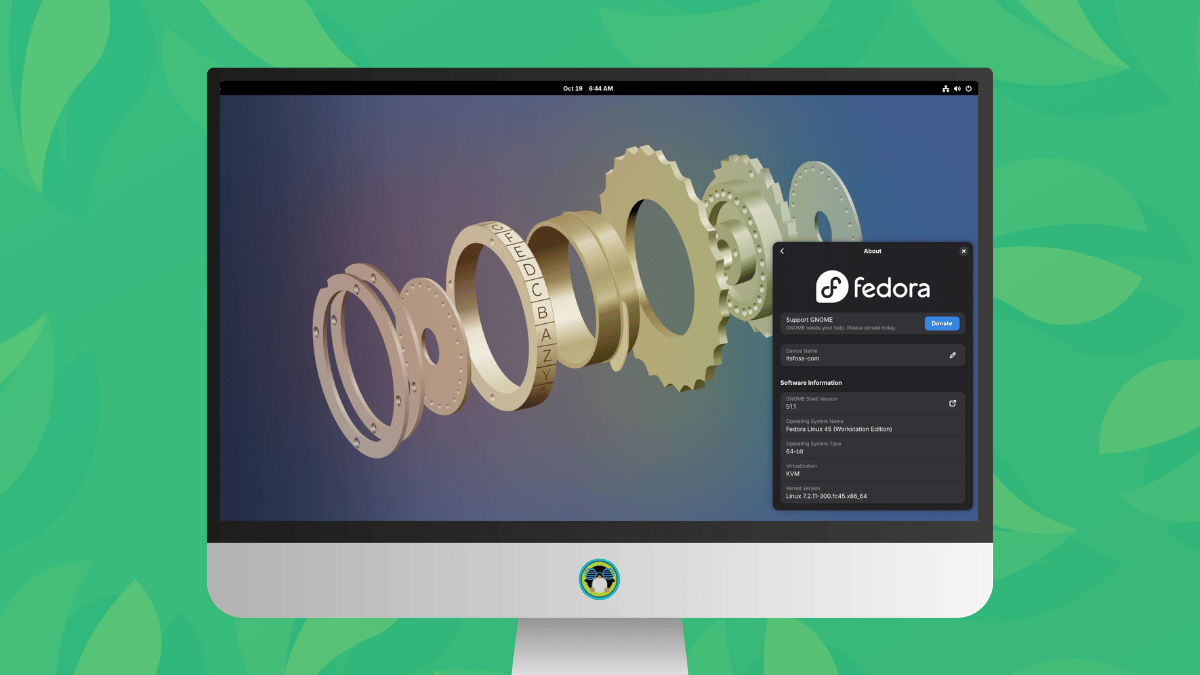
Building a Fedora release means tracking an enormous amount of formal change proposals planned for each release cycle on a public Change Set page, where every entry carries an owner and a status.
These proposals undergo community review and require approval from the Fedora Engineering Steering Committee (FESCo), either in batches or individually, depending on their scope.
But approval only means a change is accepted for the planned release, not that it is guaranteed to ship. The beta for Fedora 45 came out last month, and several proposals that were meant for the stable release were pushed to Fedora 46.
What we have now is a release that was initially set for October 20, but was pushed back to October 27, and then again, to today, November 3, because there were some late-stage teething issues with the release.
If you have ever hit a kernel panic on Fedora, you might have spotted a QR code on the screen. The DRM Panic component has shown it by default since Fedora 42, but scanning it only got you a raw trace that not many people can read.
Fedora 45 changes that with a web frontend for DRM Panic. Scanning the QR code with your phone now takes you to a Fedora-hosted page that walks you through what went wrong.
From there, you can start a Bugzilla report with your system details and the trace already filled in.
Similarly, if you have pressed Ctrl+Alt+F3 and landed on a full-screen text login, you have seen the Linux virtual console. That screen is drawn by the kernel's fbcon, and Fedora 45 swaps it for a userspace program called kmscon.
The switch brings back scrolling, adds basic mouse support, and a crash no longer results in a kernel panic. You also get resizable fonts, better Unicode support, and the ability to use the same keyboard layout as your desktop.
Don't worry about things breaking. If kmscon fails to launch, Fedora falls back to the old getty and fbcon setup automatically, and you can switch back yourself if you prefer.