// ENGADGET — FINANZA
Why EV fast charging slows down after 80 percent
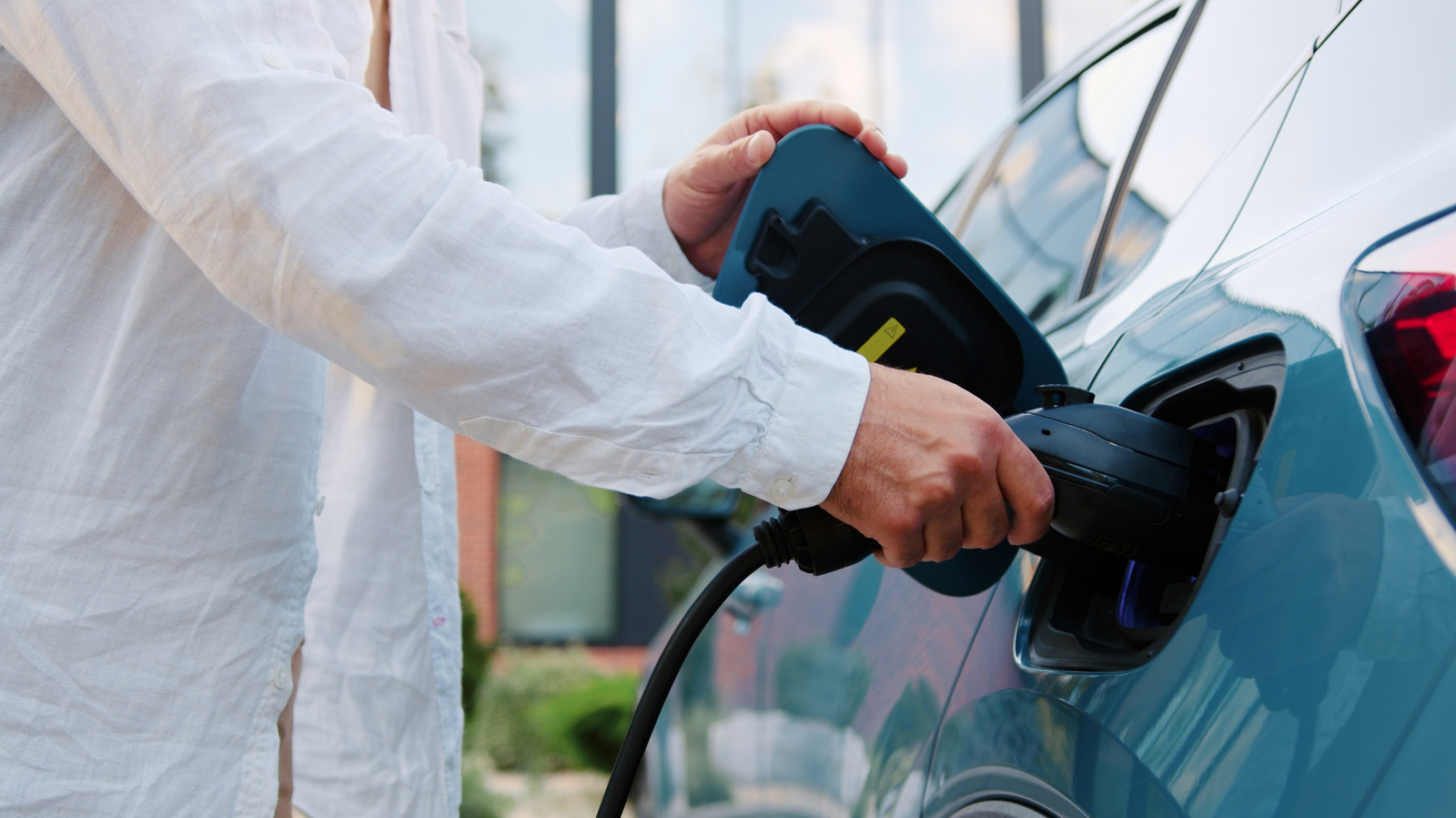
When the Tesla Model S launched in 2012, plugging it into a regular household outlet meant waiting more than 50 hours for a full charge, and all you got for that was up to 300 miles. The latest Model S is a different story: by the company's own figures, the car can add up to 200 miles in 15 minutes at a Supercharger. That's a very different car to live with.
But even now, charging doesn't stay fast. Look at how EV ads and spec sheets describe charging speed: "10 to 80 percent," "0 to 80 percent," almost never "to full." The first 80 percent is the fast part of the charge. Past it, the speed drops off, and the last stretch takes far longer than you'd expect. So what happens to the battery after 80 percent? It has nothing to do with bad EV charging habits, and everything to do with how the cell itself works.
There are three ways to charge an EV: via a regular wall socket, a home or public charging station or a fast-charge station. All three do the same basic thing. They push electrons toward the battery, and inside its cells, lithium ions travel from one side (the cathode) and settle into the other (the anode). Then, as the car drives, those ions travel back into the cathode and supply the electric current. So "charging the battery" just means pushing the ions back into the anode.
The difference is how much power each one can push. A wall socket gives you a trickle of electricity, and a home or public charging station gives you several times more. A fast-charge station typically delivers 50kW to 350kW, and the newest ones go higher. So those ions get pushed much faster.
There's a second difference that makes a fast-charge station much more efficient. A wall socket or a charging post only supplies alternating current, so the car's own onboard charger has to turn it into direct current for the battery, and that little converter caps the speed. A fast-charge station does the conversion itself, in a big cabinet that doesn't have to fit inside a car, and sends direct current straight to the battery. The car just tells it how much it can take.
Chargers push a constant current until the cell hits its voltage limit, then hold the voltage and let the current fall away. To see why that happens around 80 percent, picture the ions as passengers boarding an empty bus. They walk in one by one, find a seat and sit down. A faster charger just means more people come through the door each second. It doesn't add a single seat. Early on that works fine, because nearly every seat is free and everyone sits within a step or two of the door. Later the bus is mostly full. Each new passenger has to squeeze down the aisle, look for the last empty seat and wait for people ahead of them to shuffle along. Push more people through the door at that point and you just get a jam at the entrance.
A battery does the same thing. The anode is mostly graphite, and the lithium ions have to work their way into it, which is slow going. It takes even longer for the lithium to settle once the anode is nearly full. So past about 80 percent, the car asks the charger to cut the current, and the last stretch takes far longer than the first.
Ions aren't people on a bus, though, and that's where pushing harder goes wrong. If the charger forces current into an anode that's already crowded, the lithium ions pile up at the surface faster than they can work their way in. With nowhere to go, they settle on the graphite as a thin layer of metallic lithium. That's called lithium plating. It's partially irreversible, so the battery permanently loses lithium it needs, and the metal can grow into spikes that eventually cause a short circuit. So the car slows the charge down on purpose, long before anything bad happens.
BYD recently announced a battery that it says can charge up to 97 percent in nine minutes. Its answer to the problem was to make the bus easier to get through, instead of shoving the passengers harder. The second-generation Blade Battery, unveiled in March 2026, re