// SPACE.COM — SPAZIO & SCIENZA
A robot just built a structure autonomously in space for the 1st time ever
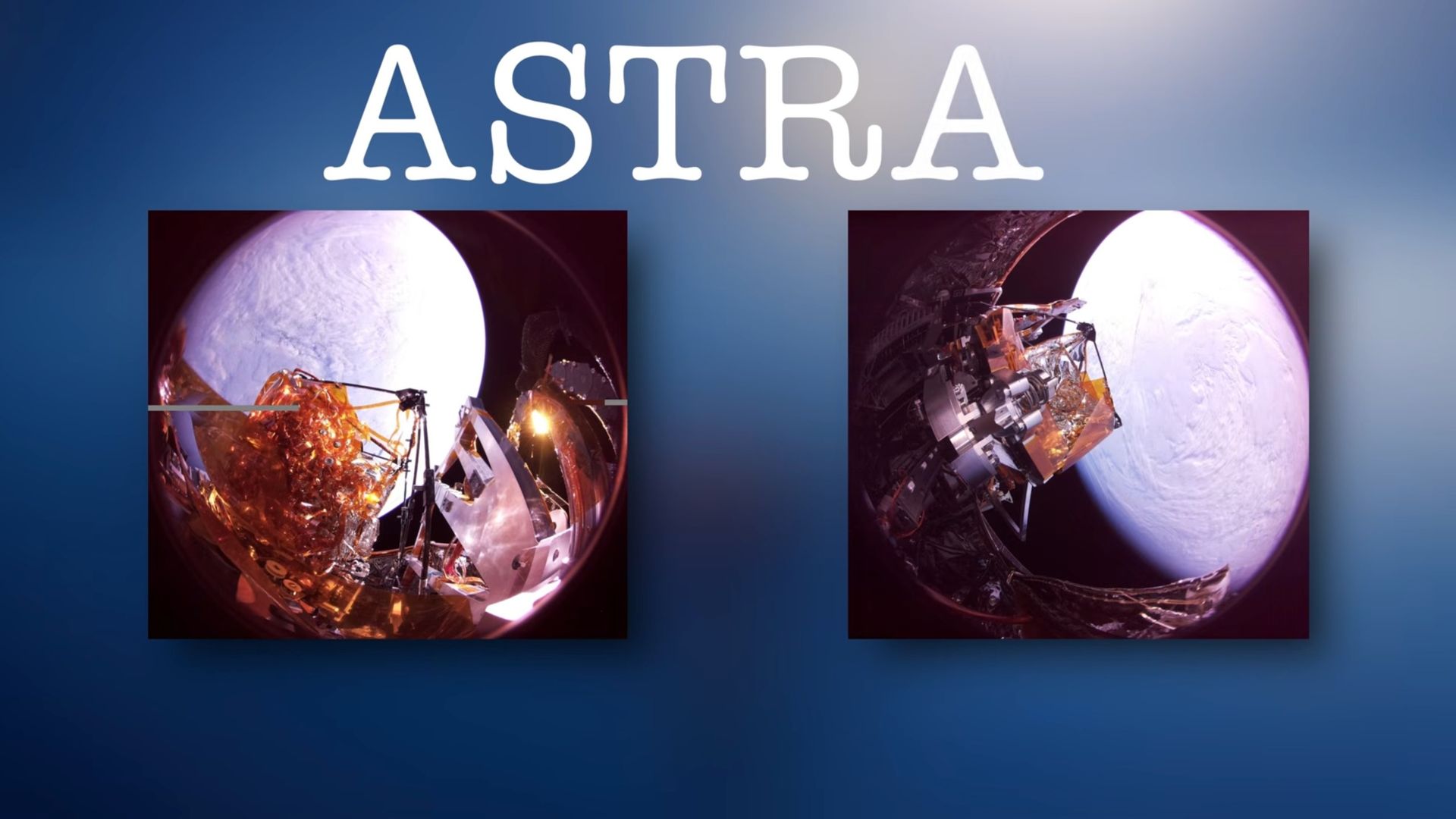
"This work could be useful not only for astronomy and astrophysics, but also for communications and other areas."
When you purchase through links on our site, we may earn an affiliate commission. Here’s how it works.
A robot just played Tinkertoys in space, assembling the first satellite structure ever made without a human touching the controls.
The DARPA-funded project saw a robotic "truss builder" create a reflective antenna using Kapton film, composite fiber tubes and aluminum joints. The implications are huge for future missions, potentially opening up new possibilities to build — or fix — satellites in the final frontier.
"This is the first time that a structure has been autonomously constructed in space," Sergio Pellegrino, an aerospace and civil engineering professor at the California Institute of Technology (Caltech), said in a statement on Nov. 5.
The need for such spacecraft will likely rise substantially in the future, as companies assemble giant megaconstellations for cell-phone communications, AI compute and other purposes. Indeed, the ball is already rolling on such ambitious projects, generating enough hype for space startups around the globe to raise a record $20.8 billion in the third quarter of 2026 alone.
Anything that launches aboard a rocket is limited by the size of that vehicle's fairing — the nose cone that protects payloads during their ride to space. In space, however, the ability to stretch out is practically infinite — after taking into account, of course, engineering and financing constraints.
Assembling structures robotically off Earth could therefore be revolutionary, advocates say. And the recent milestone was a step in that direction.
"This work could be useful not only for astronomy and astrophysics, but also for communications and other areas, such as building very large solar arrays for space solar power," said Pellegrino, who's team leader of the truss-building project, a Caltech demonstration mission called Autonomous In-Space Tensioned Reflector Assembly (ASTRA).
ASTRA built a 1.4-meter-wide (4.5-foot) structure in orbit. That's an impressive achievement, but it just scratches the surface of what DARPA wants to accomplish via a program it calls Novel Orbital and Moon Manufacturing, Materials, and Mass-efficient Design, or NOM4D for short.