// SPACE.COM — SPAZIO & SCIENZA
Satellite snaps rare birds-eye view of the ISS | Space photo of the day for Nov. 12, 2026
When you purchase through links on our site, we may earn an affiliate commission. Here’s how it works.
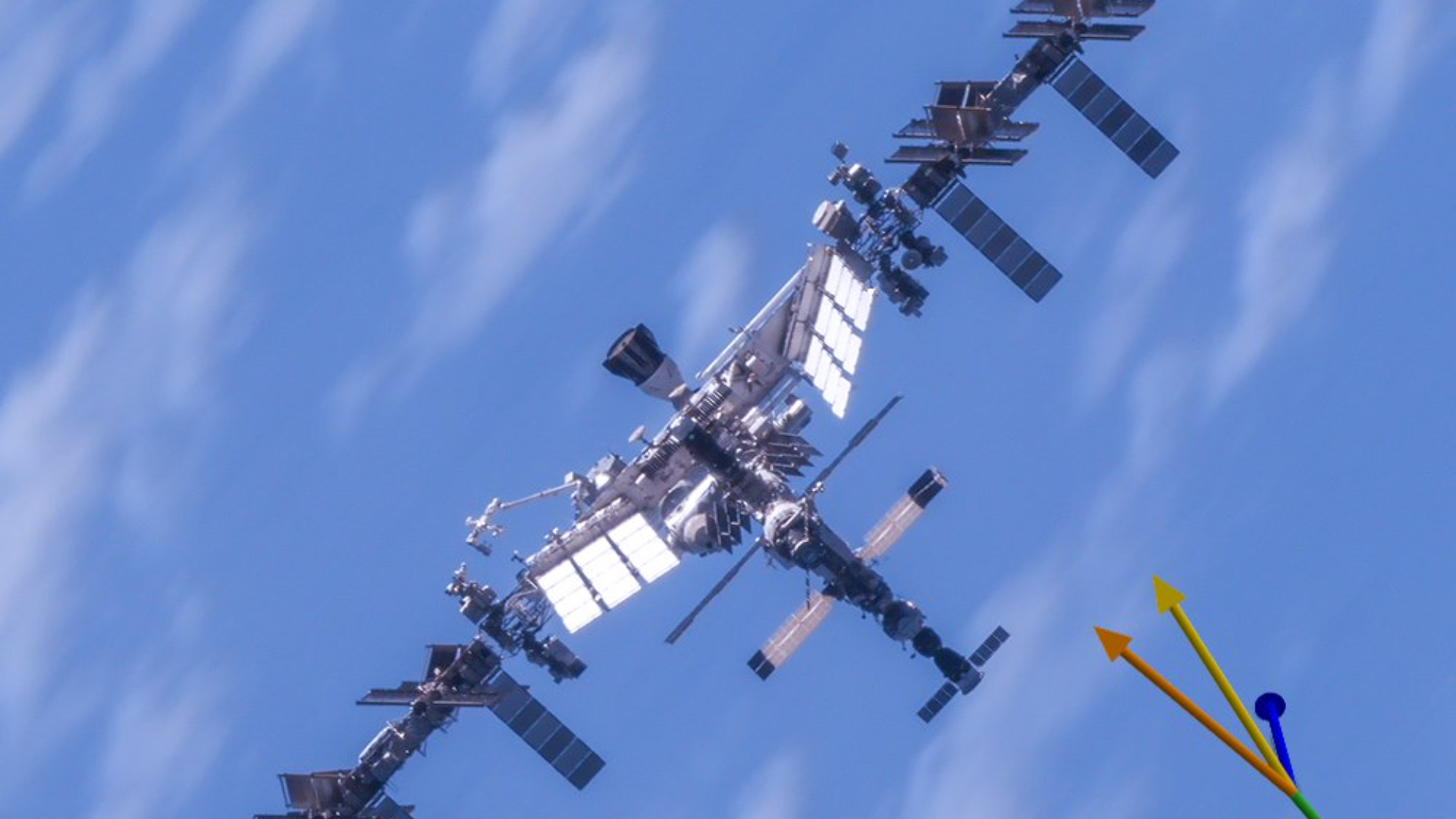
A commercial satellite has spotted the International Space Station (ISS), giving us a unique view of the orbiting lab from above.
Most of the time, when we see the ISS, it is from down here on Earth or from the viewpoint of the astronauts onboard, peering out the windows at the station's limbs, solar arrays and instruments.
But in this snapshot, which was posted on X on Nov. 9 by the Australian company HEO, we can see the station stretched out in all its glory.
HEO specializes in using satellites in low Earth orbit to capture images of other spacecraft, though longer-term the company aims to capture observations far out into the solar system. HEO doesn't build the satellites that take these photos; rather, the company's software tasks the spacecraft to image targets as they come into range.
This great photo of the ISS from above, for example, was taken by a satellite operated by BlackSky, a Virginia-based company that holds a non-Earth imaging agreement with HEO.
So far, HEO and its partners have captured imagery of a variety of spacecraft in orbit, including the ISS, China's Tiangong space station and the European Space Agency's ERS-2 satellite (while it was hurtling back to Earth in 2024).
While it might seem that satellites are just hovering above Earth, the space station and other spacecraft in LEO are hurtling through space at roughly 17,500 mph (28,160 kph), hundreds of miles above our planet's surface.
A snapshot of a satellite from above is therefore far from mundane. Rather, it requires incredible coordination and technical skill; satellite operators must know precisely when their target will present itself, and their equipment must be capable of getting the shot.
Chelsea Gohd served as a Senior Writer for Space.com from 2018 to 2022 before returning in 2026, covering everything from climate change to planetary science and human spaceflight in both articles and on-camera in videos. With a M.S. in Biology, Chelsea has written and worked for institutions including NASA JPL, the American Museum of Natural History, Scientific American, Discover Magazine Blog, Astronomy Magazine, and Live Science. When not writing, editing or filming something space-y, Gohd is writing music and performing as Foxanne, even launching a song to space in 2021 with Inspiration4. You can follow her online @chelsea.gohd and @foxanne.music