// SPACE.COM — SPAZIO & SCIENZA
SpaceX's Starship megarocket will launch to orbit on Nov. 13. Will you be able to spot it in the night sky?
"It should be very bright, considerably brighter than the Starlink satellites due to its size."
When you purchase through links on our site, we may earn an affiliate commission. Here’s how it works.
SpaceX's Starship megarocket is slated to launch on its ambitious 15th flight test as soon as this Friday (Nov. 13). Will you be able to spot its leviathan upper stage, known as Ship, or its Starlink satellite passengers as they circle Earth during the historic orbital jaunt?
Flight 15's 75-minute launch window opens at 5:45 p.m. EST (2245 GMT) on Nov. 13. Starship will fly from SpaceX's Starbase site in South Texas, where it will be 4:45 p.m. at the opening of the window — about an hour before sunset. The launch could therefore be especially dramatic for folks in the area.
"As it launches towards the southeast, and it will be daylight, then the prospects for viewing from the U.S. are going to be in Texas and the states along the Gulf of Mexico," Robert Massey, deputy executive director at the Royal Astronomical Society, told Space.com. "They could see the exhaust plume (the 'jellyfish') with the sky darker for observers further east."
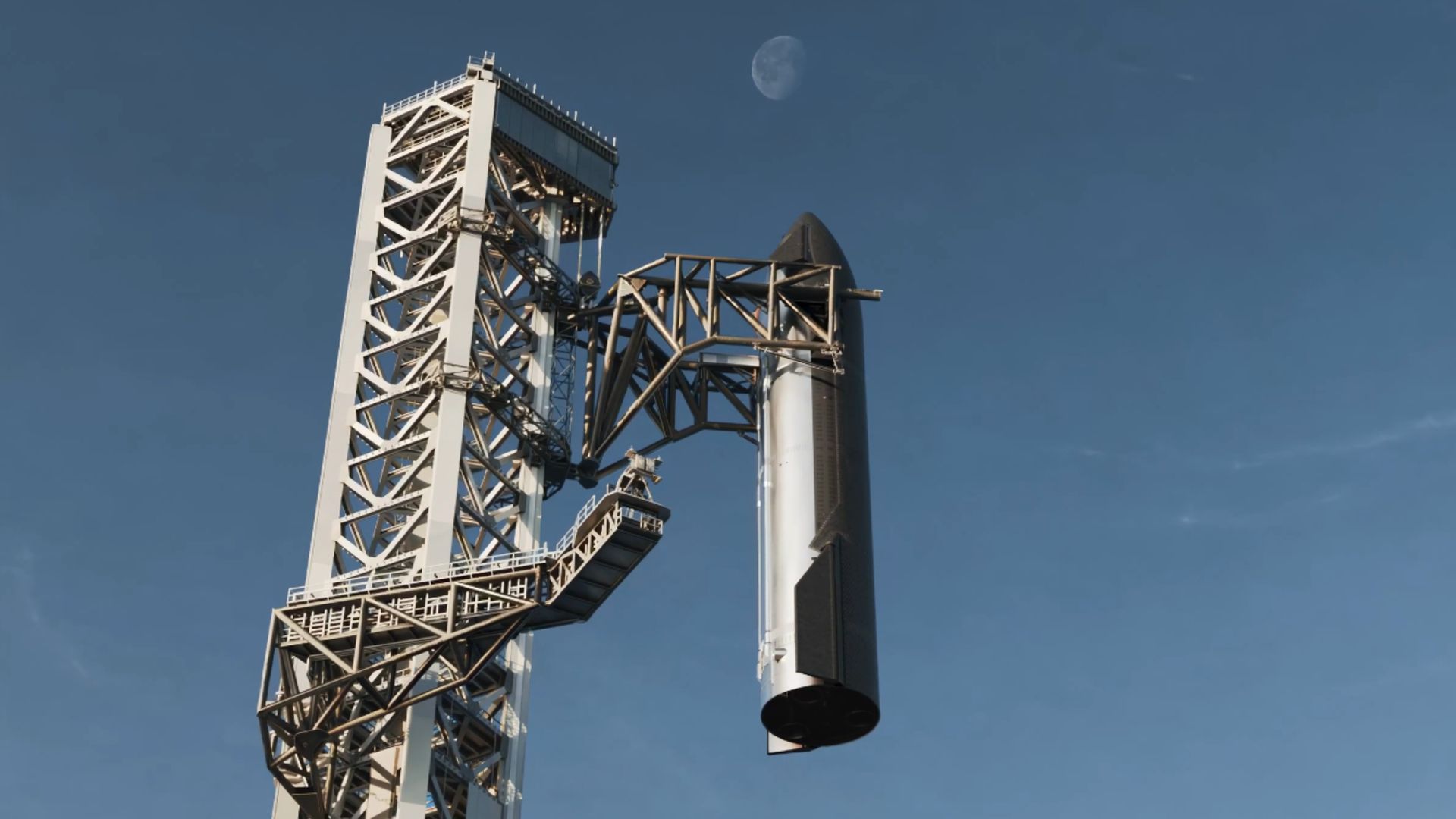
If all goes to plan, Starship's Super Heavy booster will propel the Ship upper stage through the densest part of Earth's atmosphere before returning to Starbase for a powered landing and capture via the "chopstick" arms of the "Mechazilla" tower system. Ship, meanwhile, will go on to orbit Earth approximately 14 times over the following 22 hours, during which time it will deploy 26 Starlink V3 satellites before returning to Starbase for its own ambitious catch attempt.
Satellite visibility in the night sky depends on a cocktail of factors, from the size of the spacecraft to its reflectivity, orbital inclination and position relative to the Earth and sun.
Ship is big — about 171 feet (52 meters) tall — so it will be a viable target for skywatchers, experts say.
"It certainly will be visible in twilight hours. It should be very bright, considerably brighter than the Starlink satellites due to its size," professor James Osborn of Durham University told Space.com. "Where and when is a bit more tricky."
Ship and its Starlink satellites may be seen in the 90 minutes directly after sunset on Nov. 13 and before sunrise on Nov. 14, as the probes catch the sunlight on either side of Earth's colossal shadow as they drift through the twilight sky.