// ARS TECHNICA — MOBILE & WEB
In elephants, the resilience of communities has its limits
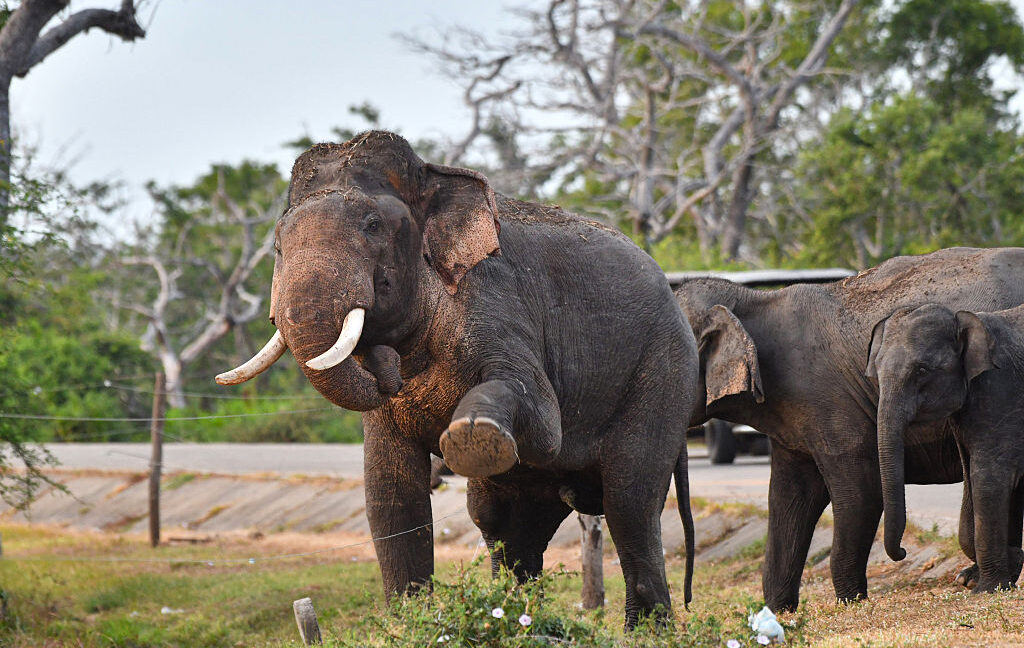
In Sri Lanka, ecological change is shrinking a park’s elephant population.
Elephants live in some of the most complex and resilient societies in the animal kingdom. Individuals die or move away, calves grow up, and newcomers join, but the local communities as a whole usually hold together. Long-term studies of African savanna elephants have shown that, even after poaching or other spikes in deaths, survivors tend to rebuild their lost connections over time. But a new study suggests that resilience may not keep the community intact when steady losses accumulate over time.
Anastasia Madsen, a behavioral ecologist at the University of California, San Diego, and her colleagues analyzed 12 years of observations of wild Asian elephants in Sri Lanka. They found that, once losses began to outpace newcomers, the elephants’ society didn’t just get smaller. It fractured.
Udawalawe National Park in southern Sri Lanka was created in the 1970s around a reservoir on one of the country’s four major rivers. “Before that, it was basically a tropical deciduous forest,” said Shermin de Silva, an ecologist at UC San Diego and senior author of the study (de Silva started the Udawalawe Elephant Research Project in 2006).
The reservoir had brought farming and settlers, some of whom lived inside what later became the park. When they were moved out, the land they had cleared for their crops turned into grassland that, according to de Silva, looks very much like an African savanna. With far more food than the original forest offered, the park became famous for its big elephant herds.
But the savanna was only a stage in the forest’s comeback. Without fires and clearing, invasive plants like lantana took over. “In some places, they’re like an impenetrable thicket. Not even elephants really like to go there because there’s no food for them,” de Silva said. This is a problem because elephants tend to move where the grass is. A park with less forage, the team says, stops attracting elephants from outside while, due to limited food, fewer calves reach adulthood.
Her team watched this transformation from a vehicle, driving random routes along the park’s roads about three days a week. The team identified elephants mostly by their floppy ears, which collect holes, tears, and cuts with age. “Their ears are very individually distinct, so it’s like a fingerprint,” de Silva said. Between 2007 and 2018, the team identified 443 adult and subadult females that roamed the park.
The team focused on females because males lead more solitary lives, ranging widely in search of mates. Females live in a so-called fission-fusion society. “It’s kind of similar to humans,” Madsen said. “You might have your work friends, you might have your family, and you’re not always with those same individuals at the same time, but they’re all part of your social network.” Unlike African savanna elephants, where families follow older matriarchs, Asian elephants move more independently. This may be because Asia’s rainy environment ensures that food and water are rarely far apart and usually easier to find, so following an experienced individual brings less benefit.
Madsen reconstructed the elephants’ social network for each year, measuring the strength of each relationship by how often two animals were seen together. “You can think of it as a probability that you will see those two individuals together,” she explains. An algorithm commonly used for analyzing human social networks then picked out communities—clusters of elephants with many strong ties to one another.
For the first few years of the study, these communities seemed to hold very well. But then cracks started to appear.