// KOTAKU — GAMING
The Legend of Zelda: Ocarina of Time — The Kotaku Review
When I was a very little kid, I went to Disneyland with my parents. I don’t remember much about that trip. But I remember visiting Minnie Mouse’s house in the newly built ToonTown, and I remember my mom explaining a joke to me that we saw inside Minnie’s fridge. There were two wheels of cheese. One was labeled “Gouda” and the other “Not So Gouda.” Once I understood it, I thought it was hilarious, and (apparently) remembered this tiny, specific, incidental detail forever.
I keep hearing friends and colleagues positively describe The Legend of Zelda: Ocarina of Time remake as a Disney theme park, and I think they’re onto something. Having revisited multiple Disneys fairly recently, I would readily believe that whoever drew up the plans for its reimagination of Castle Town did so after seeing the castle at Tokyo Disney, centered through archways, ablaze with lights, surrounded by colorful towers and European architecture and cobblestone streets.
But it’s more than just that single snapshot. I’m not a Disney fiend, and I didn’t grow up with Ocarina of Time; I played it for the first time this past January. Even so, the Ocarina of Time remake immediately invokes a powerful feeling of nostalgia in me despite me having nothing in particular to be nostalgic about, in the same way Tokyo Disney did the second that curry popcorn smell hit. It’s that feeling of being overwhelmed by the density of detail, the care someone took to ensure that everything, all the way down to the items in the fridge or the slight way Link smiles (or doesn’t) when he receives a Medallion, is exactly correct. In both situations, that inescapable cartoon fantasy magic overtook me, drawing me back in the second anything resembling cynicism tried to pull me away.
Once, Ocarina of Time’s Hyrule was considered vast—as big as a video game world conceivably could be. Now, after the soaring heights and dark depths of Tears of the Kingdom, it comes off as small. Quaint. The whole world is, what, equivalent to maybe one major region in Tears? Two, generously? Look, no matter what people proclaim AI will allow them to do or how fantastic GTA 6 ends up being, I struggle to believe you don’t lose something in the minute details as you make a video game world more and more massive. Eventually, you start copying and pasting trees and grasses. The houses start to look the same. There’s less specificity, less intention. I’m not saying such games have none! There are so many open-world marvels! But there’s a reason the Great Plateau remains one of the most memorable and well-regarded segments of Breath of the Wild so many years later—it’s compact and immaculately designed, down to a microscopic level, in a way that Nintendo or anyone could not have possibly managed for every single corner of the rest of that Hyrule. It takes too long, and you have to have too many people care too much.
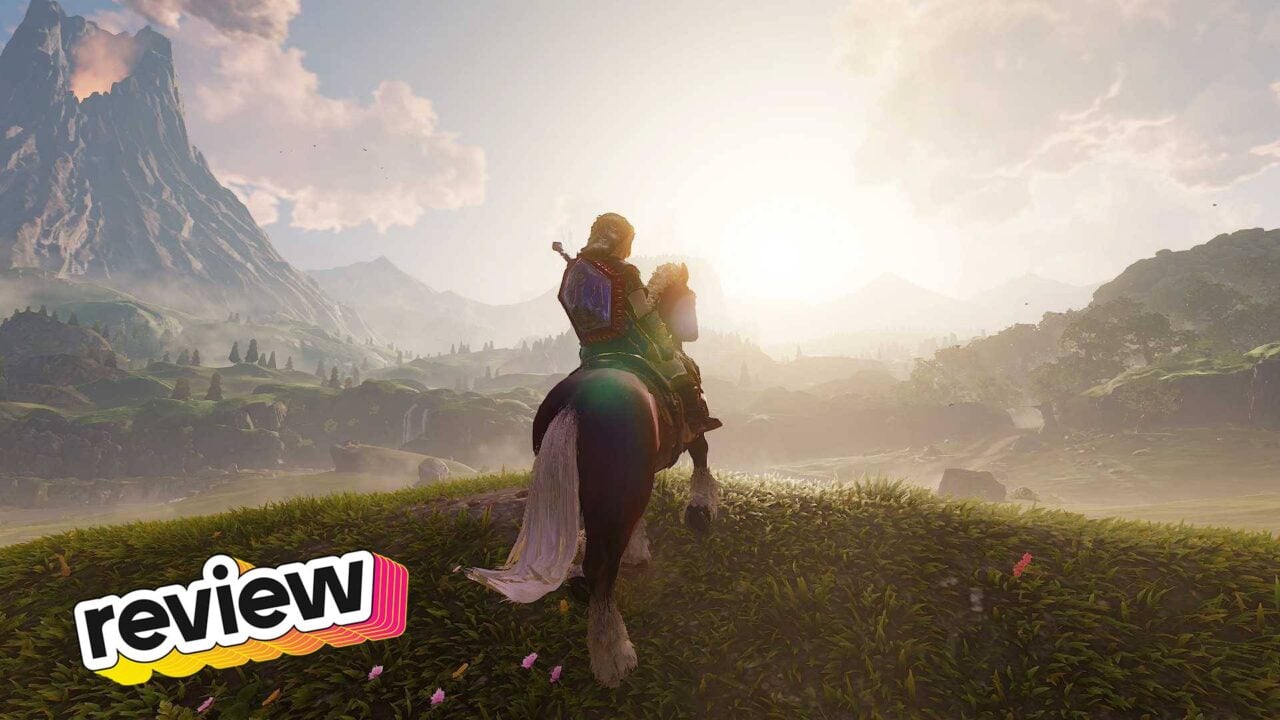
So in returning to a world with such a comparatively small scope after years of stretch, stretch, stretching, Nintendo was able to focus its time, talent, and energy on making Ocarina of Time so deliciously, visually dense. You can feel it, in every last corner, every blade of grass. Castle Town has been transformed from some vague polygons and a few Encarta-ass backdrops to a playground stuffed with detail. Every single house, exterior and interior where available, is remarkably different from the next, its intricacies speaking to the sort of person who might live there. One has an elaborate garden, different pots of flowers carefully arranged just as one’s neighbor might do. Another belongs to a clearly wealthy individual, another place looks a touch shady. I fully believe that Nintendo had a specific character in mind for each one, possibly even characters we will never see.
Everything is like this! The individual tree huts in Kokiri Forest! The elaborate embroidery on women’s skirts, the subtle pattern differences on men’s poofy pants! How dungeon mechanisms are now fully operational as c