// SPACE.COM — SPAZIO & SCIENZA
60 years ago the Leonid meteor shower produced 144,000 meteors per hour. Could it happen again?
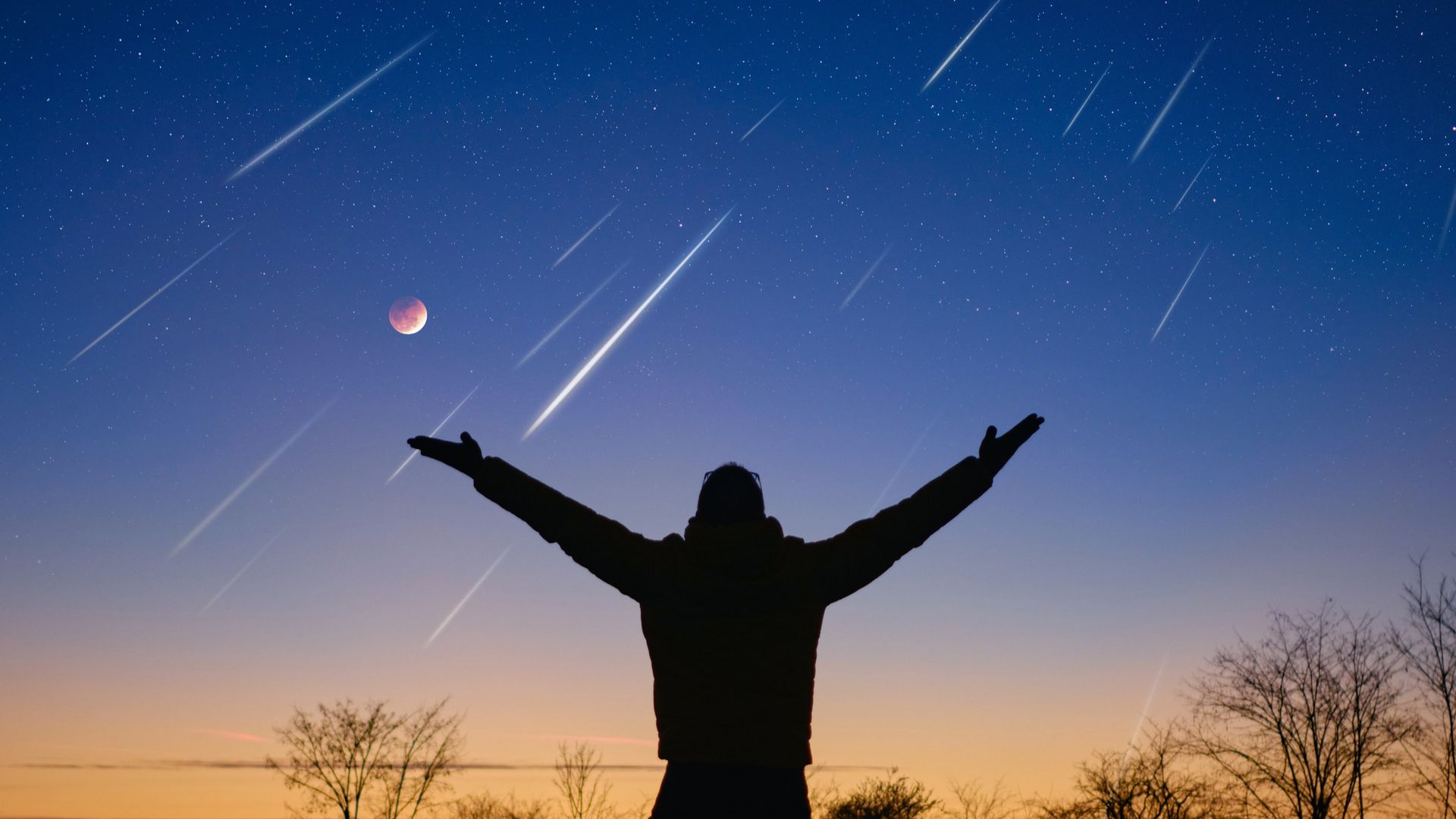
60 years ago, the Leonid meteor shower unleashed one of the most spectacular meteor storms in recorded history. As the 2026 peak approaches, here's what skywatchers can expect.
When you purchase through links on our site, we may earn an affiliate commission. Here’s how it works.
This year marks a rather auspicious anniversary for meteor watchers. Sixty years ago, one of the most stupendous Leonid meteor displays lit up the predawn skies over the central and western U.S. So, what will the 2026 Leonids bring us? And what might they bring in the years to come?
The Leonid meteor shower is one of the most celebrated of the year's annual displays of "shooting stars." The mere mention of the Leonids usually elicits mental images of a sky filled with shooting stars pouring down through the sky like rain. Such meteor storms have indeed occurred with the Leonids, such as in 1833 and 1966 when meteor rates of tens of thousands per hour were observed. In more recent years, most notably 1999, 2001 and 2002, lesser Leonid displays of up to "only" a few thousand meteors per hour took place.
Unfortunately, that's not likely to be the case this year. In fact, comparatively speaking, this is going to be a lean year for the Leonids chiefly because of the expected lack of any significant activity. Although the Leonids are one of the most famous of all the annual meteor displays, this year they're not likely to be very productive. It's probable they are going to be rather weak and there probably will be long stretches when not a single Leonid will be seen. I'll explain why in a moment. First, let's find out about this shower's lineage.
The Leonids are so named because the shower's radiant point, from where the meteors seem to fan out, is located within the constellation of Leo the Lion, from the backward question mark pattern of stars known as "The Sickle." The meteors are caused by the Tempel-Tuttle comet, which sweeps through the inner solar system every 33⅓ years. Each time the comet passes closest to the sun it leaves a "river of rubble" in its wake: a dense trail of dusty debris. A meteor storm becomes possible if the Earth were to score a direct hit on a fresh dust trail ejected by the comet over the past several centuries.
The "lion's share" (no pun intended) of comet dust can be found just ahead and trailing behind Tempel-Tuttle. That comet last swept through the inner solar system in 1998. That's why spectacular meteor showers were seen in 1999, 2001 and 2002, with declining numbers thereafter.
According to the International Meteor Organization's 2026 meteor shower calendar, the Leonids are expected to reach their regular maximum at 23:45 UTC (6:45 p.m. EST) on Nov. 17, with around 15 meteors per hour possible under ideal viewing conditions.
Other forecasts place the peak at slightly different times. Margaret Campbell-Brown and Peter Brown, meteor experts for the Royal Astronomical Society of Canada, predict that the peak of this year's Leonids will occur at 00:00 hours UTC on Nov. 18. Russian meteor expert Mikhail Maslov feels that the peak will come about a third of a day earlier, at 16:00 UTC on Nov. 17.
Several weaker encounters with older debris trails are also predicted between Nov. 17 and 19, although no major meteor storm is expected.