// PC GAMER — GAMING
Ashes of the Singularity 2 review: Some neat ideas undermined by a rubbish campaign and obtrusive generative AI
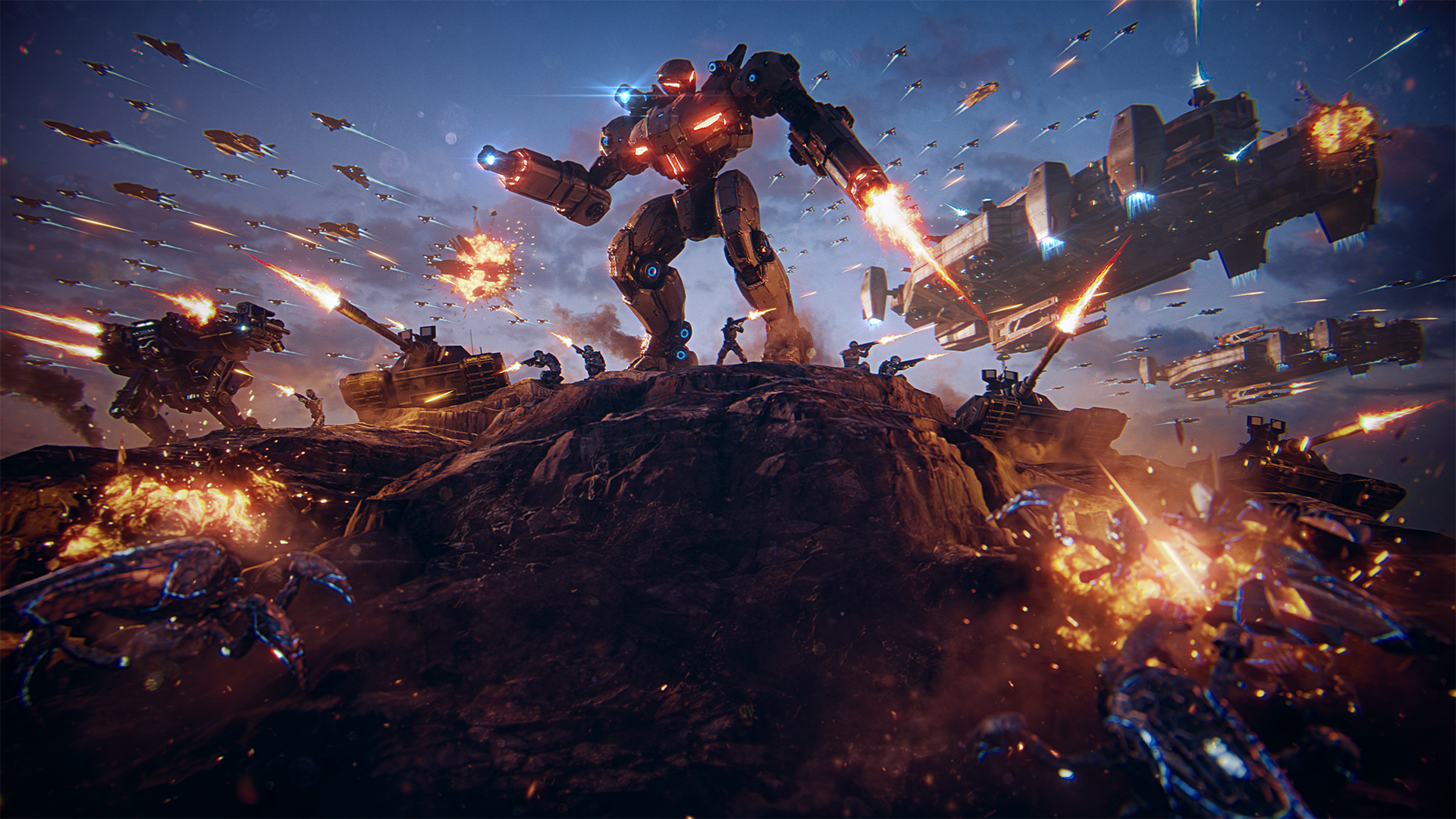
Ashes of the Singularity 2 has some neat ideas for army management, but a poor campaign, an underwhelming new faction, and obtrusive generative AI use undermines the enterprise
PC Gamer's got your back
Our experienced team dedicates many hours to every review, to really get to the heart of what matters most to you. Find out more about how we evaluate games and hardware.
What is it? RTS sequel in the lineage of Supreme Commander
Reviewed On: AMD Ryzen 5 3600, Nvidia 2080 Super, 32 GB RAM, Windows 10.
Ashes of the Singularity 2 can't be faulted for scale. Much like its predecessor, the RTS sequel delivers on the promise of letting players control truly colossal armies. Rolling up huge globs of units and tossing them at your enemy lines in a giant, explosion-riddled mud fight is never subtle and only occasionally clever. But for any veteran RTS player, watching miles-long lines of armies clash is inevitably going to stir the soul.
Unfortunately, scale is also the sum of what Ashes of the Singularity 2 offers. As a sequel, it does little to build on the strengths of the original, while largely failing to address that first game's weaknesses. The campaign is terrible, the story borderline incomprehensible, and the whole experience is overshadowed by the spectre of generative AI.
Before we get into Ashes 2's numerous problems, I do want to give Oxide Games credit for one thing: for a game of this scale, Ashes of the Singularity 2 is remarkably easy to control. In terms of base-building, Ashes of the Singularity 2 is a largely familiar RTS affair. You build your production buildings, your resource harvesters, your defensive structures, and that's more or less it.
When it comes to unit recruitment, however, Ashes 2 is much more interesting. While units are still recruited individually, they're also automatically assigned into armies at the recruitment phase. You build a new army by queueing up all the units you want, and then when you're done, you assign a rally point for the army on the map, and all the units will just assemble there.
Once recruited, armies can be selected with the number keys and controlled like a single unit, and they tend to move and attack pretty intuitively, although pathfinding does struggle with narrow passes or rough terrain (which, to be fair are both things that real armies struggle with). This makes it very easy to oversee multiple armies at once.
In addition, when in battle, you can replenish destroyed units at the press of a button, or simply set the army to reinforce automatically. It's another convenient touch, and encourages you to support your forces by constructing new production buildings close to the frontline.