// TOM'S HARDWARE US — HARDWARE & GADGET
AMD attacks Nvidia's FP64 emulation at SC26, touts native double-precision on Instinct MI430X — says Ozaki schemes fit less than 10% of HPC workloads and triple memory use and emulated FP64 is a poor fit for many HPC workloads
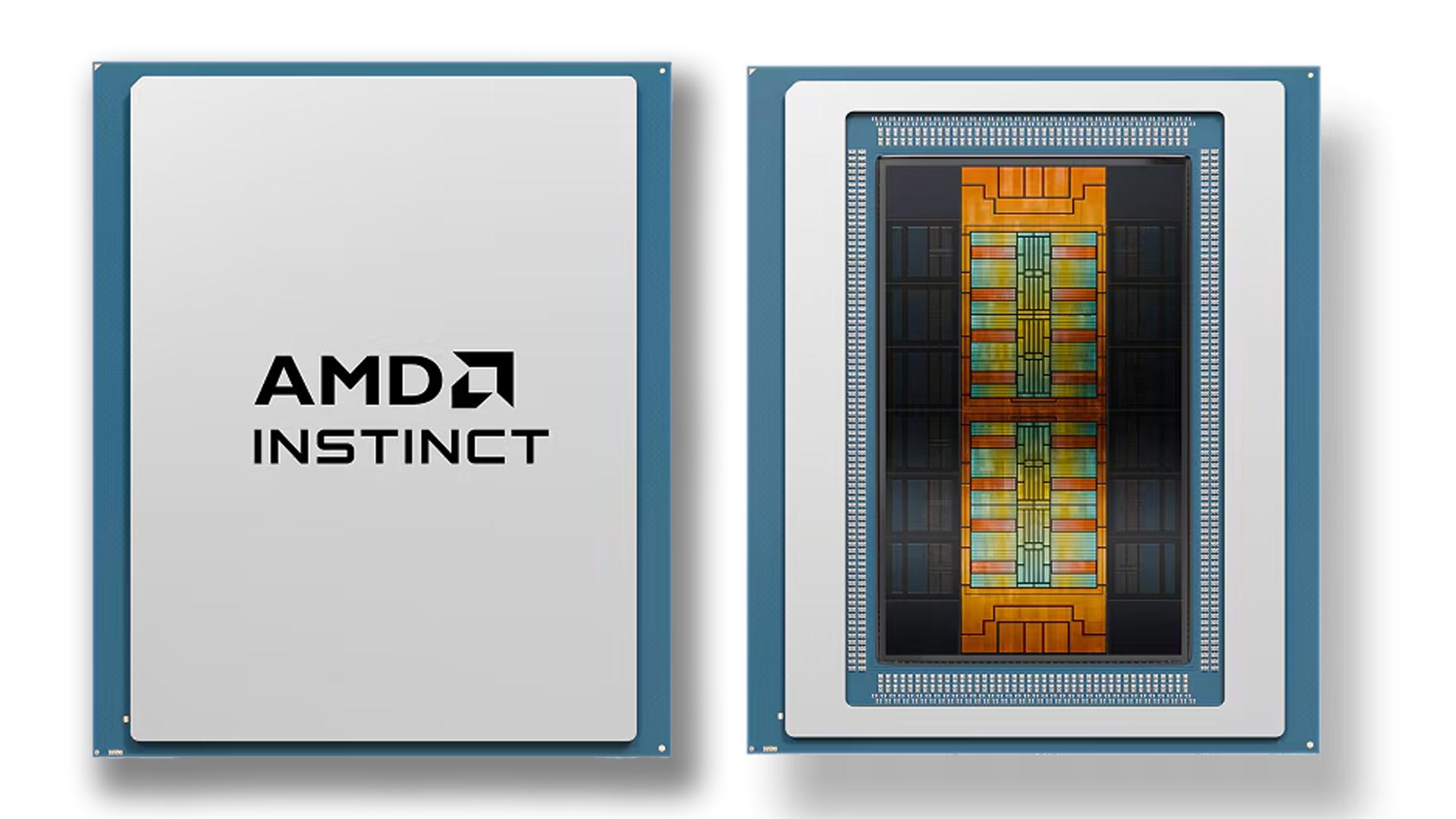
AMD says Ozaki FP64 emulation is no replacement for the real thing when it's needed.
When you purchase through links on our site, we may earn an affiliate commission. Here’s how it works.
As Supercomputing 2026 (SC26) opens in Chicago this week, AMD is indirectly needling Nvidia about the lack of native FP64 data type support in its data center GPU products. FP64, or double-precision floating-point math, is widely used in the high-performance scientific computing and simulation fields that are the focus of SC26. For those customers, AMD is trumpeting the value of its latest Instinct MI430X accelerator for customers that still need native FP64, like national laboratories and supercomputing centers.
Over the past few years, Nvidia has reallocated die area on its data center GPUs to favor the lower-precision matrix math that boosts the operations needed for much of modern AI inference. That reallocation only makes business sense, as the total addressable market for AI compute has exploded while the demand for double-precision math in large supercomputing installations has remained flat by comparison.
To make up for the lack of native FP64 support, Nvidia has turned to techniques that allow it to emulate FP64 operations using methods like the Ozaki schemes. But AMD claims this kind of emulation is nowhere close to a replacement for native double-precision processing for a few reasons—hence continued development of specialized products like the MI430X.
For one, AMD notes that Ozaki emulation assumes that the workload in question resembles a dense general matrix multiply (GEMM). In its own application profiling, the company says "less than 10%" of HPC workloads perform dense GEMM operations, so this emulation is a good replacement for native compute. Dense linear algebra is the one common workload for which AMD says Ozaki emulation is a natural fit.
For workloads like sparse iterative linear algebra, stencils and hydrodynamics, high-order finite element analysis, Monte Carlo and particle transport, and classical molecular dynamics, AMD says developers still need strong FP64 vector performance for the best results.
Furthermore, even for workloads that map well onto GEMM operations, AMD says matrix sizes must be large in order to achieve the best performance, and that might also not be a given for every operation. The operands of those matrices also have to be sized well to the hardware, as incorrectly scaled operands can reduce performance. The FP64 vector math capabilities of the MI430X are insensitive to those operand sizing issues.
Beyond those stumbling blocks, AMD also notes that using Ozaki emulation methods can cause the memory footprint of an application to balloon, requiring up to three times more capacity than native FP64 would.
Since HBM capacity is directly tied to GPUs in modern supercomputing installations, fitting a workload to a machine that can only emulate FP64 operations could have cascading effects on the number of GPUs and compute nodes required, causing knock-on challenges for the floor area, power, and cooling required to support the system.