// SPACE.COM — SPAZIO & SCIENZA
10 things that worry me about chasing the 2027 total solar eclipse in Egypt
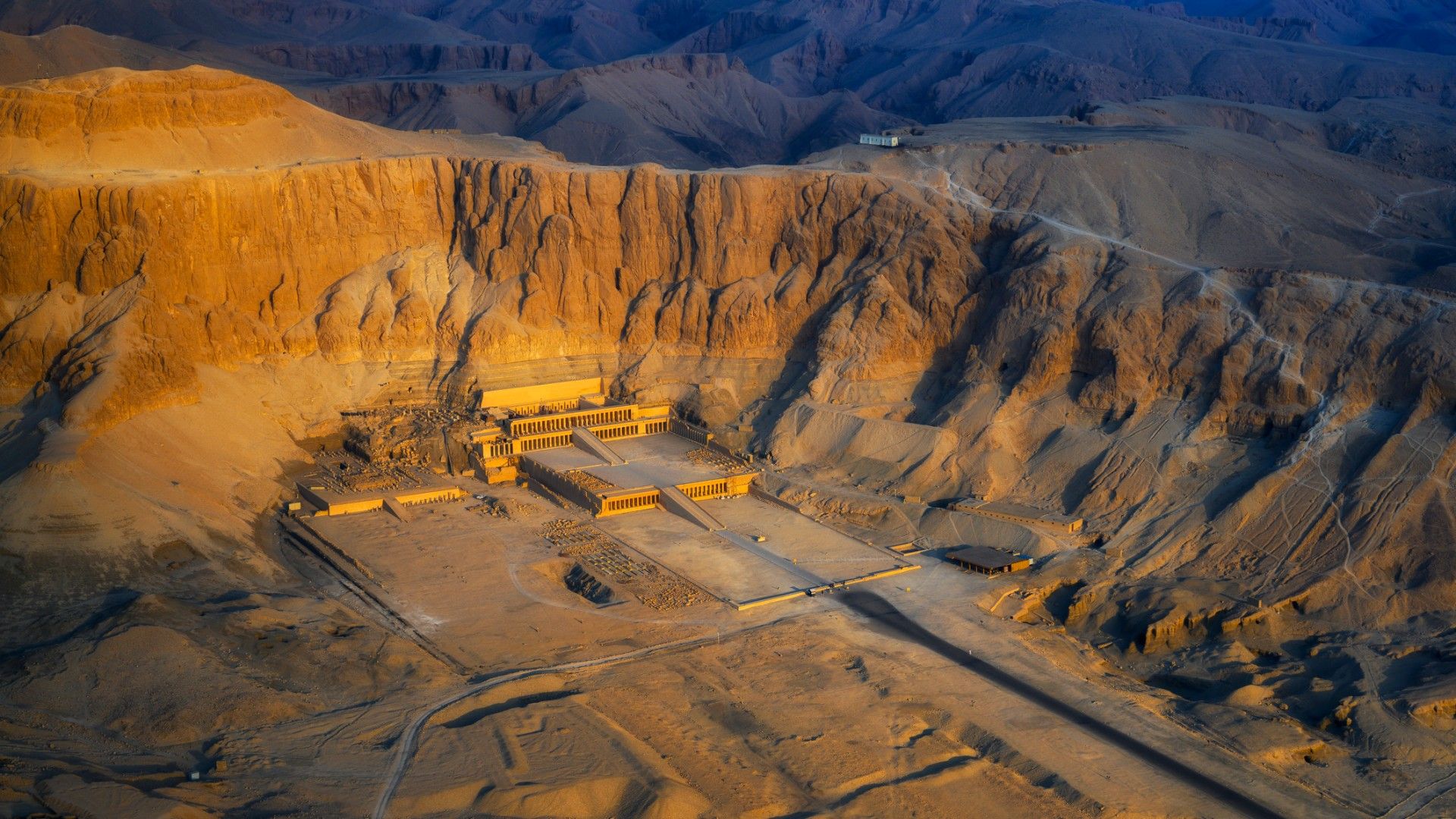
The longest total solar eclipse on land this century promises to be the experience of a lifetime, but watching it from Luxor, Egypt, may not be straightforward. What could go wrong? Quite a lot, actually.
When you purchase through links on our site, we may earn an affiliate commission. Here’s how it works.
On Aug. 2, 2027, I'll be in Luxor, Egypt, to witness what could be the greatest total solar eclipse of my life. I've seen nine total solar eclipses across the world, but this one promises to be different. For a remarkable six minutes and 22 seconds, the moon will completely cover the sun, plunging Egypt's ancient temples and monuments into eerie twilight as the solar corona bursts into view.
I've been calling it the "eclipse of the century" for many years, and for good reason. It will be the longest total solar eclipse until 2114 — and the longest on land of the 21st century — and it will take place in one of the most extraordinary places on Earth. What could go wrong?
I've chased eclipses long enough to know that the celestial mechanics are the easy part. The moon will arrive exactly on schedule — that's guaranteed. Everything else — the weather, the crowds, the transport, the equipment and the people — is rather less predictable. From the possibility of dust storms to uncertainty about whether boats will even be allowed to move on the Nile, there are plenty of reasons to be slightly wary about what awaits eclipse chasers after the ultimate bragging rights on Aug. 2, 2027. Here are the 10 things worrying me most about the 2027 total solar eclipse in Egypt.
The chances of cloud-free skies in Luxor and anywhere in Upper Egypt in August are exceptionally high — close to 100%. That's almost unheard of in eclipse-chasing. However, clouds aren't the only thing that can obscure the sun. Dust and sand are potential hazards in the Egyptian desert, and a dust storm at the wrong moment could affect—though probably not ruin—the view. Although the sun will almost certainly be visible during the eclipse, airborne dust could hide the delicate structure of the solar corona.
How many people will descend on Luxor for the eclipse? August is normally a quiet month for tourism in Luxor because of the oppressive heat. In 2027, however, the city and its surrounding urban area — population about four million — could swell as eclipse chasers, tour groups, photographers and curious visitors descend. Hotels, roads, buses and archaeological sites will all face extraordinary pressure. My biggest concern isn't necessarily the number of people watching the eclipse, but the logistical chaos it will create. Let's take Mallorca as an example for the 2026 eclipse. Authorities there had a plan for its west coast, the prime viewing region. "They were going to start closing roads from 3 p.m. on the afternoon of the eclipse," said Simon Waldram, who runs astrophotography and landscape photography workshops and who drove his tour group to the intended viewing location at 8 o'clock on the morning of the eclipse. "There were already 300 cars there, and by 11 a.m. they had shut the road." Official plans can quickly change.
Luxor in August is brutally hot. Temperatures can exceed 104 degrees Fahrenheit (40 degrees Celsius). Totality will strike at 1:02 p.m. local time (EEST). During the eclipse, from 11:40 a.m. to 2:26 p.m., the sun will be almost directly overhead. Many tour groups will stay on their hotel grounds or remain on cruise ships — relatively close to shade and air-con — though I'm also planning to keep a wet towel around my neck and carry plenty of water. However, the heat will affect the entire trip. "We're planning our visits in the early mornings and in the late afternoon, with midday just quiet time," said Khaled ElSamman, an Egyptologist at Nord Nile whose tour will witness the eclipse from a traditional dahabiya, a two-masted river boat, in Luxor. "There are reminders to drink water and keep hydrated, but it's easy to forget if you're not use