// PC GAMER — GAMING
We haven't needed motion blur in games for a long time, so I wish it would stop being the default
When you purchase through links on our site, we may earn an affiliate commission. Here’s how it works.
This week I've been: recovering from testing Halo: Campaign Evolved and playing far too much The Binding of Isaac.
I have an experiment for you. Right now, as you stare at this article on a phone, monitor, PS Vita, whatever, spin your head around. Oh, probably don't do that in public or while walking. Or do. I don't know, I'm not your dad.
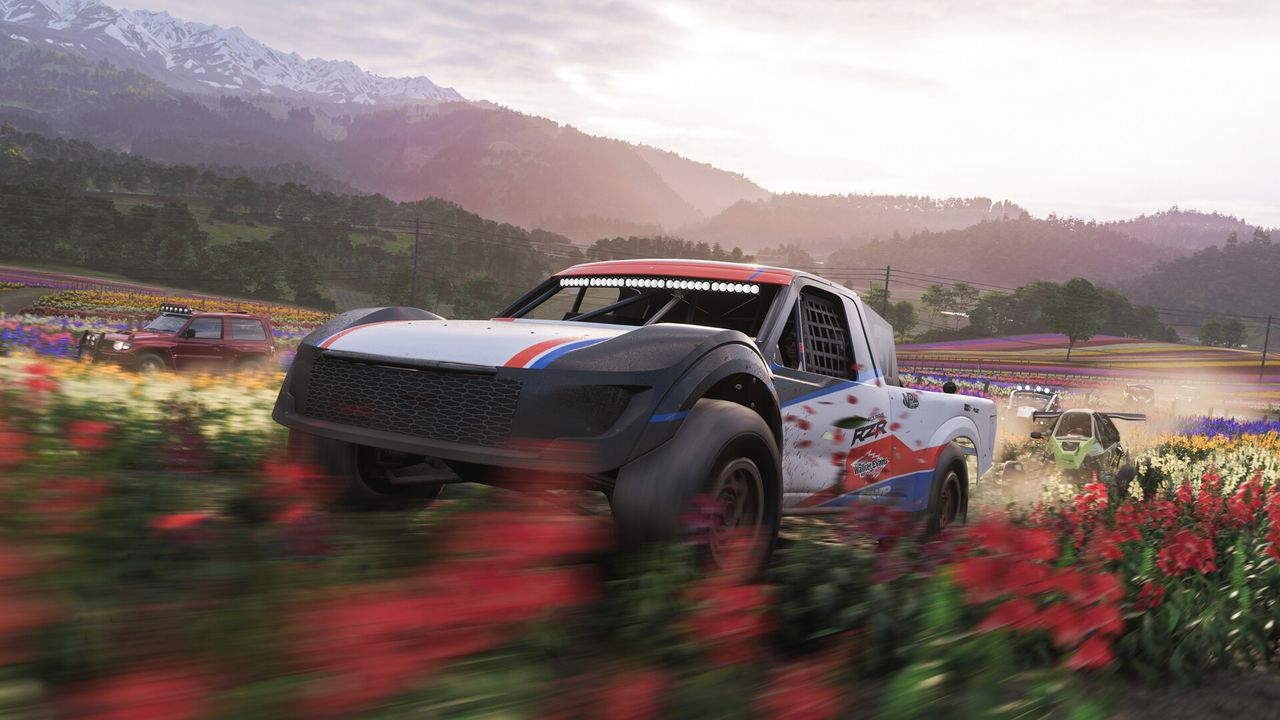
But you will probably spot that the entire world doesn't go blurry as you spin. Now, a second experiment: wave your hand in front of you and tell me if your hand goes blurry. As you'll likely deduce from that very scientific experiment, motion blur (ie the entire world going blurry around you as you wiggle your head) is not a 'realistic' game setting.
One of the first things I do when I play a game is turn motion blur off. Given you are reading this on PC Gamer dot com, the likelihood is that you do the same. Recently, while playing Halo: Campaign Evolved, I realised it has one of the worst implementations of motion blur I've ever seen, and it even has the audacity to be on by default.
Now, I do acknowledge that motion blur serves a purpose. Calling it a "cure worse than the disease" back in 2023, we noted that motion blur can not only add a sense of speed and realism but can reduce the perception of artifacts. As you might be able to guess, that means motion blur is effective at obscuring faults at lower frame rates too.
And as such, it makes sense that it largely came about in the early 2000s. As 3D games became more popular, and hardware ramped up to attempt to keep pace with that innovation, motion blur helped to obscure low frame rates.
There is another purpose for motion blur. As pointed out back in 1999, Kong looks a bit weird in the 1933 King Kong movie, because the background shots are shot on camera and the titular great ape was animated with still photos. Cameras introduce motion blur, and many games attempt to mimic film, rather than real life. Nowadays, stop motion animators add artificial blur to make their pictures feel more like a movie.
So, in big-budget cinematic games, there are two built-in reasons for motion blur: to feel closer to a movie than real life, and to make up for poor performance.
Keep up to date with the most important stories and the best deals, as picked by the PC Gamer team.