// ARS TECHNICA — CYBERSECURITY
Review: Yes, we're still arguing about Nolan's The Odyssey
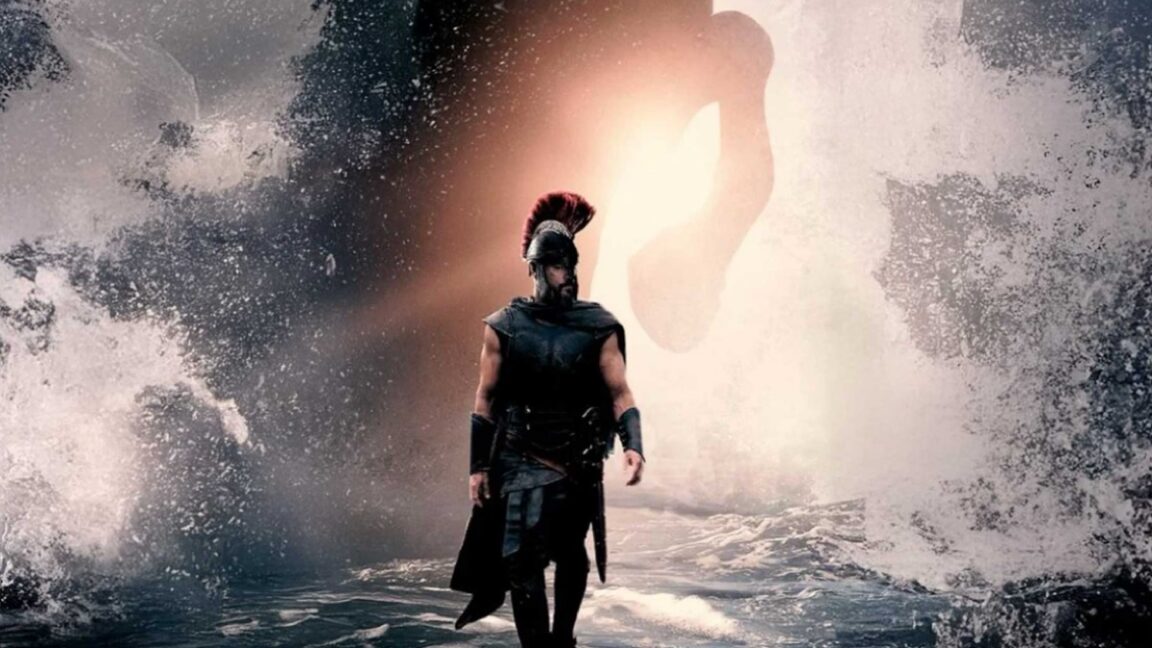
Christopher Nolan’s impressionistic remix of Homer’s epic poem finds the man behind the myth.
Christopher Nolan’s The Odyssey has been a lightning rod for controversy ever since the first casting and design reveals, igniting afresh with each new trailer. The film has garnered plenty of well-deserved accolades (and earnings) since its release, and yet somehow the debates rage on between classicists and the general public alike—all this over an adaptation of an epic poem that’s been around since roughly the 8th century BCE.
My take: the IMAX scale might be epic, but Nolan gives the story an intimate feel, weaving a captivating, nearly three-hour cinematic spell. While the magic slowly starts to dissipate once one leaves the theater, the powerful imagery will resonate for days. And the film gave me, personally, a fresh perspective on the central character of Odysseus.
Most of us read some version of The Odyssey in high school, so we’re familiar with the story: Odysseus (Matt Damon), legendary Greek king of Ithaca, begins the long journey home after 10 years of fighting in the Trojan War. But the journey does not go smoothly, as Odysseus and his men encounter the cyclops Polyphemus (Bill Irwin), the Sirens, and an enchantress named Circe (Samantha Morton), among other obstacles. Meanwhile, his long-suffering wife, Penelope (Anne Hathaway), is warding off hundreds of suitors eager to usurp Odysseus’ throne back home. And the wandering king’s son and heir, Telemachus (Tom Holland), is convinced his father is still alive and sets off to find him.
Nolan sets the tone by opening with a bard (Travis Scott) beginning to tell the tale of the fall of Troy—at least the idealized heroic version that the bard’s audiences are hungry to hear. It’s not meant to reproduce ancient Greek oratory tradition, just to evoke some sense of it, and the device is surprisingly effective.
The director has also preserved Homer’s nonlinear narrative structure, with tales nesting within tales. His depiction of Odysseus is that of a seemingly broken man slowly regaining his fractured memories of the Trojan war and its aftermath in bits and pieces, after spending years under the intoxicating effects of the lotus fruit with Calypso (Charlize Theron) on the island of Ogygia. What has he tried so hard to forget, and why? What difficult truth must he finally face before he can find his way home at last?
We only get the briefest of flashbacks at first, little more than fleeting impressions, because the Ithacan king can’t yet face his memories whole. As the film progresses, we gradually cycle through increasingly detailed memories of what transpired before Odysseus washed up alone on Calypso’s island—the sole survivor among all his men. It all builds up to a powerful moment of self-revelation with Penelope, where he finally admits that his long absence was driven in part by his stricken conscience at the horror his cleverness had unleashed on Troy.
This approach gives the audience a sense of what Odysseus is experiencing, but it also led to complaints that Nolan had wasted his talented cast of major Hollywood stars. Theron’s Calypso gets just a few minutes of screen time. Ditto Lupita Nyong’o in her dual role as Helen of Troy and Clytemnestra; Jon Bernthal’s Menelaus; and Benny Safdie’s Agamemnon, among others. It’s true that Nolan presumes his audience is familiar with Homer’s epic poem and hence many of these characters primarily exist in the margins of Odysseus’ memories. But minutes of screen time are not necessarily indicative of the relative importance of any given role to Nolan’s vision.
For instance, Zendaya’s Athena only appears to Odysseus in brief dream-like sequences, but those moments are critical. As he regains his memories, her mood shifts from calm neutrality to sadness, disappointment, disapproval, and ultimately to horrified grief as the invading Greek army chops off the head of her statue in a Trojan temple—along with the head of a young Troj