// SPACE.COM — SPAZIO & SCIENZA
From Hardspace to Clearspace: How space salvage games compare to real debris removal
When you purchase through links on our site, we may earn an affiliate commission. Here’s how it works.
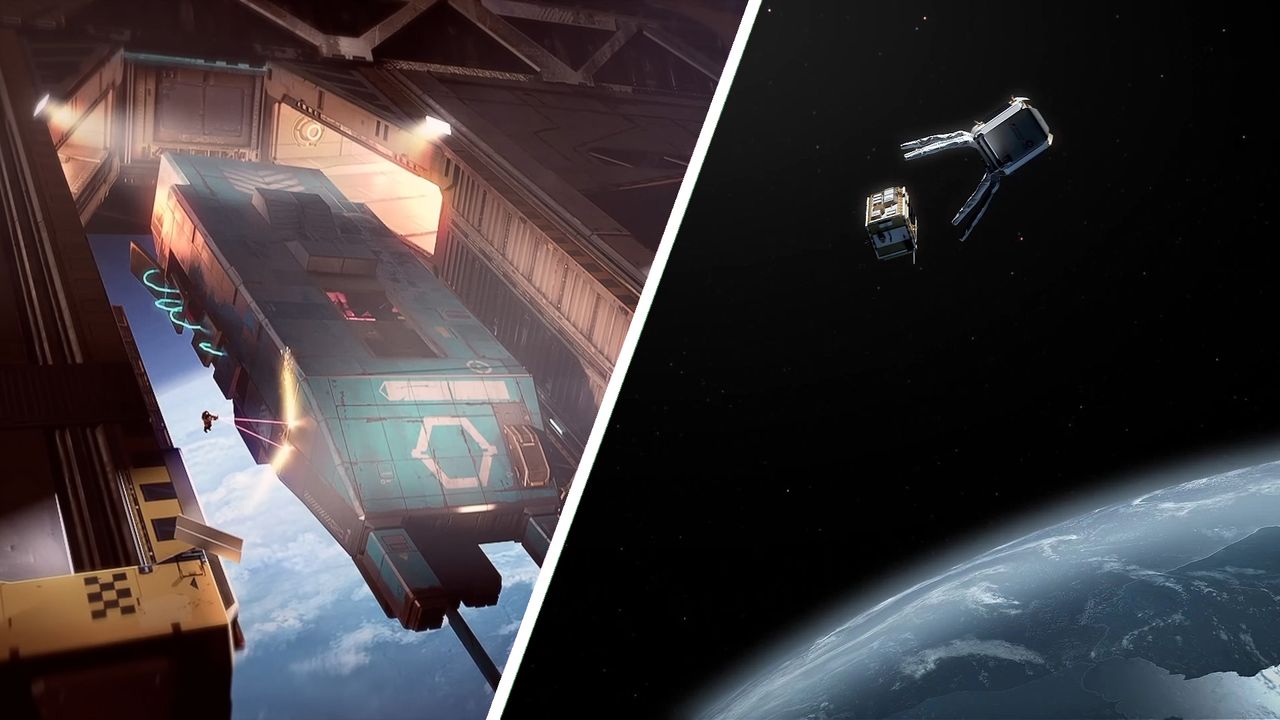
While Hardspace: Shipbreaker does an excellent job of capturing the dystopian perils of unchecked hypercapitalism, the real fun in this space game comes from carving up massive capital ships with space lasers and explosives.
Floating in zero gravity, players slice derelict spacecraft into salvageable chunks, while also contending with unruly physics, pressure, and profit margins. It's a compelling fantasy: orbital blue-collar labor, where yesterday's spacecraft become tomorrow's raw materials.
As satisfying as the simulation is, the real-world challenge of space debris removal is both more constrained and more urgent.
Christian Steimle is the Project Manager of the European Space Agency's (ESA) ClearSpace-1 mission, the first ever aimed at removing a piece of debris (in this case, a satellite called PROBA-1) from low-Earth orbit.
We spoke to him to get a sense of how actual space junk removal will happen in the future, and how it stacks up to the representations we see in sci-fi games like Shipbreaker.
Games like Hardspace: Shipbreaker, ΔV: Rings of Saturn, and other space cleanup simulators tend to emphasize three core ideas: that debris can be dismantled piece by piece, that tools can safely cut or break apart structures in orbit, and that salvage is economically driven and scalable.
While they may be necessary assumptions to make for engaging gameplay, they diverge pretty significantly from current realities.
The main issue is fragmentation. Breaking apart a defunct satellite, even under the most carefully controlled and monitored conditions, risks generating thousands of high-velocity fragments. Some of those generated would be too small to feasibly track, yet large enough to destroy operational spacecraft, satellites, or stations. This is the nightmare scenario behind the Kessler syndrome, a cascading chain of collisions that could render entire orbital pathways unusable.
As Christian Steimle, Project Manager for the European Space Agency's ClearSpace-1 mission, explains, "The common agreement between all of these missions is that objects to be removed shall not be broken up or damaged… especially to avoid creating smaller debris which is more difficult to track."