// PC GAMER — GAMING
I desperately need this TTRPG to become a videogame—it's one of the coolest things I've ever seen
I am the foremost practitioner of sword dialectics.
When you purchase through links on our site, we may earn an affiliate commission. Here’s how it works.
You ever get the feeling that a game has been made, if not just for you, then for a small cohort of absolute freaks of which you are a proud member?
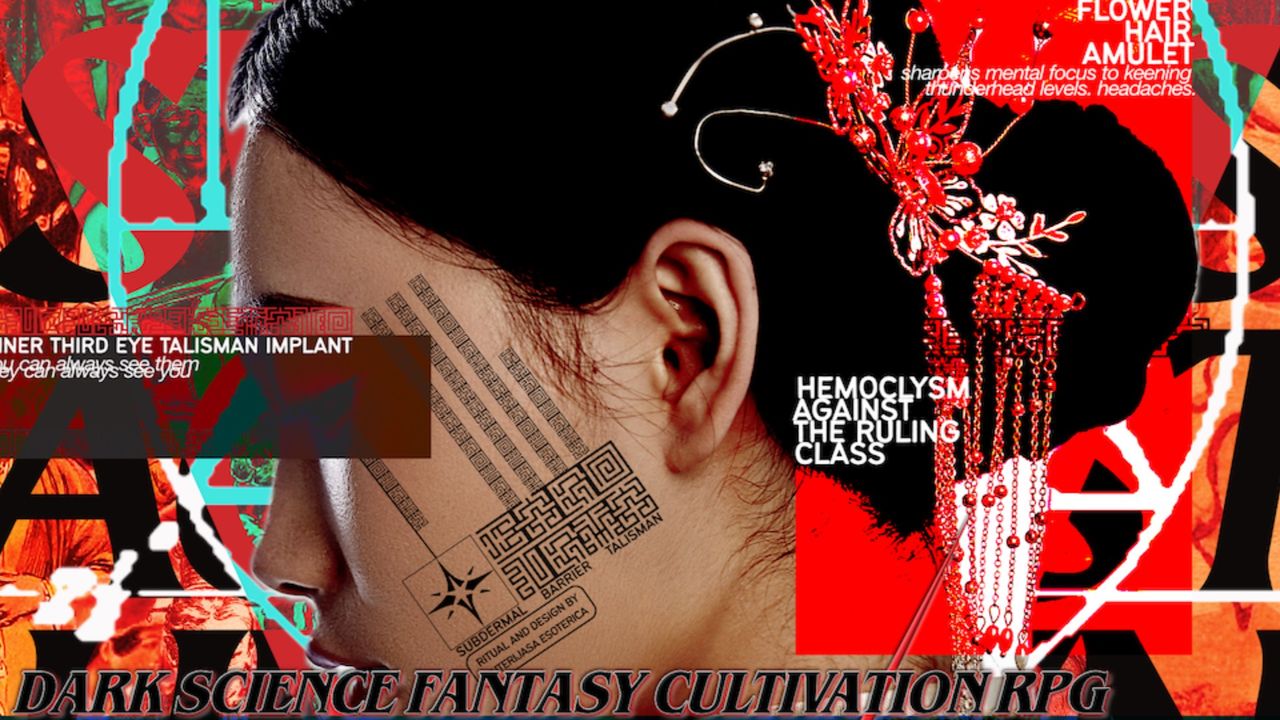
That's the feeling I got when I encountered tabletop RPG 10,000 Swords Against Heaven, from author and game designer JK Saavedra, on social media. Billed as a "dark science fantasy cultivation RPG," it is a game about visiting spectacular and liberatory violence on a "magofascist" ruling class. The whole thing looks like a gorgeous ransom note penned by Vladimir Lenin, Michael Kirkbride, and The Buddha, and I am entirely, hopelessly in love with it.
Set in the post-nuclear world of Hingsajagra—"ravaged and murdered and defiled by the movement of history"—10k Swords sets you and your party up as Wanderers: "fools, wretches, revolutionaries, outcasts, radicals—who cultivate in themselves the Unalienated Human and Revolutionary Consciousness, becoming one with their Action and Intention. A beacon of the Oppressed and the Subaltern."
I can, perhaps, put that less artfully: you are mystics, vagrants, and communist kung-fu wizards in a war against capital. Your stats are things like Violence, Word, and Dialectics, and you can belong to Sects like Aswang assassins, Fangshi, and the Sword Dialecticians. The easiest thing to compare it to would be Disco Elysium, but shot through with the culture and history of southeast Asia rather than ZA/UM's post-Soviet, Baltic roots.
"You will travel far and wide, mastering technicks, magicks, and experiencing Reality to Cultivate Indomitability," goes 10k Swords' intro. "Wanderers must cultivate and organize to strike at the Heavenly Bourgeoisie and the Heavenly Mandate is the Neoliberal World Order."
Also like Disco Elysium—it is tremendously written. It has all the sweep and urgency of a revolutionary text and a religious exhortation, and all embedded among striking artwork. It's the sheer range of influences that really hits me—in the game's acknowledgments, it namechecks Karl Marx, Walter Benjamin, Bloodborne, Jujutsu Kaisen, Hannu Rajaniemi, and The Raid, plus plenty more besides.
You encounter them all as you leaf through its pages, creating something that feels constantly surprising, unique, and joyfully liberatory.
Keep up to date with the most important stories and the best deals, as picked by the PC Gamer team.