// KOTAKU — GAMING
Critics Adore Super Mario Sunshine: ‘My Apartment Is In Shambles. Mario Has Arrived’
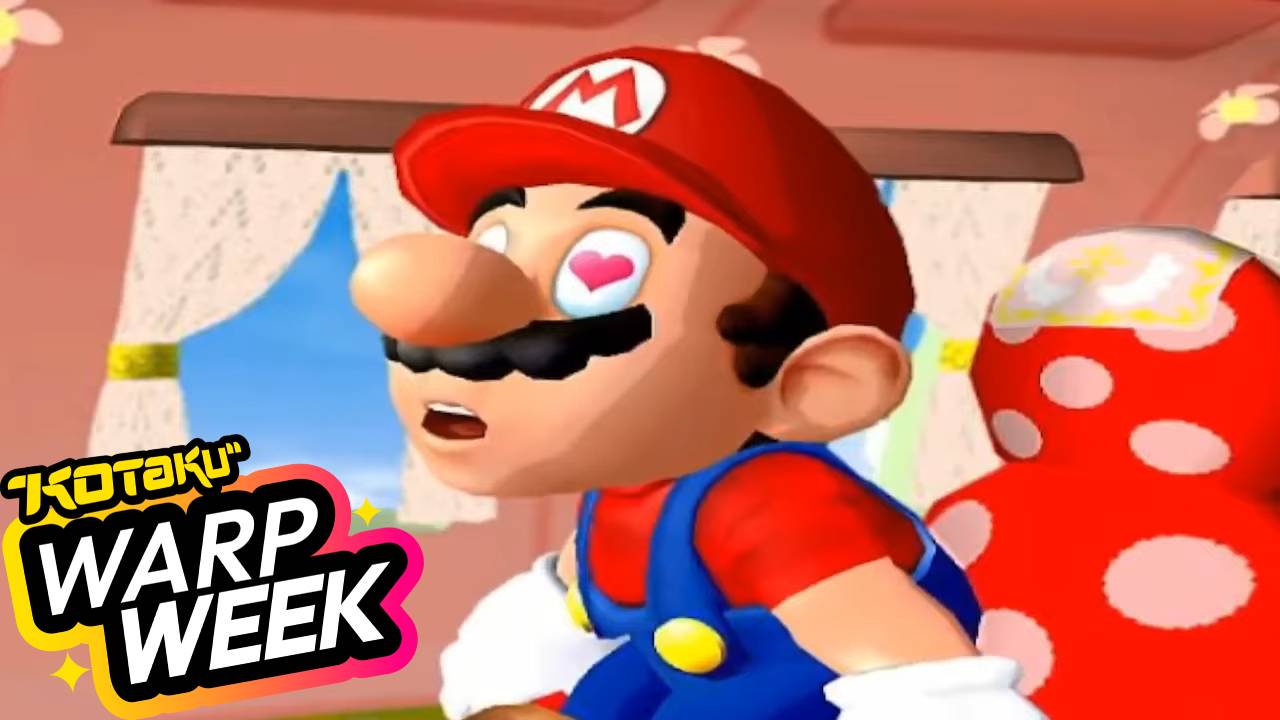
“Shades on! Mario’s debut on Cube is a historic blinder. Better than Mario 64? You betcha!”
This was the opener to Michael Cooper’s effusive 10/10 review for Computer and Video Games of Super Mario Sunshine for the Nintendo GameCube, which launched July 19, 2002. Nintendo’s 3D follow-up to Super Mario 64, Super Mario Sunshine immediately stands out due to its tropical vacation themes, and the fact that Mario is now wearing a backpack named FLUDD that squirts water. Weird as that may sound, according to Cooper, we’re really going to love this one. Cooper continues:
“To describe this game as utterly sensational is like saying Shigeru Miyamoto is just a programmer. Your eyes will pulsate with pleasure and your heart will melt with joy as you explore Mario’s colossal universe. But beneath this happy glowing exterior lie rock-solid challenges and hardcore gameplay of the highest calibre.”
Judging by the flood of high scores it’s receiving, Super Mario Sunshine is indeed beloved by critics, though most were slightly more temperate in their praise than Cooper. Most critics agree that Super Mario Sunshine, despite its unique environment and aesthetic, is not an innovation. Rather, it’s a natural second step after Super Mario 64. Here’s Andrew Reiner for Game Informer, for instance, with his 9.75/10 review making that point:
“This is aged-in-oak proof that a game doesn’t need to be original to win over the hearts of gamers. When a new Mario game hits the market, there’s an underlying expectation that it’ll revolutionize gaming as we know it. Assuredly, this statement may seem like a stretch, but if you gauge the impact that each Mario release has made, it’s not so crazy after all. Think of this: If Nintendo never released Super Mario 64, what would the shape of 3D gaming be like? It’s a scary thought, especially when you take into account that almost every platformer on the market is in some way influenced by this legendary release. Of course, this was six years ago, and given the lengthy absence, everyone anticipated that Mario’s reemergence would bring about another mind-boggling gaming revolution.
“Rather than reinventing the wheel, Nintendo developed the long awaited GameCube follow-up under the philosophy ‘if it ain’t broke, don’t fix it.’ Super Mario Sunshine truly is 64-bit at heart. Just the look of the game should evoke a flashback of memories. Ironically, age is on Mario’s side. Rather than experimenting with jet set technologies, Nintendo took the knowledge and experience from the previous game and used it to fashion the perfect sequel.”
And here’s Tom Bramwell from Eurogamer, with a similar take in a 9/10 review:
“To say that there has been an air of expectancy surrounding Super Mario Sunshine is like saying that plumbers don’t wear ties. It seems almost pointless to draw attention to something so glaringly obvious. This is the sequel to Super Mario 64, the game which launched a platform and reminded the world that Shigeru Miyamoto makes the best platform games. Super Mario Sunshine couldn’t hope to shatter boundaries and reshape the genre for a second time, but it could and has managed to provide one of the biggest and most entertaining platform games since its illustrious predecessor. The best game ever? No, but you’d be a fool not to buy it.”
The most noticeable distinction between Super Mario Sunshine and its Mario predecessors is, as mentioned, its tropical island setting and vacation-y themes. Most reviewers loved these, with IGN’s Fran Mirabella III saying that “the Caribbean-themed locales, big and beautiful, are so well designed that an ear-to-ear smile is often produced” in a 9.4/10 review.
But as pretty as the vibes were, a lot of reviewers couldn’t help but notice some inconsistencies. A lot of Super Mario Sunshine’s visual elements, such as its water and use of color, garnered praise. But a lot of reviewers pointed out textures that looked flat-out ugly up close. Jeff Gerstmann, in his 8/10 review for