// NATURE NEWS — SPAZIO & SCIENZA
Glucose-responsive probiotics for glycaemic modulation in mice and monkeys
Nature
(2026) Cite this article
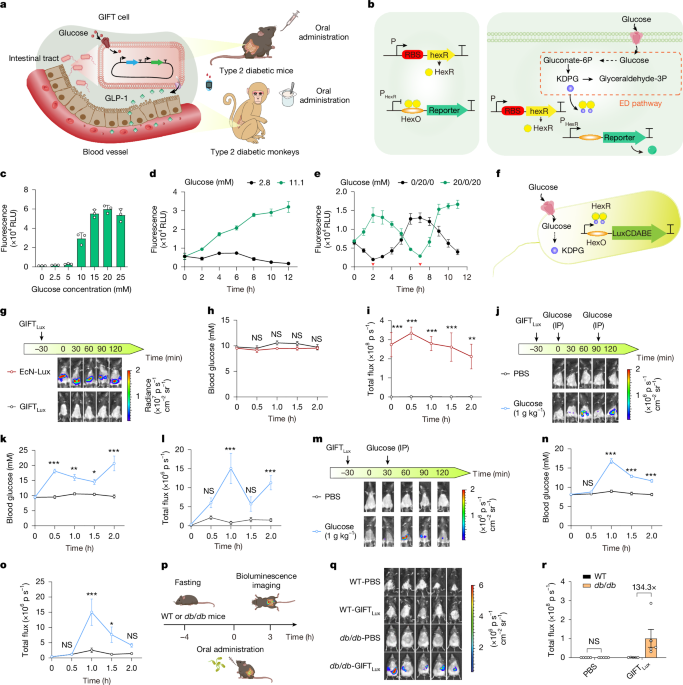
Sustained and controlled delivery of glucose-lowering agents using engineered designer cells is recognized as an effective strategy for diabetes therapy1. However, current technologies rely on external signal control or have been programmed into mammalian cells using synthetic gene networks, which pose safety concerns arising from transplantation2,3. Here we developed an engineered oral-deliverable glucose-sensing and functional response probiotic living drug for ‘sense-and-respond’-based control of diabetic blood glucose. We created a glucose sensor based on a synthetic gene circuit that incorporates the glucose-responsive transcriptional regulator HexR, coupled with a synthetic promoter. Upon oral administration of the engineered probiotics carrying the sensor, the cells reside temporarily in the intestine and regulate the expression of therapeutic transgenes in response to glucose levels that exceed the normal threshold. We show efficacy from the engineered probiotics for glycaemic control in multiple diabetic mouse and non-human primate models, demonstrating that long-term oral administration drives clear improvements in lipid profiles, while also attenuating development of multiple diabetic complications. Our probiotics-based living drug enables therapeutic dosing in response to real-time blood glucose levels, providing a programmable, orally deliverable sense-and-respond platform for metabolic therapy without transplantation.
This is a preview of subscription content, access via your institution
Access Nature and 54 other Nature Portfolio journals
Get Nature+, our best-value online-access subscription
Prices may be subject to local taxes which are calculated during checkout
All data supporting this study are provided in the main text and Supplementary Information. The 16S rRNA gene sequencing data generated in this study have been deposited in the NCBI Sequence Read Archive under BioProject accession number PRJNA1023002. Source data are provided with this paper.
Bashor, C. J., Hilton, I. B., Bandukwala, H., Smith, D. M. & Veiseh, O. Engineering the next generation of cell-based therapeutics. Nat. Rev. Drug Discov. 21, 655–675 (2022).
Article
CAS
PubMed
PubMed Central
Google Scholar
Zhou, Y. et al. A small and highly sensitive red/far-red optogenetic switch for applications in mammals. Nat. Biotechnol. 40, 262–272 (2022).