// HACKER NEWS — CYBERSECURITY
The deep history behind the Road to Nowhere inside the Great Smoky Mountains
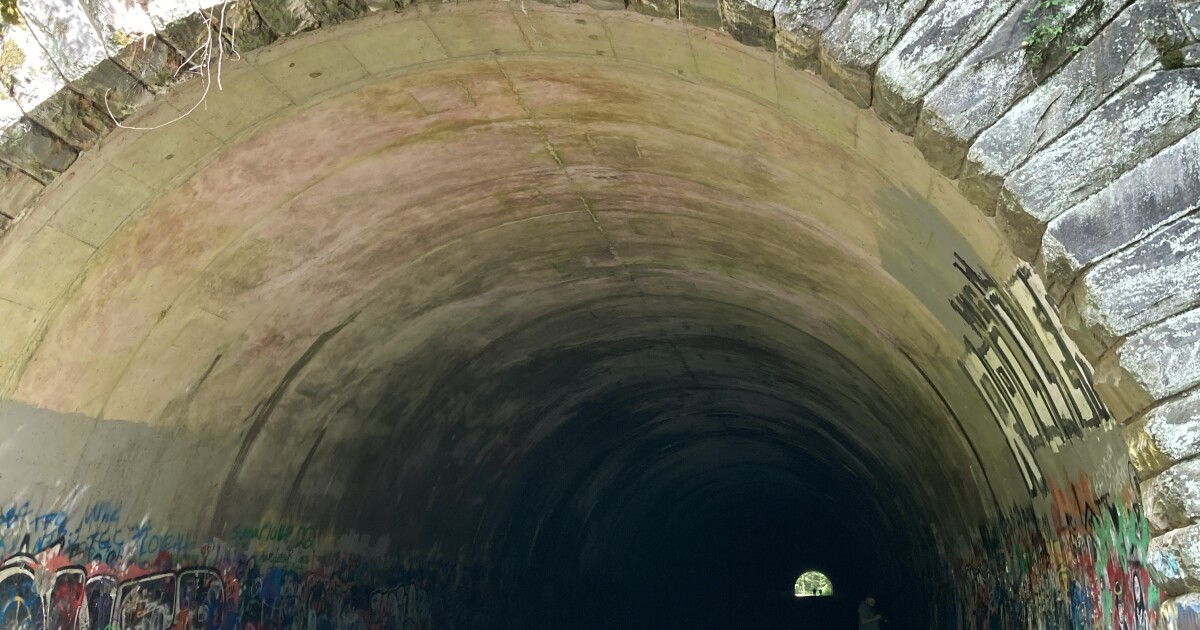
Tucked away in the mountains of western North Carolina is a mysterious and unusual tunnel. It stretches for about a quarter mile and is wide enough for two lanes of traffic.
But you won’t find any cars passing through or even any lights guiding the path — inside the tunnel, pavement suddenly turns to dirt, and the road abruptly disappears.
The tunnel’s uncanny quality has caused locals to give it an alluring nickname: the Road to Nowhere. But the tunnel’s dead end is only the beginning of its story. It’s one shaped by a fraught local history and serves as a stark reminder of the price that often comes with the pursuit of progress.
On a sunny summer Saturday, a smattering of hikers, fly fishers, and tourists explored this eerie piece of infrastructure. Positioned on the eastern edge of the Great Smoky Mountains National Park, the Road to Nowhere has become an attraction for folks spending time in the area looking to experience a slice of local lore.
"It’s really cool how all the light gets shut off. But I wouldn’t want to be here by myself, you know, close to night," said Will, a young hiker visiting from Johnson City, Tennessee. "But it’s super cool, I didn’t know it was a thing."
The tunnel is just a few miles northwest of Bryson City, North Carolina, a small mountain town known for being a gateway into the Great Smoky Mountains. A winding mountain road connects Bryson City to the Road to Nowhere, which eventually turns into a trail leading further into the Smokies on the other side of the famed tunnel. But what caused this strange passageway to be here in the first place?
On the route to the tunnel from Bryson City, a roadside sign offers a clue.
Located west of the Road to Nowhere is a massive concrete wall that holds the answer to the tunnel’s origin. Fontana Dam sits at 480 feet high, the tallest dam east of the Mississippi River. Unfurling out of the dam is Fontana Lake, a popular recreational site for the region. But a century ago, this human-made marvel was only an idea. Instead of a lake, you’d find a lush valley and dozens of small mountain communities.
"The saga of the Road to Nowhere just kept kind of snowballing," said Lance Holland, a local historian who’s lived in Bryson City for decades. Holland has written a small collection of books on the area around Fontana Lake, including his latest, "The Little Tennessee River: Following the Cherokee Path."
The Road to Nowhere saga started in the early 1900s, with the Aluminum Company of America (Alcoa). Back then, Holland says the company was on a hunt for cheap sources of electricity across the country.