// SPACE.COM — SPAZIO & SCIENZA
A weather satellite 22,000 miles above Earth saved my 2026 total solar eclipse cruise on the Mediterranean Sea
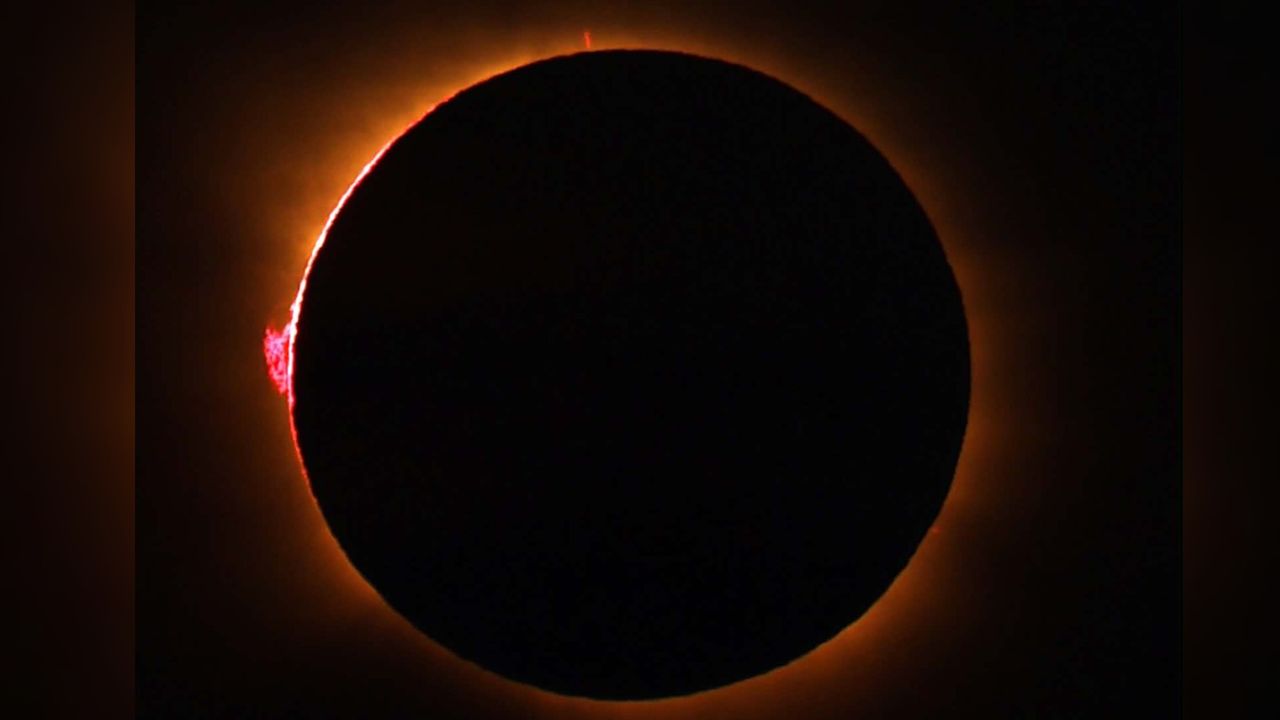
Meteorologist and skywatcher Joe Rao took to sea aboard the cruise ship Le Boréal to watch the total solar eclipse on Aug. 12, 2026. Here's what it was like.
When you purchase through links on our site, we may earn an affiliate commission. Here’s how it works.
When the 11,000-ton cruise ship Le Boréal set sail from Nice, France, on Thursday, Aug. 6, its 205 passengers and 136 crew members began a voyage whose success would depend not only on careful planning, but also on the ship's ability to outmaneuver clouds at the last critical hour.
The ship is owned and operated by the French cruise line Compagnie du Ponant. This eclipse cruise was the result of more than a year's planning by Ponant, and most of those who signed on were there specifically to witness the celestial spectacle; that shared purpose heightened the drama of the eclipse itself.
This was going to be a sunset eclipse, with the sun no more than three degrees above the horizon. To picture that height, make a fist and hold it out at arm's length. Place the bottom of your fist on the horizon; the top of your fist measures about ten degrees. During totality, the sun would appear only about one-third of a fist-width above the horizon. Even if the sky overhead was clear, clouds could still gather near the horizon, leaving open the possibility that the sun might be hidden at the critical moment.
I was on board Le Boréal as both a lecturer and the ship's onboard meteorologist. The main advantage of using a cruise ship to view an eclipse is its two-dimensional mobility, allowing it to maneuver around potential cloud cover. In practice, that meant working with Captain Mathieu Tsingrilaras to position Le Boréal on eclipse day in a location free of any clouds that might otherwise obscure the total eclipse.
Although the Iberian Peninsula and the adjacent waters of the Balearic Sea — a body of water between mainland Spain's eastern coast and the Balearic Islands — typically enjoy warm, dry, clear weather in August, the circumstances of this eclipse could still prove problematic.
Also serving as a lecturer for the cruise was Serge Brunier, a well-known French photographer, reporter, and writer who has specialized in popular depictions of astronomical subjects. He is also the co-author of the beautiful coffee-table book, Glorious Eclipses.
Serge would accommodate the French-speaking passengers onboard. Early in the cruise, as we were speaking with each other, a French passenger came up to Serge and asked, "Le temps sera-t-il dégagé pour l'éclipse?" ("Will we have clear weather for the eclipse?"). Serge nodded toward me and replied: "Il faudra demander à Joe ; c'est lui qui s'occupe de la météo." ("You will have to ask Joe; he is in charge of the weather.")
Our itinerary took us to many different places during our eight-day cruise, including two towns in Corsica (Calvi and Bonifacio), the French cities of Marseille and Port-Vendres as well as Spain where we stopped at Barcelona and Palma de Mallorca in the Balearic Islands. Through it all, we experienced weather that was mainly sunny, very warm and quite humid. An upper-level ridge of high pressure acted as a heat dome over much of Europe.