// ARS TECHNICA — INTELLIGENZA ARTIFICIALE
Data centers become "killer application" for new power transformer tech
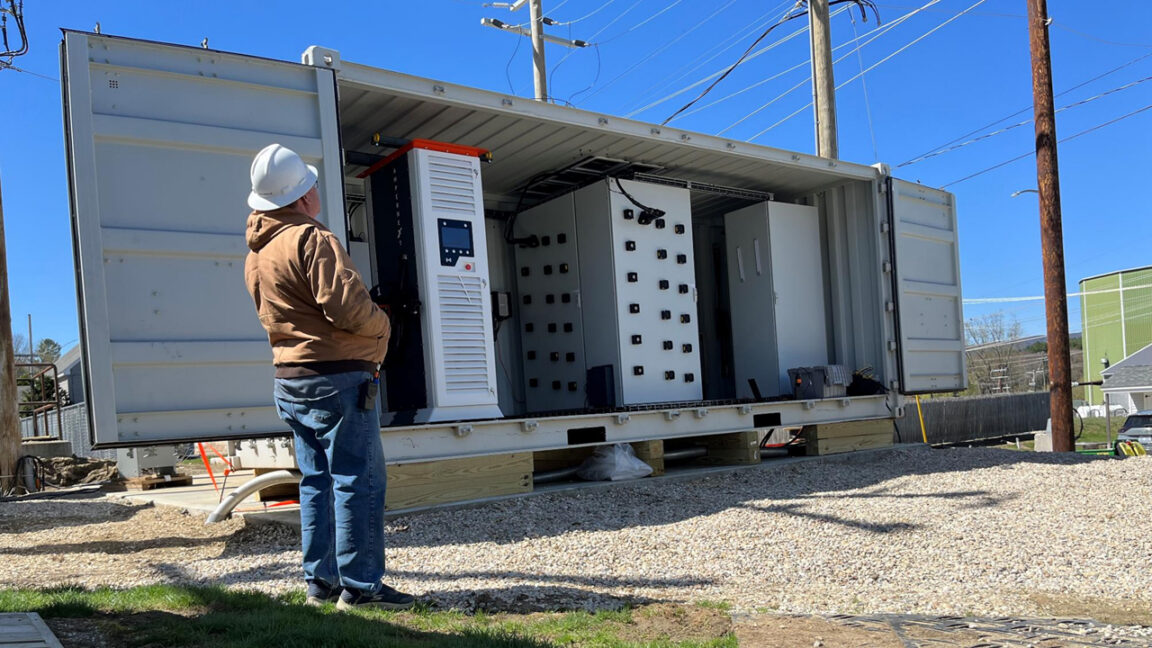
Solid-state transformers could also benefit EV charging and someday households.
Data centers have become the largest driver of surging electricity demand that is straining US power grids. But the AI data center boom has also accelerated investment in a technology that could provide a silver lining for everyone—solid-state power transformers that replace industrial-age technology with modern power electronics.
Power grids currently rely on conventional transformer technology that is painstakingly assembled by hand and has a fundamental design dating back to the 1880s. Two copper wire coils manually wound around a steel core create electromagnetic fields that help step up voltage levels of alternating current electricity for long-distance transmission or step down voltage levels for the electricity use of homes and businesses. The largest power transformers cannot be mass-manufactured but are instead custom-built for each utility company’s electrical substations.
Manufacturing constraints, coupled with the scramble to upgrade US power infrastructure, have meant utility companies and other customers must wait up to several years for delivery of new power transformers. That is not only a problem for expanding power grid infrastructure to support growing electricity demand, but also delays the process of replacing aging power transformers.
By comparison, solid-state transformers rely on high-frequency semiconductor switching to perform voltage conversions, and can be mass-manufactured using semiconductor materials such as silicon carbide. Such transformers are physically smaller and lighter than conventional transformers, have modular designs that enable easy upgrades or replacements of parts, and can perform as all-in-one power electronic devices by handling multiple tasks.
Tech companies building the largest AI data centers are interested in solid-state transformers because they are embracing direct current (DC) power architectures to support server racks packed with energy-hungry AI chips. Solid-state transformers can directly convert alternating current (AC) power from a local grid’s distribution network into the DC power that such data centers require—all without the need for a separate electrical device to perform that AC/DC conversion.
“It’s kind of this one magic box that eliminates a lot of the infrastructure and also provides one control location that eliminates a lot of the interoperability challenges that you may see in a traditional data center, where various components within the data center are trying to regulate the same thing,” said Srdjan Lukic, a professor of electrical and computer engineering at North Carolina State University. “Now you have one conversion stage outside the data hall and then you just go straight to the rack.”
Data centers have become the “killer application for solid-state transformers right now,” Lukic told Ars. Several US companies, including Amperesand, Heron Power and DG Matrix, have collectively raised more than $280 million in funding over the past year to commercialize solid-state transformer technology.
Solid-state transformers could also greatly reduce the amount of copper and other materials needed by data center projects, while their smaller physical footprints allow data center developers to do other things with the available space, Lukic explained.
In the long run, successful commercialization of solid-state transformers could even help ease the broader supply chain shortage affecting power transformers. That would make transformers more readily available for power grid upgrades and expansions beyond data center projects.