// NATURE NEWS — SPAZIO & SCIENZA
More than 18,000 questionable images found in antibody catalogues of 15 companies
Search author on:
PubMed
Google Scholar
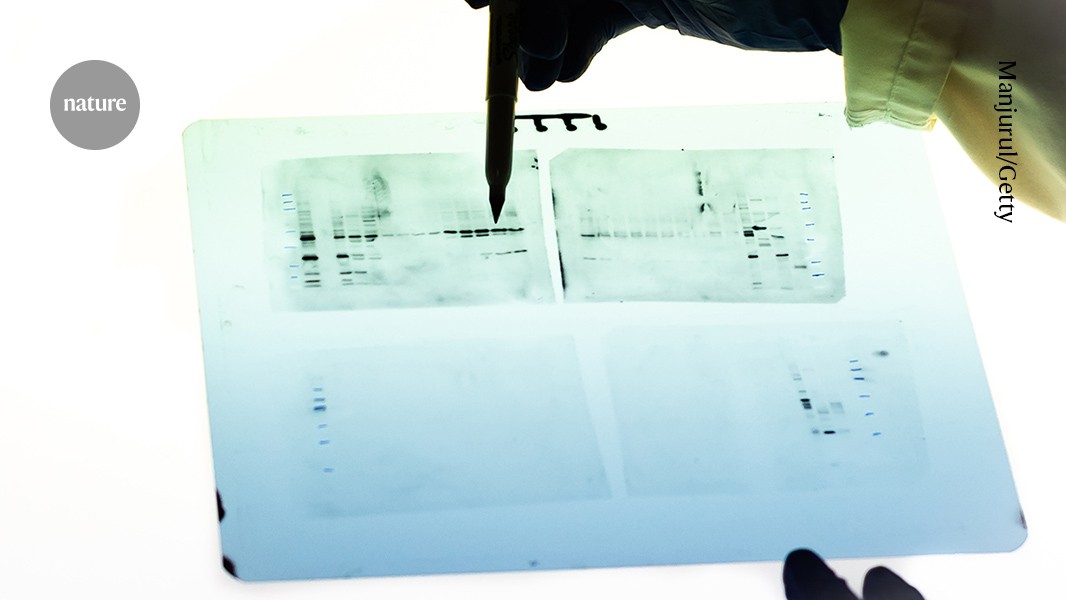
Companies use western blots in their catalogues to provide confirmation that their antibodies work as they are supposed to. Credit: Manjurul/Getty
Thousands of antibodies sold by multiple research vendors have images associated with their catalogue entries that seem to have been digitally altered, according to a scientific-integrity specialist.
The finding comes after more than 100 problematic images were found by science sleuths in the antibody catalogue of supply company Thermo Fisher Scientific in May. Although image alteration does not mean an underlying product is defective, the trove of flagged images raises questions about the practices of commercial antibody suppliers as the scientific community grapples with concerns about the reliability of these workhorse diagnostic molecules.
Science sleuths uncover more than 100 suspicious images in Thermo Fisher antibody catalogue
The latest search for problematic images in vendor catalogues was undertaken by Reese Richardson, a metascientist at Northwestern University in Evanston, Illinois, who also led the inquiry in May. On 25 August, he reported that he had found more than 18,000 further questionable images associated with antibodies sold by 15 companies, and released a database of them. Many of the ‘validation images’, which are included in catalogue entries to confirm antibodies’ quality, show signs of extensive editing, according to Richardson.
Antibodies are Y-shaped biomolecules that can bind to specific proteins, making them crucial diagnostic tools in the laboratory. However, their reliability has been a persistent problem; a 2023 study1 examining 614 commercial antibodies showed that more than 50% of them did not work as advertised. The annual cost of ineffective antibodies is estimated to be more than US$1 billion.
Researchers who work on improving antibody reliability are frustrated by the news from Richardson. “It’s disappointing, but it doesn’t surprise me that much because I’ve been burned so many times buying commercial antibodies that don’t work,” says Simona Colantonio, director of the Antibody Characterization Laboratory at the Frederick National Laboratory for Cancer Research in Maryland.
Most of the vendors in Richardson’s database are each associated with a few hundred potentially problematic images. But four are tied to thousands of flagged validation images: G-Biosciences in St. Louis, Missouri, is linked with 6,388 images; Thermo Fisher in Waltham, Massachusetts, with 5,580; LSBio in Newark, California, with 2,695; and Origene, in Rockville, Maryland, with 2,236.
A spokesperson for Thermo Fisher said in a statement that an ongoing review of the firm’s products had so far found “no evidence of impact to antibody performance or the underlying scientific data” and that the company remains “confident in the quality of the products within our antibody catalog”. A spokesperson for LSBio said in a statement that the entries “amount to less than 0.04% of the total offering on our platform”, but that the firm takes the image concerns seriously and will perform an investigation with its partners. G-Biosciences and Origene did not respond to a request for comment.